CM Bhajan Lal marks 2.5 years of BJP rule in Rajasthan
Synopsis
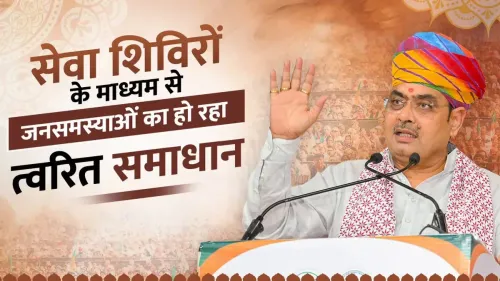
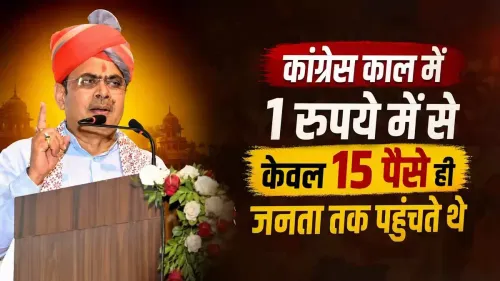
Rajasthan Chief Minister Bhajan Lal Sharma marked his BJP government's two-and-a-half years in office on 7 June 2026, asserting that policy and intent aligned with public welfare are the foundation of good governance and that his administration has delivered on its core promises of service, sushasan, and development.
Key Takeaways
Bhajan Lal Sharma posted on 7 June 2026 marking approximately two and a half years of the BJP government in Rajasthan.
The Chief Minister stated that when policy and intent are dedicated to public welfare, good governance follows — framing his government's record in moral as well as administrative terms.
The BJP won the Rajasthan assembly elections in December 2023 , with Sharma sworn in as Chief Minister shortly after.
The post echoes the BJP's national sushasan (good governance) theme, which has been central to the party's political messaging since 2014 .
The mid-term statement signals the government's intent to highlight its record ahead of the second half of its five-year term.
Independent verification of specific governance achievements cited in the post is pending official performance reports and budget disclosures.
Rajasthan Chief Minister Bhajan Lal Sharma on Sunday, 7 June 2026, invoked the principle of good governance to mark his government's completion of roughly two and a half years in office, asserting that policy and intent dedicated to public welfare together pave the path to sushasan (good governance).
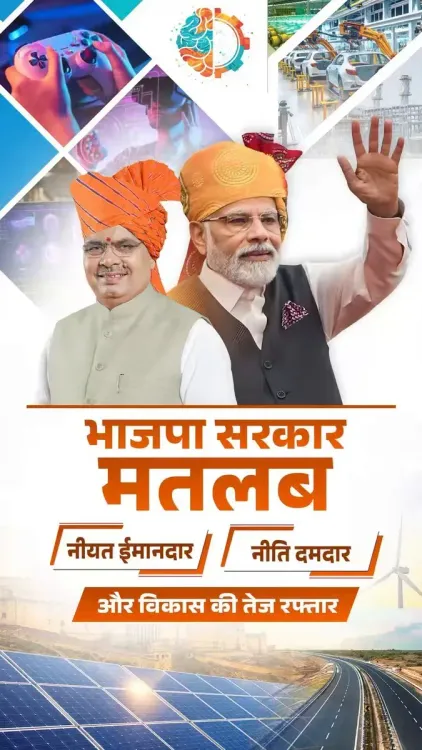
In a post on X, the Chief Minister wrote: 'Jab neeti aur niyat janhit ke liye samarpit hon, to sushasan ka marg prashast hota hai' — 'When policy and intent are dedicated to public welfare, the path to good governance opens up.' He added that his government had, over the past two and a half years, proved this truth by translating the resolve of service, good governance, and development from intent into ground-level reality.
Context
The BJP formed the Rajasthan state government following the December 2023 Legislative Assembly elections, with Bhajan Lal Sharma being sworn in as Chief Minister. The post, published in June 2026, comes at approximately the midpoint of the government's five-year term — a juncture at which state administrations across India commonly issue assessments of their governance record.
The phrase sushasan — good governance — has been a central rhetorical pillar of the BJP's political communication nationally since 2014, deployed consistently across state governments to frame administrative performance in terms of intent and delivery.
Policy Backdrop
Indian state governments routinely mark mid-term milestones with statements emphasising service delivery, infrastructure development, and welfare outreach. Such communications serve both as internal accountability benchmarks and as public-facing political messaging ahead of the second half of a term.
The BJP's 'service, good governance, and development' triad — seva, sushasan, aur vikas — mirrors the party's national governance vocabulary, signalling ideological continuity between the state administration in Jaipur and the central government in New Delhi.
Stakeholders and Impact
Rajasthan's population of over 8 crore citizens are the primary stakeholders in any assessment of the state government's two-and-a-half-year record. The Chief Minister's statement, while broad in scope, is directed at voters who will evaluate the administration's performance before the next assembly election.
Civil society groups, opposition parties, and policy observers in the state are likely to scrutinise the government's claims against measurable outcomes in areas such as agriculture, public health, infrastructure, and social welfare schemes.
What's Next
Analysts and citizens will watch for the next Rajasthan state budget presentation and any official performance reports on welfare or development schemes as concrete tests of the governance claims articulated by the Chief Minister. The second half of the BJP government's term in Rajasthan will be a critical period for translating the stated resolve into verifiable outcomes that can withstand scrutiny ahead of the next electoral cycle.
Point of View
Positioning the BJP's Rajasthan tenure within the party's broader national narrative of intent-driven governance. By anchoring the message in the morally resonant language of neeti aur niyat (policy and intent), the Chief Minister seeks to pre-empt opposition scrutiny by framing governance as a question of political will rather than just measurable outcomes. The timing — at roughly the halfway mark of a five-year term — is consistent with a pattern seen in BJP-governed states, where mid-term stocktaking is used to consolidate the party's voter base and set the agenda for the second half. Whether this narrative holds will depend on how the government's record is assessed when concrete performance data becomes publicly available.
NationPress
22 Oct 2026
Frequently Asked Questions
Who is Bhajan Lal Sharma and what is his role?
Bhajan Lal Sharma is a BJP leader who has served as Chief Minister of Rajasthan since December 2023, when the BJP won the state assembly elections.
What did Rajasthan CM Bhajan Lal Sharma post on X in June 2026?
He posted that when policy and intent are dedicated to public welfare, the path to good governance opens up, and that his government had proved this over the past two and a half years through service, good governance, and development.
How long has the BJP government been in power in Rajasthan?
The BJP government in Rajasthan has been in power since December 2023, making it approximately two and a half years as of June 2026.
What does sushasan mean in Indian politics?
Sushasan is a Hindi word meaning 'good governance.' It has been a central theme of the BJP's political messaging at both the national and state levels since 2014.
What should Rajasthan citizens watch for next regarding the state government's performance?
Citizens and analysts should watch for the next Rajasthan state budget and any official reports on welfare and development scheme outcomes, which will provide measurable evidence of the governance record the Chief Minister has described.