CM Bhajan Lal Sharma Pays Tribute to APJ Abdul Kalam on Birth Anniversary
Synopsis
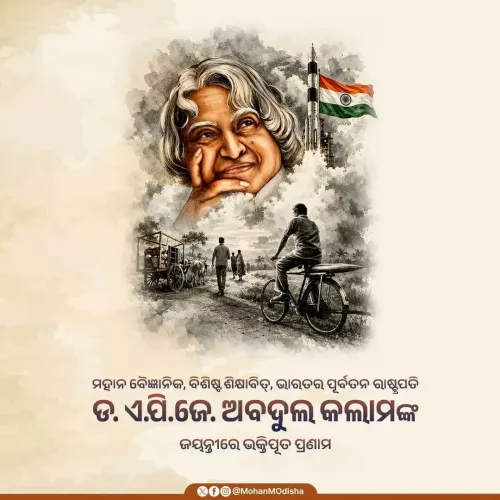
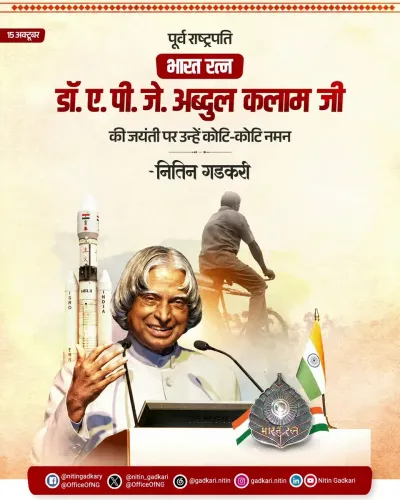
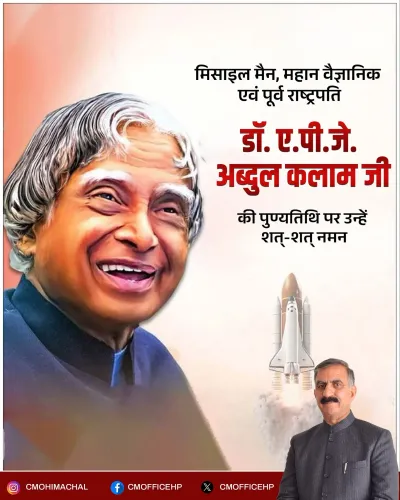
Rajasthan Chief Minister Bhajan Lal Sharma on October 15 paid tribute to former President and Bharat Ratna Dr. APJ Abdul Kalam on his birth anniversary, honouring his unparalleled contributions to science, education, and his enduring vision of a Developed India.
Key Takeaways
Rajasthan CM Bhajan Lal Sharma paid tribute to Dr.
APJ Abdul Kalam on his birth anniversary, October 15 .
Kalam was born on October 15, 1931 , in Rameswaram, Tamil Nadu , and served as India's 11th President from 2002 to 2007 .
He was conferred the Bharat Ratna in 1997 for his contributions to science and technology, including India's ballistic missile programme.
CM Sharma highlighted Kalam's dream of a 'Viksit Bharat' (Developed India) as a continuing source of national inspiration.
Kalam's 'India 2020' vision, articulated in 1998 , popularised the Developed India narrative now widely invoked across India's political spectrum.
On what would have been his 95th birth anniversary, the legacy of Dr. A.P.J. Abdul Kalam — nuclear scientist, former President, and India's most beloved symbol of scientific dreaming — drew fresh salutes from across the country. Rajasthan Chief Minister Bhajan Lal Sharma on Thursday, October 15, joined the nation in honouring the Bharat Ratna laureate, calling his contributions to nation-building, science, and education 'incomparable.'
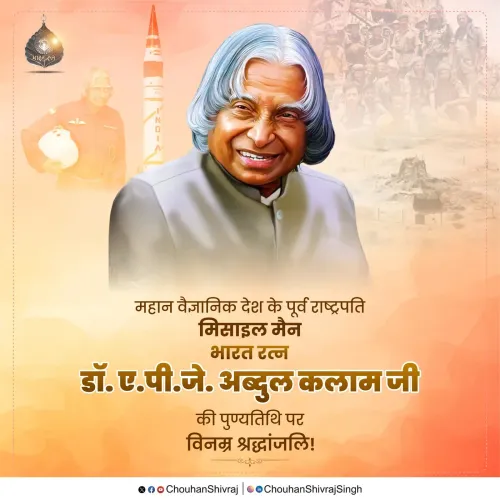
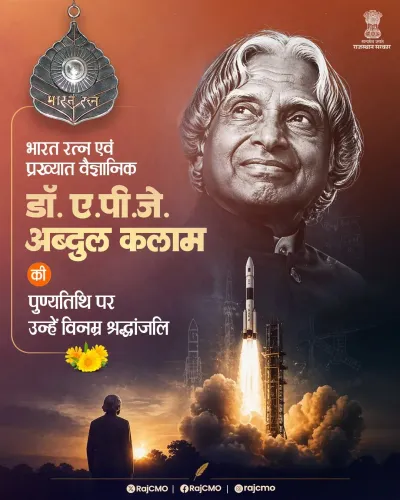
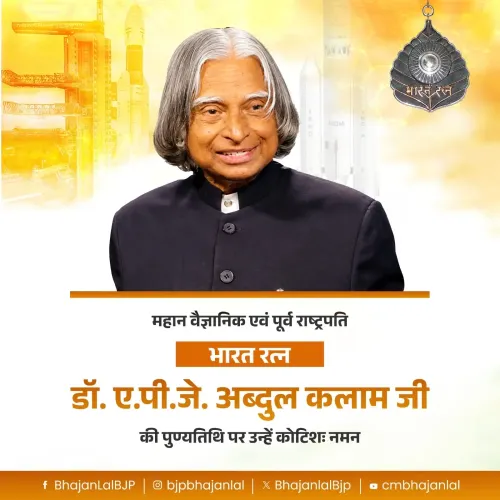
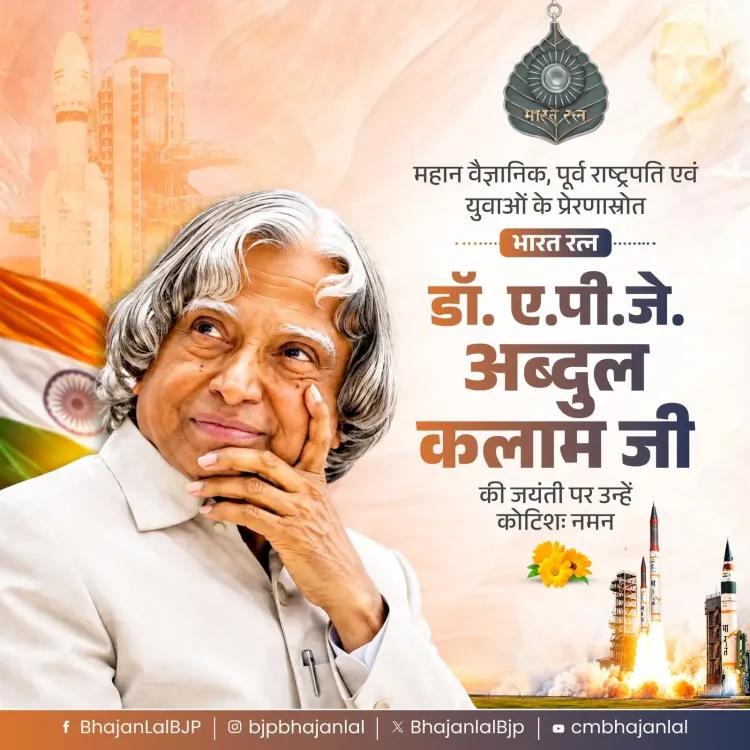
In his post, CM Sharma wrote: 'Mahaan vaigyanik, poorv rashtrapati evam yuvaon ke preranasrot, Bharat Ratna Dr. A.P.J. Abdul Kalam ji ki jayanti par unhe kotishः naman!' — 'Heartfelt salutations on the birth anniversary of the great scientist, former President, and inspiration for youth, Bharat Ratna Dr. A.P.J. Abdul Kalam.' He added that Kalam's dream of a 'Viksit Bharat' (Developed India) and his unparalleled service to science and education would continue to inspire every Indian.
From Missile Man to 'People's President'
Dr. Avul Pakir Jainulabdeen Abdul Kalam, born October 15, 1931, in Rameswaram, Tamil Nadu, rose from modest origins to architect India's ballistic missile programme, earning him the title 'Missile Man of India.' His work as a senior scientist at DRDO and ISRO underpinned India's defence self-reliance for decades. He was conferred the Bharat Ratna in 1997 — India's highest civilian honour — recognising a career that reshaped the country's scientific ambitions.
His presidency from 2002 to 2007 was defined by extraordinary public warmth — a Head of State who visited schools, answered children's letters, and spoke of science not as a career but as a calling. He passed away on July 27, 2015, while delivering a lecture at IIM Shillong, a fitting final scene for a man who never stopped teaching.
The 'Viksit Bharat' Thread That Runs Through Generations
The phrase 'Viksit Bharat' — Developed India — that CM Sharma invokes is no accident. Kalam popularised this vision in his 1998 technology mission 'India 2020', which argued India could become a developed nation within two decades through science, agriculture, and manufacturing. That vocabulary has been absorbed into mainstream political discourse across party lines ever since, reappearing in national policy frameworks and budget speeches as a recurring north star.
For a BJP government in Rajasthan — a state where science education infrastructure remains a live priority — invoking Kalam's legacy carries specific resonance. Annual observances on October 15 typically include state-level science fairs, student programmes, and youth awards designed to translate his ideals into institutional action.
Kalam's real bequest to India was simpler than any missile schematic: the radical idea that a child from anywhere could look at the sky and believe it was reachable. That idea, decades on, still hasn't gone out of date.
Point of View
National pride, and aspirational youth outreach. The deliberate use of 'Viksit Bharat' is not coincidental; it stitches Kalam's legacy to the ruling dispensation's own developmental branding. Yet the gesture also reflects a genuine structural reality: Rajasthan's education and science infrastructure gaps mean Kalam's 'every child can dream' message retains real policy utility, not just symbolic weight. Annual October 15 observances are quietly becoming a soft-power vehicle for state governments to benchmark progress on science education commitments.
NationPress
15 Oct 2026
Frequently Asked Questions
When is APJ Abdul Kalam's birth anniversary?
October 15 is Dr. APJ Abdul Kalam's birth anniversary. He was born on October 15, 1931 , in Rameswaram, Tamil Nadu.
What is Bharat Ratna and when did Kalam receive it?
The Bharat Ratna is India's highest civilian honour. Dr. APJ Abdul Kalam was conferred the award in 1997 for his outstanding contributions to science and technology.
What was APJ Abdul Kalam's role as President of India?
Dr. Kalam served as India's 11th President from 2002 to 2007 . He was widely known as the 'People's President' for his outreach to students and youth during his tenure.
What is the 'Viksit Bharat' vision associated with Kalam?
'Viksit Bharat' means Developed India . Kalam popularised this vision through his 1998 'India 2020' technology mission, which laid out a roadmap for India to become a developed nation through science and innovation.
Why is Rajasthan CM Bhajan Lal Sharma paying tribute to Kalam?
CM Bhajan Lal Sharma paid tribute on October 15, 2026 , Kalam's birth anniversary, honouring his contributions to science, education, and national development — a tradition observed by leaders across India's political spectrum.