CM Bhajan Lal Sharma pays tribute to Ustad Bismillah Khan on death anniversary
Synopsis
Rajasthan Chief Minister Bhajan Lal Sharma paid homage to Bharat Ratna Ustad Bismillah Khan on his death anniversary on 21 August 2026, honouring the shehnai legend who performed at India's first Independence Day and received the nation's highest civilian award in 2001.
Key Takeaways
Rajasthan CM Bhajan Lal Sharma paid tribute to Ustad Bismillah Khan on his death anniversary on 21 August 2026 .
Bismillah Khan (1916–2006) was a legendary shehnai player rooted in Varanasi who brought the instrument to global concert stages.
He performed at the Red Fort on 15 August 1947 , marking India's first Independence Day.
The Government of India awarded him the Bharat Ratna in 2001 , making him the first classical musician to receive the honour.
CM Sharma called his contribution to Indian classical music 'incomparable' and said it would inspire future generations in art, devotion, and excellence.
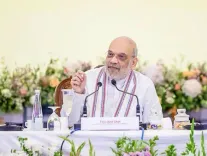
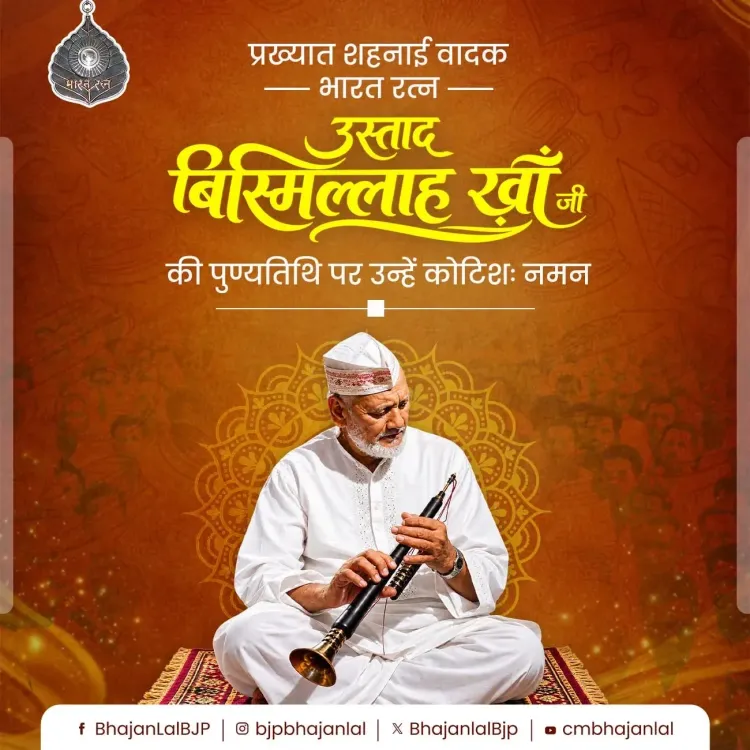
A shehnai that once heralded India's independence still echoes across generations. Rajasthan Chief Minister Bhajan Lal Sharma on Friday, 21 August 2026 paid homage to Bharat Ratna Ustad Bismillah Khan on his death anniversary, calling the legendary maestro's contribution to Indian classical music 'incomparable' and 'eternally inspiring'.
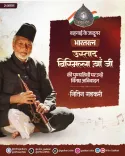
In his tribute post, CM Sharma wrote: 'प्रख्यात शहनाई वादक, भारत रत्न उस्ताद बिस्मिल्लाह ख़ाँ जी की पुण्यतिथि पर उन्हें कोटिशः नमन!' — 'Countless salutations to the renowned shehnai maestro, Bharat Ratna Ustad Bismillah Khan on his death anniversary!' He added that Khan's unparalleled role in bringing Indian classical music to global recognition would continue to inspire future generations in art, devotion, and excellence.
The man who made the shehnai immortal
Ustad Bismillah Khan, born in 1916 in Bihar's Dumraon and rooted deeply in Varanasi, transformed the shehnai — a reed instrument long associated with temple courtyards and wedding processions — into a concert-hall centrepiece recognised the world over. His was the voice that greeted India's first dawn of independence: on 15 August 1947, he performed at the Red Fort as the tricolour rose for the first time, a moment etched permanently into the nation's cultural memory.
In 2001, the Government of India conferred upon him the Bharat Ratna — the country's highest civilian honour — making him the first classical musician to receive the distinction. He passed away in 2006, leaving behind a legacy that redefined what a folk instrument could mean to a civilisation.
Why BJP chief ministers keep the shehnai's story alive
Tributes like this are not merely ceremonial. Indian political leaders, particularly from the BJP, have increasingly used the anniversaries of classical arts icons to reinforce a narrative of civilisational pride and composite cultural heritage. For a party that has placed India's artistic and spiritual traditions at the centre of its governance identity, invoking Bismillah Khan — a Muslim maestro who spent his life devoted to the ghats of Varanasi and its Hindu temple music — carries a pointed symbolic weight. The message: India's classical inheritance belongs to everyone, and the state stands as its guardian.
The shehnai does not need a political moment to justify its greatness. But political moments, well chosen, remind a distracted age that greatness existed — and demands to be carried forward.
Point of View
CM Sharma signals both reverence for India's composite artistic heritage and alignment with the party's broader effort to position the state as a custodian of traditional culture. The gesture is routine in form but carefully chosen in subject.
NationPress
21 Aug 2026
Frequently Asked Questions
When did Ustad Bismillah Khan pass away?
Ustad Bismillah Khan passed away in 2006 . He was born in 1916 in Dumraon, Bihar, and spent most of his life in Varanasi .
What is Ustad Bismillah Khan famous for?
He is celebrated as the greatest shehnai player in Indian history, credited with elevating the instrument from folk and ceremonial contexts to global concert stages. He also performed at India's first Independence Day ceremony at the Red Fort in 1947 .
Did Bismillah Khan receive the Bharat Ratna?
Yes. The Government of India conferred the Bharat Ratna — India's highest civilian honour — on Ustad Bismillah Khan in 2001 , making him the first classical musician to receive it.
Why did CM Bhajan Lal Sharma post about Bismillah Khan?
Rajasthan Chief Minister Bhajan Lal Sharma posted a tribute on 21 August 2026 to mark the death anniversary of Ustad Bismillah Khan , honouring his legacy in Indian classical music.
What instrument did Ustad Bismillah Khan play?
Ustad Bismillah Khan was a master of the shehnai , a traditional Indian reed instrument, which he transformed into a globally recognised classical instrument through decades of dedicated performance.