CM Bhajan Lal Highlights ₹1.44 Lakh Cr Investment Push in Rajasthan
Synopsis
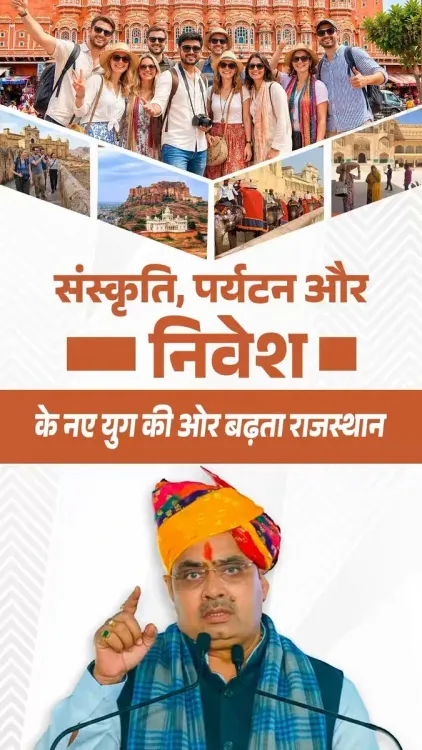
Rajasthan CM Bhajan Lal Sharma on June 14, 2026, cited ₹1,44,625 crore in investment proposals and spotlighted Border Tourism and the Maharana Pratap Tourist Circuit as pillars of the state's dual strategy to honour cultural heritage while driving modern economic growth.
Key Takeaways
Chief Minister Bhajan Lal Sharma posted on June 14, 2026 , framing Rajasthan 's growth around cultural pride and investment.
The state has received investment proposals worth ₹1,44,625 crore , cited as a milestone by the CM.
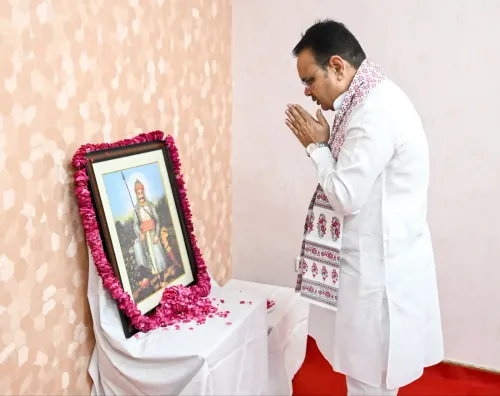
The Maharana Pratap Tourist Circuit links heritage sites associated with the 16th-century Mewar ruler to boost thematic tourism.
The Border Tourism initiative aims to develop infrastructure near Rajasthan 's international borders, targeting remote communities.
Bhajan Lal Sharma has served as Chief Minister since December 2023 , positioning heritage and investment as twin engines of growth.
Actual investment realisation and project rollout timelines remain the key metrics to watch going forward.
Rajasthan Chief Minister Bhajan Lal Sharma on Sunday, June 14, 2026, highlighted the state's dual pursuit of cultural pride and economic development, citing investment proposals worth ₹1,44,625 crore alongside tourism initiatives including Border Tourism and the Maharana Pratap Tourist Circuit.
Context
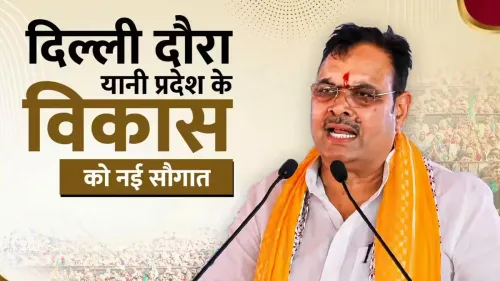
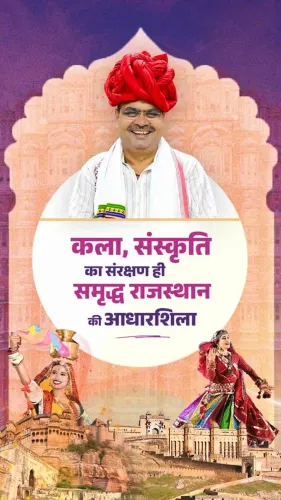
In a post on X, Chief Minister Sharma wrote — 'सांस्कृतिक गौरव और आधुनिक विकास की नई गाथा लिख रहा है हमारा राजस्थान!' ['Our Rajasthan is writing a new story of cultural pride and modern development!'] — framing the state's progress as a convergence of heritage and investment. He called on citizens to collectively build a 'strong and prosperous Rajasthan,' invoking both economic milestones and the state's historical identity.
The post was accompanied by a video and referenced specific policy initiatives, signalling a coordinated communication effort around the state government's development narrative heading into the latter half of 2026.
Policy Backdrop
Rajasthan, India's largest state by area, has long leveraged its heritage assets — forts, desert landscapes, and historical figures — as economic drivers. The Maharana Pratap Tourist Circuit connects sites associated with the 16th-century Mewar ruler Maharana Pratap, a figure of deep cultural significance in Rajasthan and across India. The circuit is part of a broader state strategy to develop thematic tourism routes that draw domestic and international visitors.
The Border Tourism initiative focuses on developing infrastructure near Rajasthan's international border areas, aiming to open frontier zones as tourist destinations while simultaneously boosting economic activity in otherwise remote communities. Both schemes sit within a wider pattern of successive state governments using tourism circuits as tools for balanced regional development.
The investment figure of ₹1,44,625 crore cited by Chief Minister Sharma refers to investment proposals received by the state — a metric commonly tracked following investor summits and industry outreach events that Rajasthan has hosted under the current administration, which took office in December 2023.
Stakeholders and Impact
The primary beneficiaries of the twin-track approach are investors and the tourism industry, which stand to gain from infrastructure development and policy support. Border communities — historically underserved in terms of economic opportunity — are a key target of the Border Tourism scheme, with the state positioning frontier zones as viable livelihood hubs.
For the broader labour market, large-scale investment proposals carry the potential for job creation across sectors, though the realisation of pledged investment into operational projects and employment remains contingent on implementation timelines and follow-through by both the state and private partners.
What's Next
Attention will now turn to the rollout timelines for the Maharana Pratap Tourist Circuit and Border Tourism infrastructure projects, as well as state budget allocations earmarked for their execution. The pace at which pledged investment proposals convert into ground-level activity will be a key indicator of the administration's delivery capacity. Follow-up investor engagement events or policy announcements are likely to serve as the next benchmarks for the state's development agenda.
Point of View
Weaving together cultural symbolism — centred on Maharana Pratap — with hard investment numbers to project an image of a state that is both rooted in identity and open for business. This dual messaging is a well-worn template in Indian state politics, but its effectiveness depends entirely on whether investment proposals translate into verifiable jobs and infrastructure. The emphasis on Border Tourism is also politically significant, signalling outreach to communities in strategically sensitive frontier districts that have historically felt economically marginalised. The broader arc here is the BJP-led government's effort to differentiate its tenure through scale and specificity — large figures and named circuits — ahead of the midpoint of its term.
NationPress
24 Sept 2026
Frequently Asked Questions
What is the ₹1,44,625 crore investment figure Rajasthan CM Bhajan Lal Sharma mentioned?
It refers to the total value of investment proposals received by Rajasthan, a figure cited by Chief Minister Bhajan Lal Sharma to highlight the state's attractiveness to investors since his government took office in December 2023.
What is the Maharana Pratap Tourist Circuit in Rajasthan?
The Maharana Pratap Tourist Circuit is a state initiative connecting heritage sites associated with the 16th-century Mewar ruler Maharana Pratap, designed to promote thematic tourism and boost visitor footfall across historically significant locations in Rajasthan.
What is Border Tourism in Rajasthan?
Border Tourism is a Rajasthan government scheme to develop tourism infrastructure near the state's international border areas, aiming to open frontier zones to visitors and create economic opportunities for border communities.
Who is Bhajan Lal Sharma and when did he become Chief Minister of Rajasthan?
Bhajan Lal Sharma is a BJP leader who was sworn in as Chief Minister of Rajasthan in December 2023 after the BJP's victory in the state assembly elections.
How is Rajasthan balancing cultural heritage with economic development?
The state is pursuing a dual strategy — promoting heritage-linked tourism circuits such as the Maharana Pratap Tourist Circuit and Border Tourism, while simultaneously attracting large-scale private investment to generate employment and drive regional growth.