CM Bhajan Lal Pledges Development of 7 Key Rajasthan Temples
Synopsis
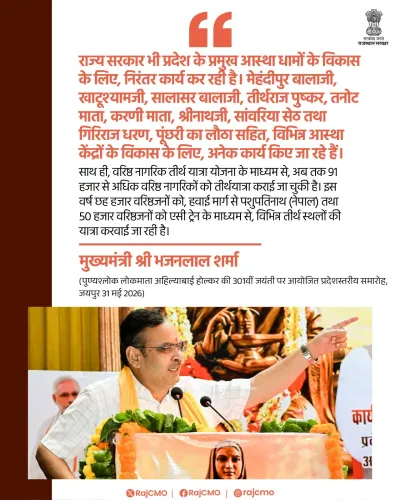
Rajasthan Chief Minister Bhajan Lal Sharma has publicly reaffirmed his government's commitment to the development of seven major pilgrimage sites — Mehandipur Balaji, Khatu Shyam Ji, Salasar Balaji, Pushkar Raj, Tanot Mata, Karni Mata, and Shrinath Ji — signalling continued state investment in religious tourism infrastructure.
Key Takeaways
CM Bhajan Lal Sharma named seven specific pilgrimage sites for comprehensive development and strengthening on 31 May 2026 .
The sites span multiple districts: Sikar, Churu, Ajmer, Bikaner, Jaisalmer , and the Nathdwara area of Rajsamand.
The Rajasthan Devasthan Department is the state's nodal body for managing temple infrastructure and maintenance.
The initiative mirrors BJP-governed states' broader strategy of linking temple corridor development with religious tourism and local economic growth.
Pilgrims, local businesses, and state tourism revenue are the primary stakeholders expected to benefit from upgraded facilities.
Budget allocations and project tenders for these sites in the coming fiscal cycle will be the key indicators of implementation.
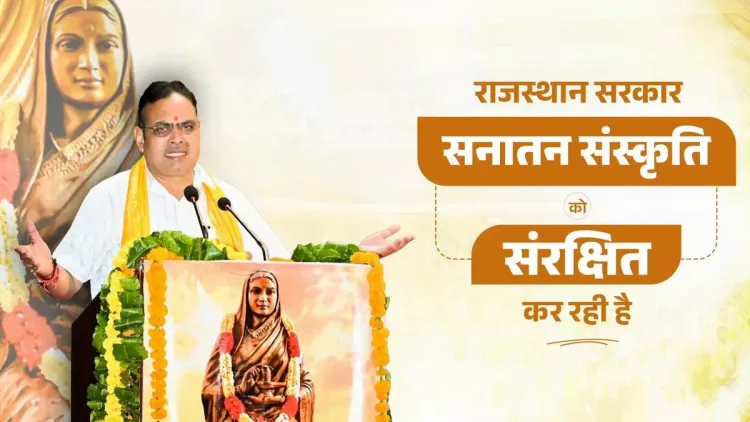
Rajasthan Chief Minister Bhajan Lal Sharma on Sunday, 31 May 2026, reaffirmed his government's commitment to the comprehensive development and strengthening of seven major religious sites across the state, naming them individually in a post on X.
In the post, written in Hindi, the Chief Minister stated: 'Hamari sarkar pradesh ke sabhi pramukh aastha kendron... ke samagra vikas aur sudridheekaran ke liye nirantar pratibaddhataa ke saath kaam kar rahi hai' — ('Our government is continuously working with commitment for the comprehensive development and strengthening of all major faith centres of the state'). The seven sites named are Mehandipur Balaji, Khatu Shyam Ji, Salasar Balaji, Pushkar Raj, Tanot Mata, Karni Mata, and Shrinath Ji.
Context
Rajasthan is home to some of India's most visited Hindu pilgrimage destinations, drawing tens of millions of devotees each year. The sites named by CM Sharma span several districts — from Sikar and Churu in the north to Bikaner in the west and Ajmer in the centre — representing the geographic and religious breadth of the state's pilgrimage economy.
The Rajasthan Devasthan Department, which has coordinated temple maintenance and infrastructure upgrades across the state since its formal expansion in the 2000s, is the nodal body for managing such development work at these shrines.
Policy Backdrop
The announcement fits into a wider pattern of BJP-governed states investing in temple corridor development and pilgrim infrastructure, mirroring initiatives seen in Uttar Pradesh and Madhya Pradesh. The approach links cultural heritage preservation with economic growth by improving visitor facilities and access roads around major shrines.
Khatu Shyam Ji in Sikar district and Salasar Balaji in Churu district are among Rajasthan's highest-footfall temples, both known for large annual fairs that strain existing infrastructure. Pushkar, in Ajmer district, holds the distinction of housing one of India's rare Brahma temples and hosts the internationally recognised Pushkar Camel Fair. Karni Mata in Bikaner draws both domestic pilgrims and international tourists, while Tanot Mata near the Pakistan border in Jaisalmer district carries strategic and cultural significance.
Stakeholders and Impact
Pilgrims, local priests, shopkeepers, and hospitality businesses in the vicinity of these shrines stand to benefit directly from any infrastructure upgrades. Improved roads, sanitation, and crowd-management facilities at high-density sites such as Khatu Shyam Ji and Salasar Balaji are perennial demands from devotee organisations and local elected representatives.
State tourism revenue is also a consideration: religious tourism is one of Rajasthan's largest visitor segments, and well-maintained pilgrimage circuits can extend average tourist stays and boost ancillary spending in local economies.
What's Next
Observers will watch the Rajasthan state budget allocations for the Devasthan Department and any new project tenders issued for the seven listed sites in the coming fiscal cycle as a measure of how the stated commitment translates into on-ground action. The Chief Minister's explicit enumeration of each site by name signals that individual project timelines and funding announcements may follow.
Point of View
Publicly naming seven high-footfall temples to reassure devotee communities and local economies that the BJP government remains invested in religious infrastructure. The move fits a well-established pattern among BJP-ruled states of using pilgrimage site upgrades as a bridge between cultural identity politics and tangible development delivery. By listing sites from geographically dispersed districts — ranging from the Pakistan border at Tanot to the Mewar heartland at Shrinath Ji — Sharma also signals statewide reach rather than regional favouritism. The real test will come when budget figures and project tenders are made public, converting a social media commitment into verifiable policy action.
NationPress
18 Oct 2026
Frequently Asked Questions
Which temples did CM Bhajan Lal Sharma mention for development in Rajasthan?
CM Bhajan Lal Sharma named seven temples: Mehandipur Balaji, Khatu Shyam Ji, Salasar Balaji, Pushkar Raj, Tanot Mata, Karni Mata, and Shrinath Ji, pledging comprehensive development and strengthening of all seven sites.
What is the Rajasthan Devasthan Department?
The Rajasthan Devasthan Department is the state government body responsible for the administration, maintenance, and infrastructure development of major Hindu temples and religious sites across Rajasthan.
Where is Khatu Shyam Ji temple located?
Khatu Shyam Ji temple is located in Sikar district of Rajasthan and is one of the state's most visited pilgrimage sites, attracting millions of devotees each year.
Why is Tanot Mata temple significant?
Tanot Mata temple in Jaisalmer district holds both religious and strategic significance as it is situated near the India-Pakistan border and is closely associated with the Indian Army, particularly the 1971 war.
How does Rajasthan's temple development policy compare to other BJP states?
Rajasthan's focus on pilgrim infrastructure mirrors similar initiatives in Uttar Pradesh and Madhya Pradesh, where BJP governments have developed temple corridors to boost religious tourism and support local economies around major shrines.