CM Bhajanlal Addresses Rajasthan Municipal Workers' Convention
Synopsis
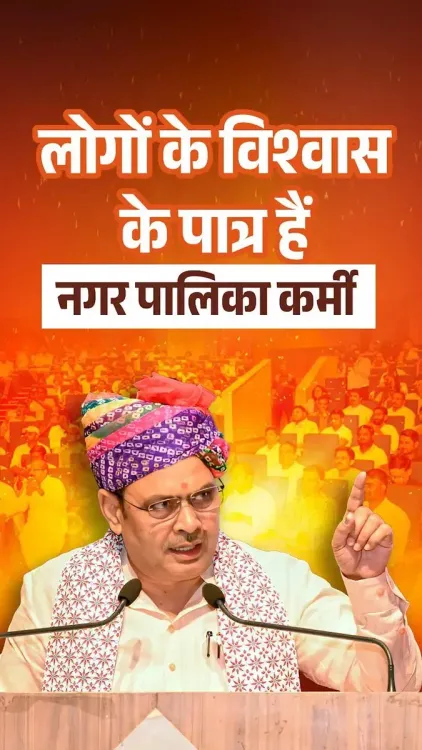
Chief Minister Bhajanlal Sharma addressed the ninth grand convention of the Rajasthan Nagar Palika Karmchari Federation in Jaipur on 30 May 2026, calling municipal employees the trusted link between the state and its citizens and stressing their heightened responsibility.
Key Takeaways
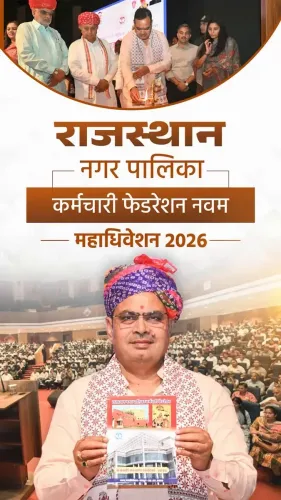
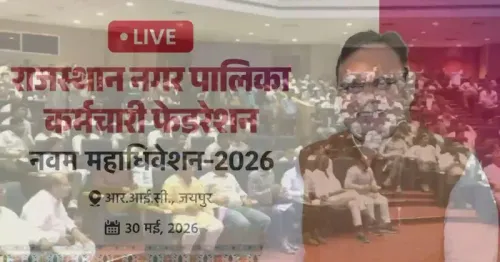
CM Bhajanlal Sharma addressed the ninth Mahadhiveshan of the Rajasthan Nagar Palika Karmchari Federation on 30 May 2026 .
The event was held at the Rajasthan International Centre, Jaipur .
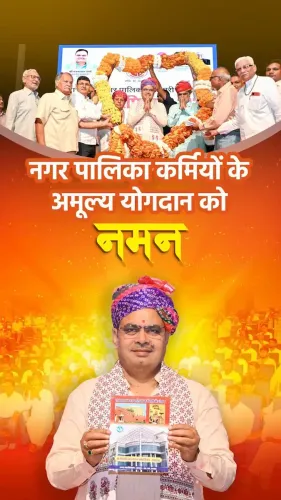
The Chief Minister described municipal employees as the 'link' in whom the public places its trust.
He emphasised that this public trust increases the responsibility of the municipal workforce.
The federation represents employees of urban local bodies — municipal corporations, councils, and town committees — across Rajasthan .
The address continues a pattern of direct state-government engagement with municipal employee federations under the 74th Constitutional Amendment framework.
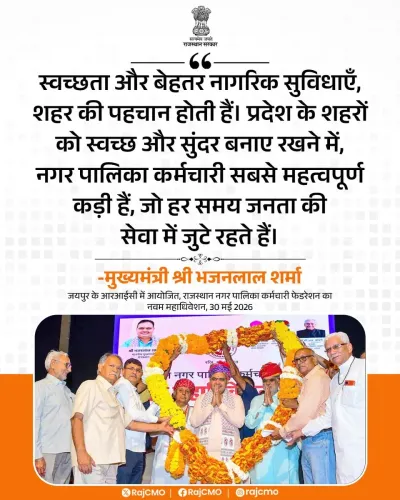
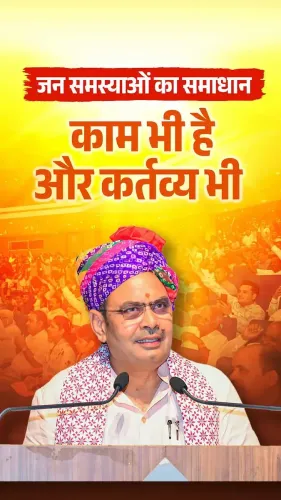
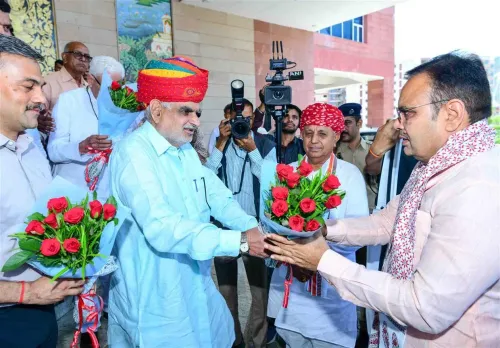
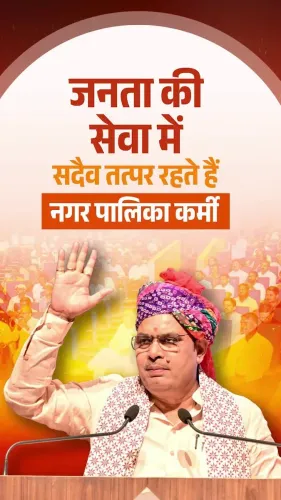
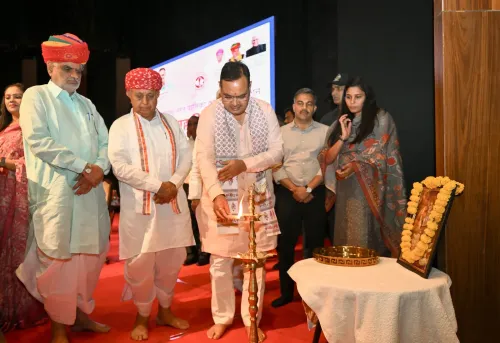
Chief Minister Bhajanlal Sharma addressed the ninth grand convention (Navam Mahadhiveshan) of the Rajasthan Nagar Palika Karmchari Federation at the Rajasthan International Centre, Jaipur, on Saturday, 30 May 2026. Speaking to an assembly of municipal employees from across the state, the Chief Minister underscored the central role these workers play in sustaining public trust in local governance.
What the Chief Minister Said
Addressing the gathering, CM Bhajanlal Sharma stated — 'Nagar Palika karmchari wo kadi hai, jin par log vishwas karte hain' ['Municipal employees are the link in whom the people place their trust'] — and added that this trust makes their collective responsibility all the greater. The remark was directed at frontline municipal workers who handle sanitation, public health, and civic infrastructure daily.
The Chief Minister's choice of the word 'kadi' (link or chain) is significant: it frames municipal employees not as back-office functionaries but as the connective tissue between the state and its citizens, a framing that carries both motivational and accountability dimensions.
Context
The Rajasthan Nagar Palika Karmchari Federation is the principal state-level body representing employees of urban local governments — municipal corporations, councils, and town committees — across Rajasthan. Its periodic mahadhiveshans (grand conventions) bring together delegates from dozens of urban local bodies to deliberate on service conditions, workload, and policy priorities.
The ninth edition of this convention marks a significant moment for the federation, coinciding with the BJP government's ongoing push to strengthen urban service delivery under CM Sharma, who took office in December 2023. Holding the event at the Rajasthan International Centre — a prominent convention facility in Jaipur — signals the administration's intent to treat the engagement with institutional seriousness.
Policy Backdrop
Urban local bodies in Rajasthan derive their constitutional standing from the 74th Constitutional Amendment, enacted in the 1990s, which devolved a defined set of powers and functions to municipalities. The amendment placed the onus on state governments to ensure that these bodies are adequately staffed and empowered to deliver urban services.
Successive Rajasthan governments have maintained a tradition of direct engagement with municipal employee federations, recognising that the quality of urban service delivery depends heavily on the morale, capacity, and working conditions of frontline staff. CM Sharma's address continues this pattern while reinforcing the current administration's emphasis on accountability at the grassroots level of governance.
Stakeholders and Impact
The immediate audience — municipal employees across Rajasthan's urban local bodies — stands to benefit if the Chief Minister's address translates into concrete policy follow-through, whether on service rules, pay structures, or capacity-building programmes. Urban residents, in turn, are the end-beneficiaries of any improvement in municipal workforce performance.
Federation representatives are likely to use the convention platform to place demands related to regularisation of contractual staff, pending pay revisions, and workload rationalisation before the state government. The Chief Minister's presence lends political weight to these discussions and raises the prospect of administrative action ahead of the next Rajasthan budget or assembly session.
What's Next
Observers will watch for follow-up announcements on municipal employee service rules or pay revisions in the coming weeks. The convention's resolutions, if formally submitted to the state government, could feed into the urban local body policy agenda for the remainder of CM Sharma's term. The address also sets a benchmark: having publicly linked municipal employees to public trust, the administration will face scrutiny on whether that rhetorical commitment is backed by administrative and financial support for the workforce.
Point of View
The CM is implicitly raising the accountability bar while simultaneously signalling that the BJP government values the workforce that delivers urban services on the ground. This fits a broader pattern in Indian state politics where ruling parties use such conventions to shore up goodwill among organised government employee groups, who carry influence in local elections. The real test will be whether the rhetoric is followed by tangible policy action — on pay, service rules, or staffing — before the next electoral cycle.
NationPress
19 Sept 2026
Frequently Asked Questions
What did CM Bhajanlal Sharma say at the Rajasthan municipal employees convention?
CM Bhajanlal Sharma said that municipal employees are the link in whom the people place their trust, and that this trust makes their responsibility all the greater.
What is the Rajasthan Nagar Palika Karmchari Federation?
It is the state-level federation representing employees of urban local bodies — municipal corporations, councils, and town committees — across Rajasthan.
Where was the ninth Mahadhiveshan of the Rajasthan Nagar Palika Karmchari Federation held?
The convention was held at the Rajasthan International Centre in Jaipur on 30 May 2026.
Who is Bhajanlal Sharma?
Bhajanlal Sharma is the Chief Minister of Rajasthan, representing the Bharatiya Janata Party. He assumed office in December 2023.
What policy changes could follow CM Bhajanlal's address to municipal workers?
Observers are watching for potential announcements on municipal employee service rules, pay revisions, or urban local body capacity-building measures in upcoming budget or assembly sessions.