CM Bhajanlal invokes Ahilyabai Holkar to champion girls' education
Synopsis
The Chief Minister's Office of Rajasthan invoked the legacy of 18th-century ruler Ahilyabai Holkar on 1 June 2026, framing quality education and self-reliance for girls as the true fulfilment of her ideals, in a post addressed to CM Bhajanlal Sharma under the 'Our Pioneering Rajasthan' campaign.
Key Takeaways
The Chief Minister's Office of Rajasthan posted on 1 June 2026 invoking Lokamata Ahilyabai Holkar to champion girls' education.
The post calls providing daughters 'quality education and opportunities to become self-reliant' the true following of Ahilyabai Holkar's ideals.
The message was addressed to CM Bhajanlal Sharma , who has led Rajasthan since December 2023 .
Rajasthan runs the Mukhyamantri Rajshree Yojana (2016) and participates in the national Beti Bachao Beti Padhao programme (2015) to support girls' education.
The post was tagged under #आपणो_अग्रणी_राजस्थान ('Our Pioneering Rajasthan'), the state government's broader governance campaign.
Upcoming budget allocations for girls' secondary and vocational education in Rajasthan will be a key indicator of follow-through.
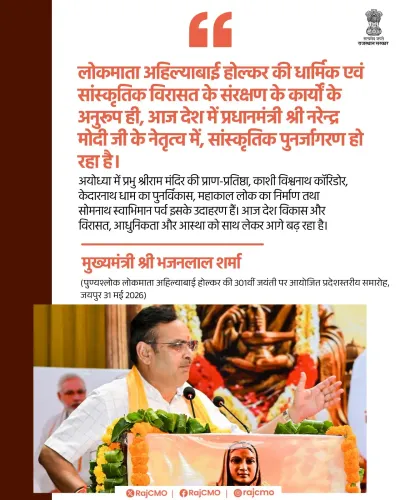
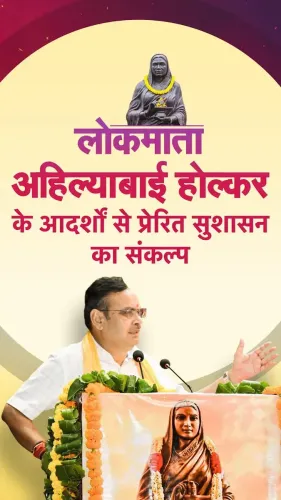
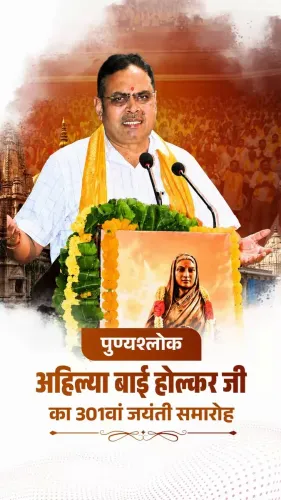
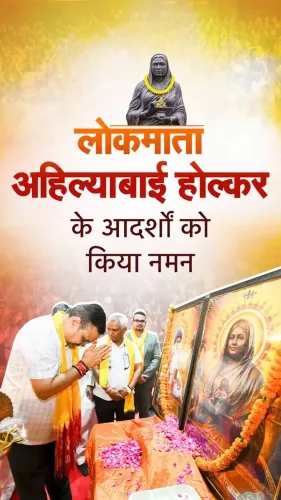
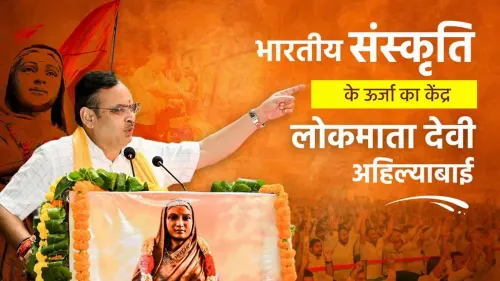
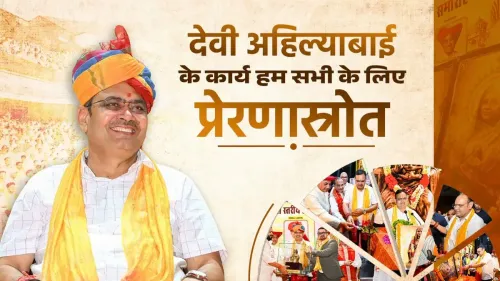
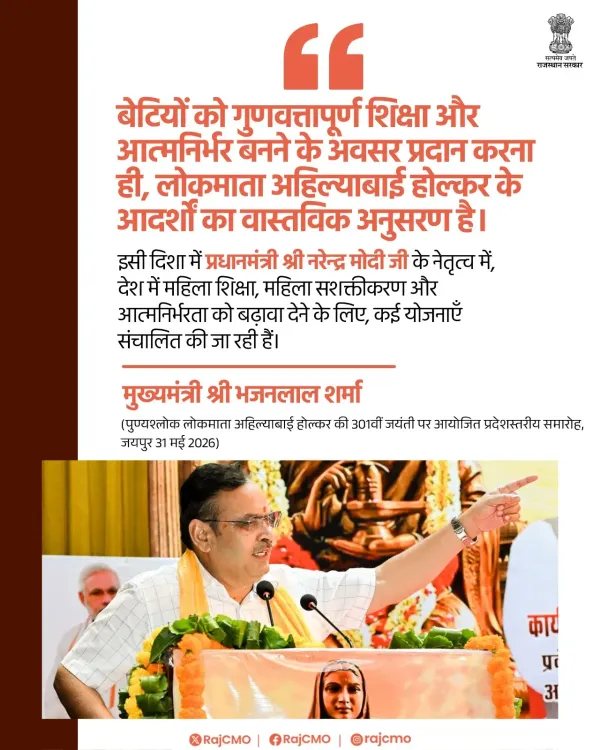
The Chief Minister's Office of Rajasthan, on behalf of Chief Minister Bhajanlal Sharma, posted on Monday, 1 June 2026, invoking the legacy of 18th-century ruler Lokamata Ahilyabai Holkar to reaffirm the state government's commitment to quality education and economic empowerment for girls across Rajasthan.
The post, shared under the hashtag #आपणो_अग्रणी_राजस्थान (meaning 'Our Pioneering Rajasthan'), states in Hindi: 'Providing daughters with quality education and opportunities to become self-reliant is the true following of the ideals of Lokamata Ahilyabai Holkar.' The message was addressed directly to CM Bhajanlal Sharma, signalling an official government position rather than a personal remark.
Context
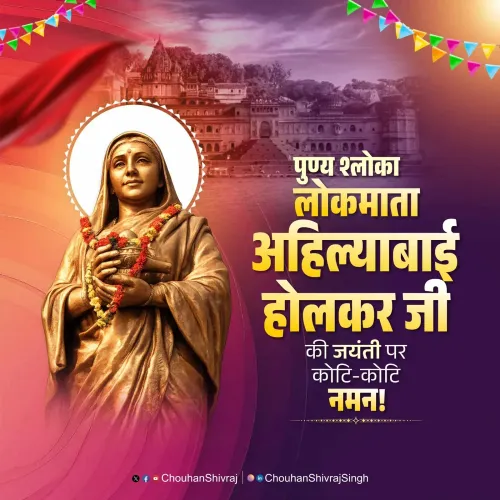
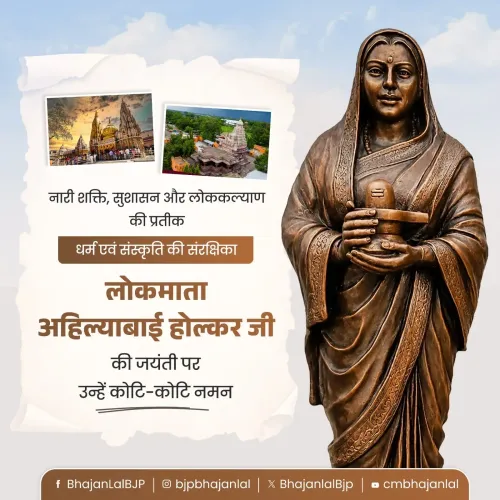
Ahilyabai Holkar (1725–1795) was the ruler of the Malwa kingdom and is widely regarded as one of India's most enlightened historical administrators. She is remembered for building temples, rest-houses, and wells across the subcontinent, for championing the rights of widows, and for fostering learning and commerce in her domains. Her birth anniversary is observed nationally, and successive governments have invoked her name in the context of women's welfare and education. By anchoring its messaging in her legacy, the Chief Minister's Office of Rajasthan frames the state's push for girls' education not merely as a policy goal but as a moral and civilisational imperative rooted in Indian tradition.Policy Backdrop
Rajasthan has been a key implementation state for the national Beti Bachao Beti Padhao programme, launched in 2015, which targets improved child sex ratios and expanded access to education and health services for girls. At the state level, the Mukhyamantri Rajshree Yojana, introduced in 2016, provides tiered financial support linked to the birth, immunisation, and school enrolment of girl children, incentivising families to keep daughters in education through secondary level. The BJP-led state government, in office since December 2023, has positioned female education and self-reliance as central themes of its governance agenda. Statements of this nature from the Chief Minister's Office typically accompany or precede budget reviews, scheme expansions, or policy announcements targeting adolescent girls and young women.Stakeholders and Impact
The primary beneficiaries of the policy direction signalled in this post are girl students and young women in Rajasthan, particularly those in rural and semi-urban areas where secondary enrolment and vocational training access remain uneven. Self-help groups, skill development centres, and school-level administrators are among the institutional stakeholders who would operationalise any expanded programmes. The invocation of Ahilyabai Holkar also carries symbolic weight for communities that regard her as a patron figure, potentially broadening the social acceptance of girls' education in conservative pockets of the state. Analysts note that BJP-governed states have increasingly used historical women rulers as cultural anchors for contemporary welfare messaging, seeking to build consensus across ideological lines.What's Next
Attention will now turn to Rajasthan's upcoming budget allocations for girls' secondary and vocational education, and to any formal announcements expanding existing schemes or launching new self-help group or skill-development initiatives targeting adolescent girls. If this post signals a forthcoming policy move, details are expected to emerge through official government communications or legislative announcements. The broader trajectory of the #आपणो_अग्रणी_राजस्थान campaign will also be watched as an indicator of the government's electoral and governance messaging priorities.Point of View
Historicising women's empowerment through figures like Holkar serves a dual purpose: it signals ideological continuity with Indian civilisational values while positioning the party as the natural custodian of female welfare. The timing, ahead of potential budget or scheme announcements, suggests this is as much a scene-setter as a standalone statement. Whether the rhetoric translates into measurable increases in girls' secondary enrolment or vocational funding will determine its lasting political and policy weight.
NationPress
19 Sept 2026
Frequently Asked Questions
What did the Rajasthan Chief Minister's Office post about girls' education?
On 1 June 2026, the Chief Minister's Office of Rajasthan posted that providing daughters with quality education and opportunities to become self-reliant is the true following of the ideals of Lokamata Ahilyabai Holkar, addressing the message to CM Bhajanlal Sharma.
Who was Ahilyabai Holkar and why is she relevant to education?
Ahilyabai Holkar (1725–1795) was the ruler of the Malwa kingdom, celebrated for administrative reforms, support for widows, and promotion of learning. She is frequently invoked by Indian governments as a symbol of women's empowerment and enlightened governance.
What schemes does Rajasthan have for girls' education?
Rajasthan implements the national Beti Bachao Beti Padhao programme (launched 2015) and the state-level Mukhyamantri Rajshree Yojana (launched 2016), which provides financial support tied to the birth, immunisation, and school enrolment of girl children.
Who is Bhajanlal Sharma and when did he become Chief Minister of Rajasthan?
Bhajanlal Sharma is a BJP leader who became Chief Minister of Rajasthan in December 2023 following the party's victory in the state assembly elections.
What does the hashtag Aapno Agrani Rajasthan mean?
The hashtag #आपणो_अग्रणी_राजस्थान translates from Rajasthani/Hindi as 'Our Pioneering Rajasthan' and is used by the state government to brand its governance and development messaging.