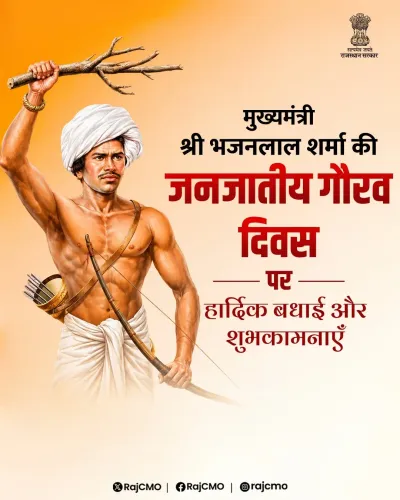
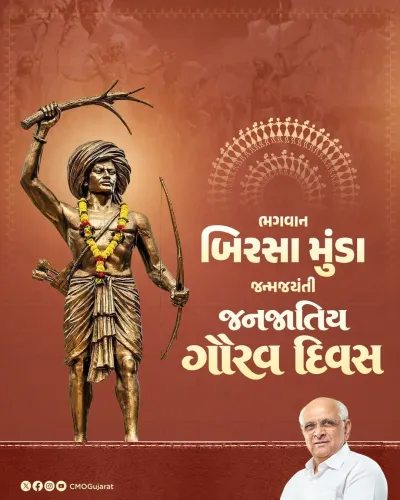
CM Bhajanlal Marks Birsa Munda's 151st Birth Anniversary
Synopsis
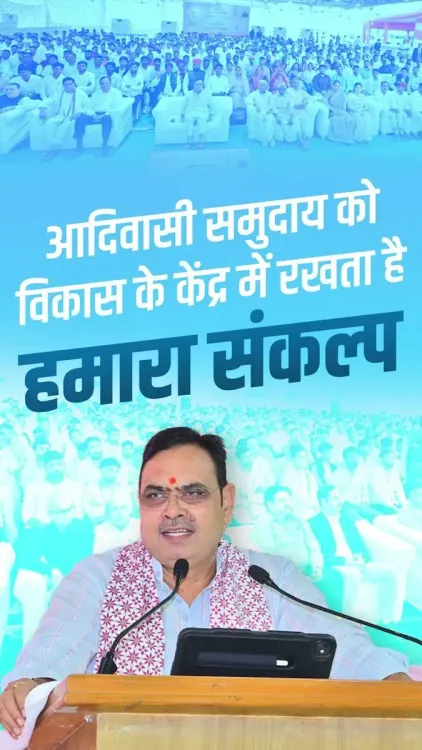
Rajasthan CM Bhajanlal Sharma addressed a Janjatiya Gaurav Divas programme on Birsa Munda's 151st birth anniversary, spotlighting PM Modi's 'Sabka Saath' pledge and the Dharti Aaba Janjatiya Gram Utkarsh Abhiyan aimed at India's most remote tribal villages.
Key Takeaways
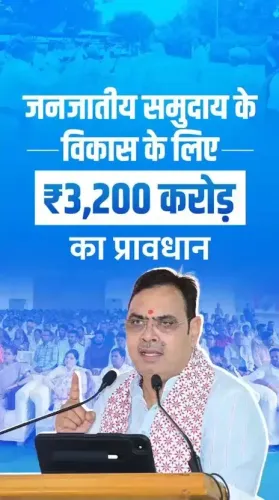
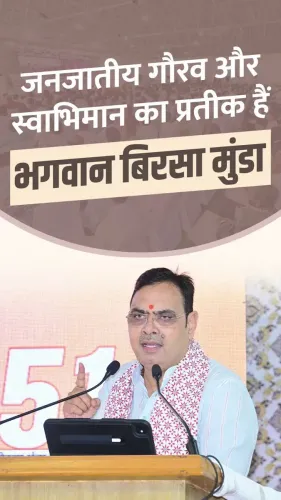
CM Bhajanlal Sharma addressed the Janjatiya Gaurav Divas programme at his official residence in Jaipur on November 16, 2026 .
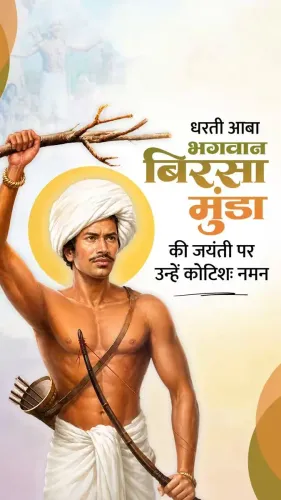
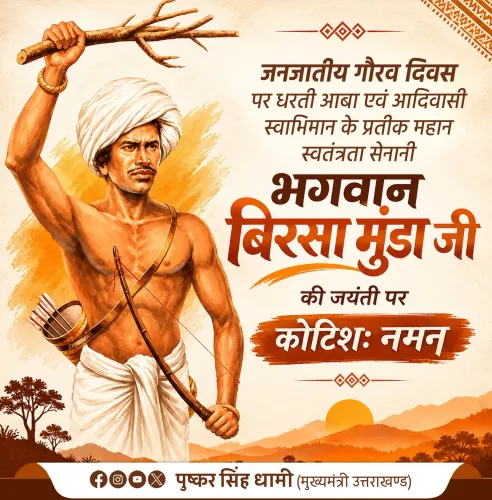
The event marked the 151st birth anniversary of tribal freedom fighter Birsa Munda , revered as Dharti Aaba .
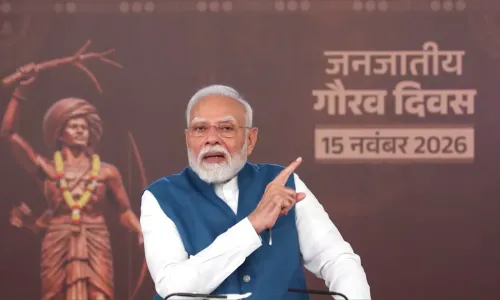
Janjatiya Gaurav Divas was instituted by the Government of India in 2021 on November 15 each year.
CM Sharma cited PM Modi's 'Sabka Saath, Sabka Vikas, Sabka Vishwas, Sabka Prayas' mantra as the guiding framework for tribal welfare.
The Dharti Aaba Janjatiya Gram Utkarsh Abhiyan was highlighted as the key central scheme for reaching remote and deprived tribal habitations.
Rajasthan's tribal population is concentrated in districts including Dungarpur, Banswara, and Udaipur , making ground-level implementation the key test.
On the 151st birth anniversary of tribal icon Birsa Munda, Rajasthan Chief Minister Bhajanlal Sharma convened a Janjatiya Gaurav Divas (Tribal Pride Day) programme at his official residence in Jaipur on Monday, November 16, 2026 — bringing the state's most historically marginalised communities to the centre of the government's agenda.
Birsa Munda's Legacy and the National Day Behind It
Known reverentially as Dharti Aaba — 'Father of the Earth' — Birsa Munda was a 19th-century tribal freedom fighter and folk hero whose armed resistance against colonial land encroachment made him a defining symbol for India's Scheduled Tribe communities. The Government of India instituted Janjatiya Gaurav Divas in 2021, designating November 15 as an annual day of recognition for tribal culture, history, and contribution to the national freedom struggle. Rajasthan's programme, held a day later at the Chief Minister's residence, signals the state government's formal alignment with that national observance.
Modi's 'Sabka Saath' Pledge and the Utkarsh Abhiyan on the Ground
Addressing the gathering, CM Sharma framed the state's tribal welfare work around Prime Minister Narendra Modi's governing mantra — 'Sabka Saath, Sabka Vikas, Sabka Vishwas, Sabka Prayas' ('Together with all, development for all, trust of all, effort of all') — arguing that it places tribal communities at the very core of India's development model. He specifically highlighted the Dharti Aaba Janjatiya Gram Utkarsh Abhiyan, a central initiative designed to push development benefits into the most remote and deprived tribal villages that routine schemes often fail to reach. The abhiyan takes its name from Birsa Munda himself, underscoring the symbolic thread the Centre has woven between the icon's legacy and its current welfare architecture.
Rajasthan is home to a substantial Scheduled Tribe population concentrated in its southern and eastern districts — Dungarpur, Banswara, Udaipur, and parts of the Hadoti belt — making the rollout of such a scheme a live political and administrative test for the BJP government that took charge in December 2023.
Routine Observance or a Signal for Tribal Districts?
Events like these serve a dual function: they honour a cultural calendar that tribal communities hold dear, and they give state governments a visible platform to claim ownership of central welfare programmes. What will matter beyond the ceremony is whether Rajasthan's tribal districts see accelerated implementation — timely fund release, village-level infrastructure, and last-mile delivery — under the Utkarsh Abhiyan. That is the metric against which Monday's words at the Chief Minister's residence will ultimately be judged.
Point of View
CM Sharma is signalling continuity between Jaipur and Delhi on tribal policy, reinforcing the narrative of a unified BJP development architecture. The real political weight, however, shifts quickly from ceremony to implementation: Rajasthan's tribal-belt constituencies in the south and east have historically been competitive, and visible delivery on the Utkarsh Abhiyan could prove electorally consequential. The Janjatiya Gaurav Divas platform thus functions as both tribute and accountability moment — measuring words against ground-level outcomes.
NationPress
16 Nov 2026
Frequently Asked Questions
What is Janjatiya Gaurav Divas and when is it observed?
Janjatiya Gaurav Divas is a national day instituted by the Government of India in 2021 and observed on November 15 each year to mark the birth anniversary of tribal freedom fighter Birsa Munda and celebrate India's tribal culture and heritage.
Who is Birsa Munda and why is he called Dharti Aaba?
Birsa Munda was a 19th-century tribal leader and freedom fighter who led armed resistance against colonial land encroachment. He is called Dharti Aaba — meaning 'Father of the Earth' — by tribal communities as a mark of deep reverence for his role as a protector of their rights and land.
What is the Dharti Aaba Janjatiya Gram Utkarsh Abhiyan?
The Dharti Aaba Janjatiya Gram Utkarsh Abhiyan is a central government initiative named after Birsa Munda, designed to deliver development benefits — infrastructure, services, and welfare — specifically to the most remote and deprived tribal villages that conventional schemes often fail to reach.
What did CM Bhajanlal Sharma say at the Janjatiya Gaurav Divas event in Rajasthan?
CM Bhajanlal Sharma addressed the programme at his official residence in Jaipur on November 16, 2026 , stating that PM Modi's 'Sabka Saath, Sabka Vikas, Sabka Vishwas, Sabka Prayas' pledge places tribal communities at the centre of development, and highlighting the Dharti Aaba Janjatiya Gram Utkarsh Abhiyan as the key vehicle for reaching marginalised tribal habitations.
Which tribal districts in Rajasthan are most affected by central tribal welfare schemes?
Rajasthan's tribal population is largely concentrated in southern and eastern districts including Dungarpur, Banswara, Udaipur , and parts of the Hadoti belt — the primary target regions for schemes like the Dharti Aaba Janjatiya Gram Utkarsh Abhiyan.