CM Bhajanlal lays foundation for 115 temple restorations in Sanganer
Synopsis
Chief Minister Bhajanlal Sharma visited Sanganer's Tripolia Balaji Temple on 24 June 2026 and laid the foundation for beautification and restoration of 115 religious sites in the area, including the Sanghi Ji Jain Temple and Sanga Baba Temple, under the state's urban development initiative.
Key Takeaways
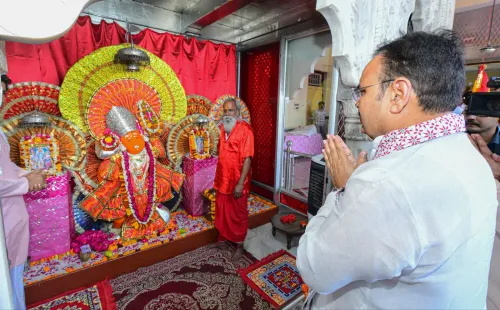
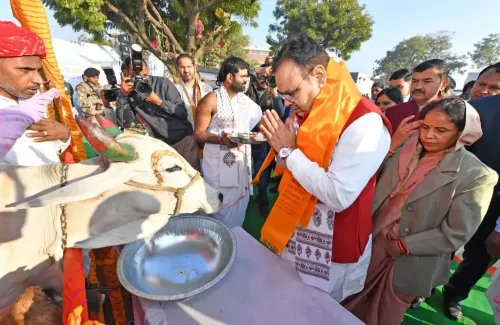
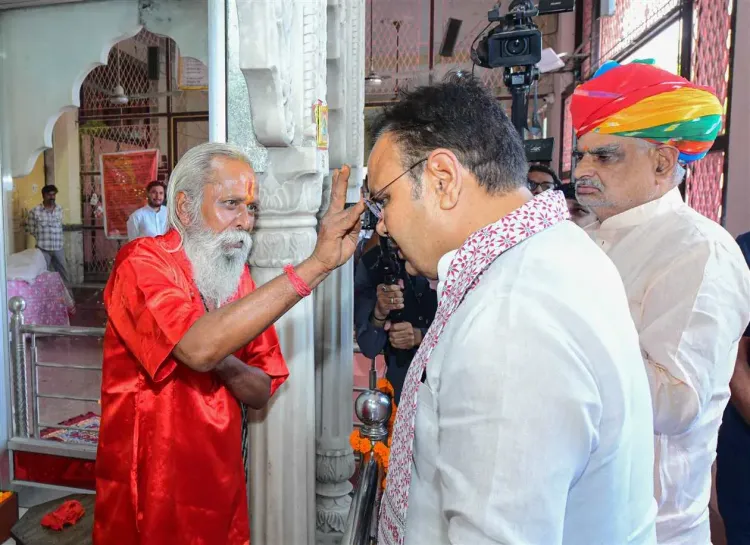
CM Bhajanlal Sharma offered prayers at the ancient Tripolia Balaji Temple in Sanganer, Jaipur on 24 June 2026 .
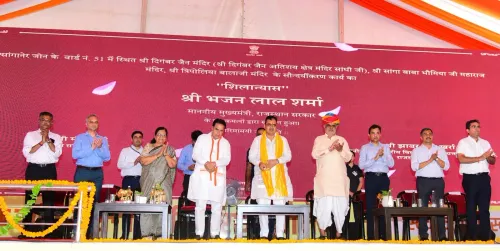
He laid foundation stones for beautification and restoration of 115 religious sites across the Sanganer area.
Notable sites included in the project are the Sanghi Ji Jain Temple and the Sanga Baba Temple .
Urban Development Minister (Independent Charge) Jhabar Singh Kharra was present at the ceremony.
The initiative is routed through the Urban Development and Self-Government Department of Rajasthan.
The project aims to support both cultural heritage preservation and religious tourism in the Jaipur region.
Chief Minister Bhajanlal Sharma visited the ancient Tripolia Balaji Temple in Sanganer, Jaipur, on Wednesday, 24 June 2026, offering prayers for the prosperity and welfare of Rajasthan. During the same visit, he laid the foundation stone for beautification and restoration works at 115 religious sites across the Sanganer area, including the Sanghi Ji Jain Temple and the Sanga Baba Temple.
Context
The Chief Minister's Office of Rajasthan announced that Sharma performed rituals at the Tripolia Balaji Temple — vidhi-vidhan se pooja-archana (worship conducted according to prescribed rites) — and prayed for pradesh ki khushhali aur samridhi (the happiness and prosperity of the state). The event drew a large number of devotees, local representatives, and officials to Sanganer, a historic town on the southern fringe of Jaipur city known for its cluster of ancient temples.
Urban Development and Self-Government Minister (Independent Charge) Jhabar Singh Kharra was present at the ceremony alongside other elected representatives and senior government officials.
Policy Backdrop
The restoration drive covering 115 religious sites falls under the state's urban development mandate, which has periodically channelled funds toward the upkeep of heritage places of worship. Rajasthan governments across administrations have executed similar temple-restoration programmes since at least the 2010s, framing them as cultural-heritage and religious-tourism initiatives.
The current BJP government, which took office in December 2023 under Chief Minister Bhajanlal Sharma, has positioned the preservation of religious and cultural sites as a visible plank of its governance agenda. Foundation-stone ceremonies of this scale — covering over a hundred sites in a single announcement — are typically routed through the Urban Development Department and executed in phases.
Stakeholders and Impact
Residents of Sanganer and the wider Jaipur district stand to be the most immediate beneficiaries, particularly the large devotee communities that frequent these temples. The inclusion of the Sanghi Ji Jain Temple alongside Hindu shrines signals an effort to address the religious infrastructure needs of both communities in the area.
Local traders and hoteliers linked to pilgrimage footfall are also likely to benefit if the restoration works enhance the area's appeal as a religious-tourism destination — a pattern observed in other Rajasthan temple-town upgrades in recent years.
What's Next
Attention will now turn to the release of project budgets and the implementation timeline for the 115-site restoration package. Progress on these works is expected to be tracked through the Urban Development Department and may feature in future Rajasthan assembly sessions or urban development reviews. Any staggered funding releases or contractor appointments will indicate how quickly ground-level work begins at sites beyond the high-profile Tripolia Balaji and Sanghi Ji Jain Temple locations.
Point of View
The administration maximises political visibility while signalling inclusivity. The presence of Urban Development Minister Jhabar Singh Kharra underlines that these announcements are institutionalised through departmental machinery, not just ceremonial. The real test will be whether budget allocations and execution timelines follow at the pace the scale of the announcement implies.
NationPress
22 Sept 2026
Frequently Asked Questions
Which temples did CM Bhajanlal Sharma visit in Sanganer?
CM Bhajanlal Sharma visited the Tripolia Balaji Temple in Sanganer, Jaipur, where he offered prayers. He also presided over the foundation-stone ceremony covering 115 religious sites, including the Sanghi Ji Jain Temple and Sanga Baba Temple.
How many religious sites will be restored under the Sanganer project?
The Rajasthan government announced restoration and beautification works for 115 religious sites in the Sanganer area of Jaipur under this initiative.
Who is Jhabar Singh Kharra and what is his role?
Jhabar Singh Kharra is the Rajasthan Minister holding independent charge of the Urban Development and Self-Government departments. He was present at the Sanganer foundation-stone ceremony alongside CM Bhajanlal Sharma.
What department is overseeing the Sanganer temple restoration project?
The Urban Development and Self-Government Department of Rajasthan is overseeing the restoration and beautification of the 115 religious sites in Sanganer.
Why is Sanganer significant for religious tourism in Rajasthan?
Sanganer is a historic town in Jaipur district known for a dense cluster of ancient Hindu and Jain temples. Its proximity to Jaipur city makes it an accessible pilgrimage destination, and state-funded restoration works are intended to enhance its appeal for religious tourism.