CM Bhajanlal meets Amit Shah, flags Yamuna pact and border security
Synopsis
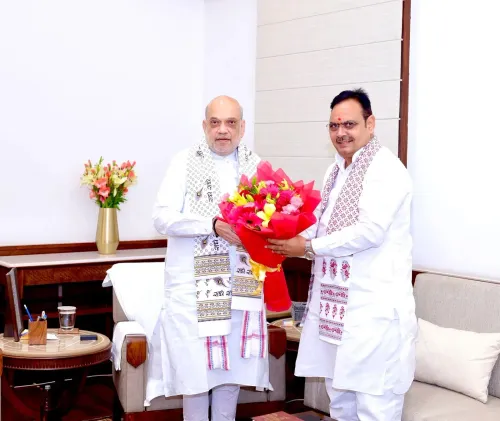
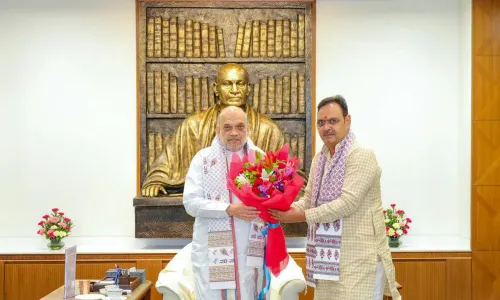
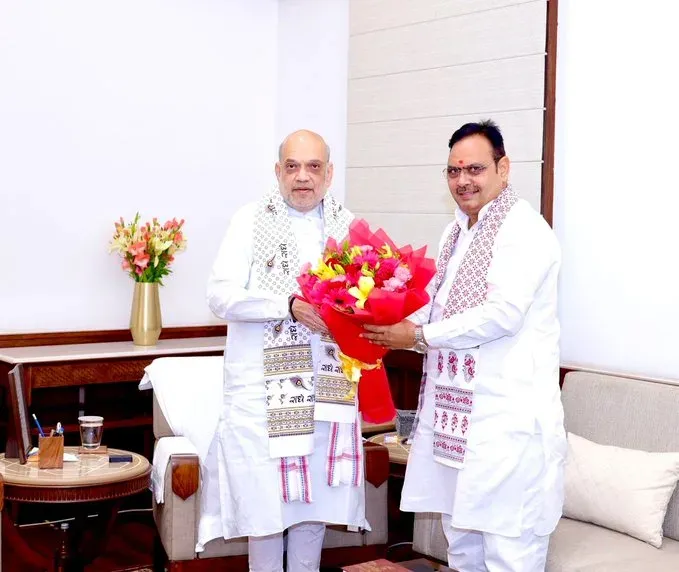
Rajasthan CM Bhajanlal Sharma met Union Home Minister Amit Shah in New Delhi on August 6, 2026, updating him on state development schemes, thanking him for the Yamuna water agreement, and discussing cooperative sector reforms and border security.
Key Takeaways
CM Bhajanlal Sharma held a courtesy meeting with Union Minister Amit Shah in New Delhi on August 6, 2026 .
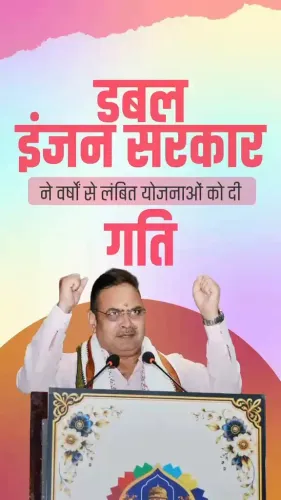
Sharma briefed Shah on the progress of schemes and development projects under the BJP's 'double-engine government' model in Rajasthan.
Sharma formally thanked Shah for facilitating the Yamuna water agreement , which affects irrigation and water access in Rajasthan.
Discussions covered strengthening Rajasthan's cooperative sector , with Shah holding the dedicated Union Cooperation portfolio since 2021.
Border district development and tightening security along Rajasthan's Pakistan frontier were also on the agenda.
Rajasthan's Chief Minister carried a full agenda to New Delhi on Thursday, August 6, 2026 — and left with a thank-you delivered in person. Chief Minister Bhajanlal Sharma called on Union Home and Cooperation Minister Amit Shah in the capital, briefing him on the state government's development push and formally expressing gratitude for the Yamuna water agreement — a deal with direct consequences for millions of Rajasthanis.
What Bhajanlal brought to the table
The meeting covered three distinct tracks. First, Sharma updated Shah on the progress of schemes and infrastructure projects running under what the BJP calls the 'double-engine government' model — the alignment of a BJP state administration with the BJP-led Centre. The logic: fewer friction points, faster clearances, shared political accountability for outcomes on the ground.
Second, and notably, Sharma thanked Shah personally for the Yamuna water agreement. Rajasthan has long sought a larger share of Yamuna waters, and any central facilitation of an inter-state arrangement on this carries real weight for irrigation and drinking water access across the state's eastern districts.
Cooperative sector and the Pakistan border
The third track was two-pronged: strengthening Rajasthan's cooperative sector and accelerating holistic development alongside tighter security in the state's border districts. Shah, who holds the Cooperation portfolio in addition to Home Affairs — a ministry created in 2021 specifically to modernise India's cooperative ecosystem — is the natural interlocutor on both counts. On border security, Rajasthan's long frontier with Pakistan has historically demanded sustained central-state coordination, and that conversation clearly remains live.
The शिष्टाचार भेंट ('courtesy call') framing in the official post signals a structured bilateral update rather than a crisis meeting — routine centre-state coordination of the kind BJP-governed states have institutionalised since December 2023, when Sharma took office after the assembly elections.
The 'double-engine' model in practice
Meetings like this one are the visible machinery of the double-engine pitch: a state chief minister flying to Delhi, presenting a progress report, flagging asks, and walking out with political goodwill and — ideally — faster central approvals. The Yamuna water agreement gratitude is a signal that at least one significant ask has already been delivered. Whether the cooperative sector push and border infrastructure requests yield concrete projects is the question to watch in the weeks ahead.
Point of View
And the BJP needs to show tangible wins ahead of any future electoral cycle. The simultaneous push on cooperative sector reform and border security reflects Rajasthan's dual vulnerability — economic underdevelopment in rural cooperative networks and a long, sensitive international frontier — and suggests Sharma is consolidating his governance agenda through central channels rather than state-level improvisation.
NationPress
6 Aug 2026
Frequently Asked Questions
Why did CM Bhajanlal Sharma meet Amit Shah in Delhi?
Sharma called on Shah to update him on Rajasthan's development schemes, thank him for the Yamuna water agreement, and discuss cooperative sector reforms and border security.
What is the Yamuna water agreement and why does it matter for Rajasthan?
The Yamuna water agreement is an inter-state arrangement on river water sharing facilitated with central involvement. For Rajasthan, it affects irrigation and drinking water access, making it a high-priority political and administrative issue.
What is the 'double-engine government' model the BJP refers to?
It refers to a BJP-ruled state government working in alignment with the BJP-led central government, with the claimed benefit of faster policy clearances and shared accountability for development outcomes.
What is Amit Shah's role in cooperative sector reform?
Shah holds the Union Cooperation portfolio, heading a dedicated Ministry of Cooperation created in 2021 to modernise and strengthen India's cooperative sector nationwide.
Why is border security a key topic between Rajasthan and the Centre?
Rajasthan shares a long international border with Pakistan, which historically requires sustained central-state coordination on both security infrastructure and development of border-area communities.