CM Bhajanlal Sharma Meets Australian Consul General Paul Murphy
Synopsis
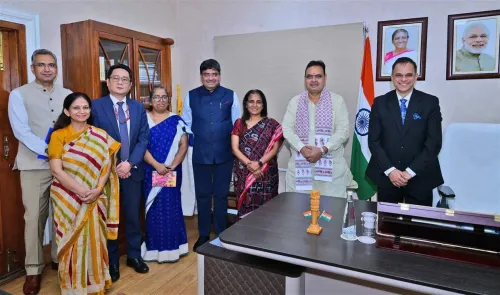
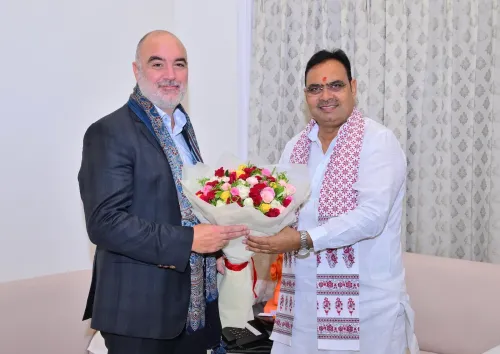
Chief Minister Bhajanlal Sharma of Rajasthan met Australian Consul General Paul Murphy on 16 July 2026. The meeting reflects growing direct state-level engagement between Rajasthan and Australia, with potential implications for critical minerals, renewable energy, and education partnerships under the broader India-Australia Comprehensive Strategic Partnership.
Key Takeaways
Chief Minister Bhajanlal Sharma received Australian Consul General Paul Murphy in a bilateral meeting on 16 July 2026 .
The meeting was announced by the Chief Minister's Office of Rajasthan on X under the hashtag #आपणो_अग्रणी_राजस्थान ('Our Leading Rajasthan').
Rajasthan has been actively courting foreign investment since its Global Investment Summit in 2023-24 , targeting mining, logistics, and green energy.
Australia and India share a Comprehensive Strategic Partnership since 2020 , covering critical minerals, education, and skilled migration.
The meeting signals potential follow-up engagement on MoUs or investment roadshows in sectors where Rajasthan and Australia have overlapping interests.
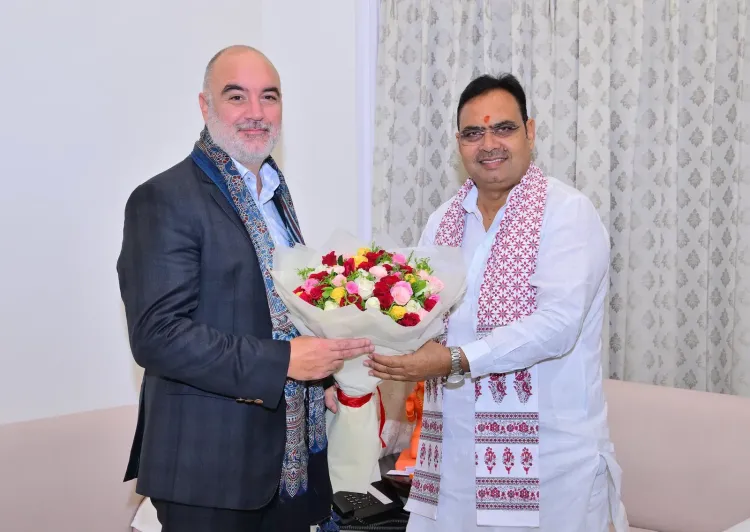
The Chief Minister's Office of Rajasthan announced on Thursday, 16 July 2026 that Chief Minister Bhajanlal Sharma received Australian Consul General Paul Murphy in a bilateral courtesy meeting, signalling continued diplomatic engagement between the state government and Australia's consular mission in India.
The CMO posted on X: 'मुख्यमंत्री श्री भजनलाल शर्मा से ऑस्ट्रेलिया के महावाणिज्य दूत पॉल मर्फी ने भेंट की' ('Australian Consul General Paul Murphy called on Chief Minister Shri Bhajanlal Sharma'), tagging the initiative under the hashtag #आपणो_अग्रणी_राजस्थान ('Our Leading Rajasthan'), the state government's branding for its development and outreach agenda.
Context
Bhajanlal Sharma has led the Bharatiya Janata Party government in Rajasthan since December 2023, with investment attraction and administrative reform as central planks of his tenure. State governments across India have increasingly conducted direct engagement with foreign consulates to channel overseas capital and expertise into state-specific priority sectors, supplementing the central government's diplomatic machinery.
Paul Murphy serves as Australia's Consul General, responsible for trade promotion, consular services, and bilateral engagement within his jurisdiction in India. Such calls on chief ministers are a standard mechanism for consular officials to build relationships with state-level decision-makers who hold significant sway over investment approvals and policy implementation.
Policy Backdrop
Australia and India formalised a Comprehensive Strategic Partnership in 2020, which has since expanded to cover critical minerals, education, and skilled migration — areas where Rajasthan holds natural strategic relevance. The state possesses substantial mineral reserves and a growing renewable energy base, both of which align closely with Australian industrial and trade interests.
Rajasthan organised a Global Investment Summit in 2023-24 to court foreign direct investment in mining, logistics, and green energy. Bilateral meetings of this nature often serve as preparatory groundwork for formal agreements or investment roadshows that follow at a later stage.
Stakeholders and Impact
Foreign investors, trade officials, and businesses operating in sectors such as critical minerals, renewable energy, and education are the primary stakeholders watching this engagement. Rajasthan's mineral-rich districts and its expanding solar energy corridor make it a natural destination for Australian capital seeking exposure to India's resource and clean-energy transition.
For the Australian side, deepening ties with a large, resource-endowed state government provides a practical channel for advancing bilateral economic objectives beyond the federal level. State-level partnerships have increasingly become a feature of the broader Australia-India economic relationship.
What's Next
Observers will watch for follow-up announcements on potential memoranda of understanding in mining, education, or skills development, which could emerge at the next India-Australia Joint Ministerial Commission meeting or at dedicated Rajasthan investment roadshows. The meeting's alignment with the state's 'Aapno Agrani Rajasthan' ('Our Leading Rajasthan') brand suggests the government intends to position this engagement within its broader outreach narrative. How the relationship translates into concrete project commitments will be the benchmark by which this diplomatic exchange is ultimately measured.
Point of View
Where state governments actively cultivate foreign consular relationships rather than waiting for central government facilitation. For Bhajanlal Sharma, hosting the Australian Consul General reinforces Rajasthan's pitch as an investment-ready destination, particularly in critical minerals and renewables — sectors that sit at the heart of the Australia-India Comprehensive Strategic Partnership. The CMO's decision to publicise the meeting under the 'Aapno Agrani Rajasthan' brand suggests a deliberate effort to project diplomatic momentum ahead of any concrete deal announcements. Whether this translates into signed agreements or remains a relationship-building exercise will depend on the follow-through at the next round of joint ministerial or investment-forum engagements.
NationPress
15 Oct 2026
Frequently Asked Questions
Why did Australian Consul General Paul Murphy meet Rajasthan CM Bhajanlal Sharma?
Paul Murphy , Australia's Consul General in India, called on Chief Minister Bhajanlal Sharma on 16 July 2026 as part of bilateral diplomatic engagement. Such meetings typically cover trade, investment, and areas of mutual economic interest between Australia and Rajasthan .
What is Rajasthan's connection to Australia's trade interests?
Rajasthan holds significant mineral reserves and is expanding its renewable energy capacity, both of which align with Australia's interests in critical minerals and clean energy under the India-Australia Comprehensive Strategic Partnership signed in 2020 .
What is the 'Aapno Agrani Rajasthan' hashtag used in the CMO post?
Aapno Agrani Rajasthan translates to 'Our Leading Rajasthan' and is the Rajasthan state government's branding for its development, investment, and outreach programmes under Chief Minister Bhajanlal Sharma .
What was discussed at the Rajasthan Global Investment Summit?
The Rajasthan Global Investment Summit held in 2023-24 focused on attracting foreign direct investment in sectors including mining, logistics, and green energy, laying the groundwork for ongoing bilateral engagements such as this consular meeting.
What could follow from the CM Bhajanlal Sharma and Paul Murphy meeting?
Possible outcomes include follow-up discussions on memoranda of understanding in critical minerals, education, or skills development, which could be formalised at the next India-Australia Joint Ministerial Commission meeting or at dedicated Rajasthan investment roadshows.