CM Bhajanlal Sharma Sips Tea With Jodhpur Residents After Refinery Launch
Synopsis
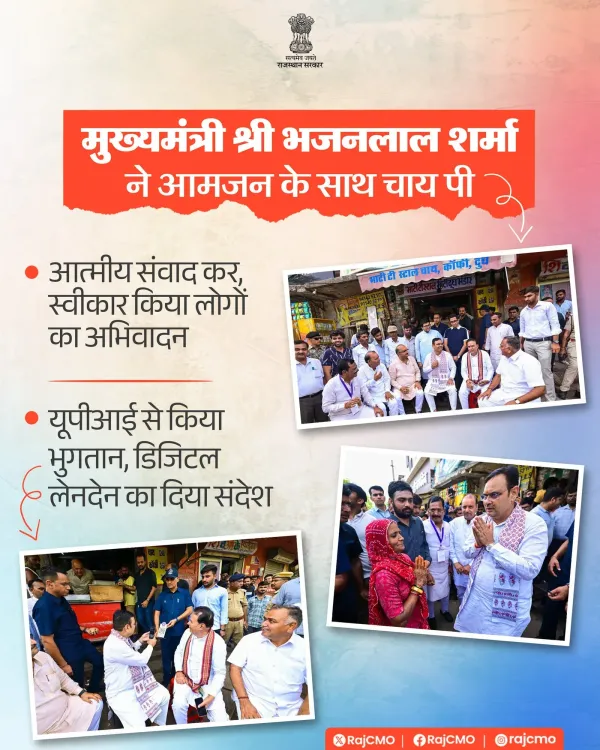
Rajasthan Chief Minister Bhajanlal Sharma stopped at a roadside tea stall in Jodhpur's Bhati Chowraha after inaugurating the HPCL Rajasthan Refinery, chatting with residents, greeting children, and paying his bill via UPI to champion digital transactions.
Key Takeaways
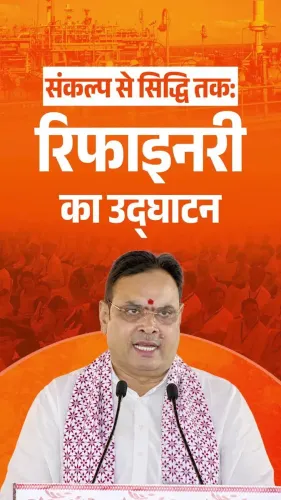
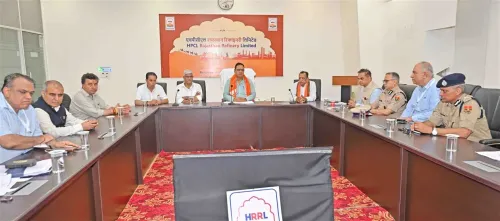
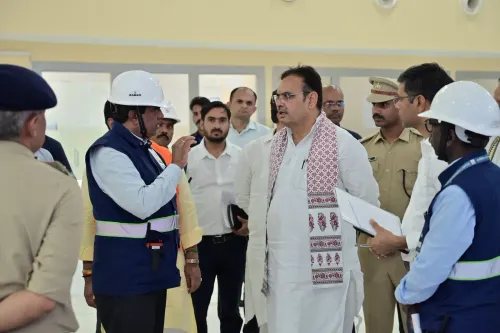
CM Bhajanlal Sharma visited Bhati Tea Stall, Bhati Chowraha, Jodhpur on 5 July 2026 after the HPCL Rajasthan Refinery inauguration.
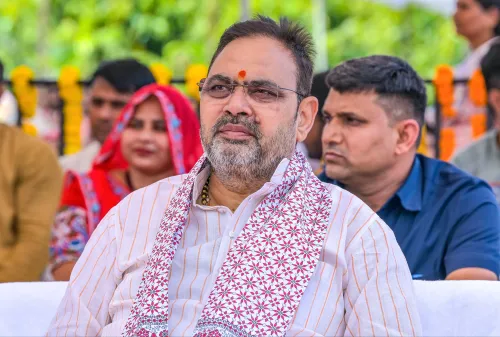
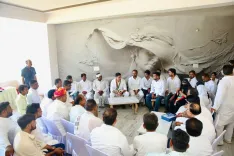
He drank tea with ordinary citizens, engaged children, posed for photographs, and discussed daily life and local civic issues.
Sharma paid the tea bill via UPI , publicly promoting digital and cashless transactions at the grassroots level.
The HPCL Rajasthan Refinery is a joint-venture project with a planned capacity of 9 MMTPA , approved by the Union Cabinet in 2013 .
The visit was hashtagged #PMModi4ViksitRajasthan , linking the state event to Prime Minister Modi's national development agenda.
The informal outreach follows a wider pattern of Indian chief ministers combining infrastructure launches with direct public engagement.
The Chief Minister's Office of Rajasthan announced on Sunday, 5 July 2026, that Chief Minister Bhajanlal Sharma visited Bhati Chowraha in Jodhpur after the inauguration of the HPCL Rajasthan Refinery, where he joined ordinary citizens for tea at a roadside stall and paid the bill via UPI, promoting digital transactions.
Context
Following the inauguration ceremony of the HPCL Rajasthan Refinery, CM Bhajanlal Sharma made an unscheduled stop at Bhati Tea Stall at Bhati Chowraha in Jodhpur. The visit was marked by informal conversation with local residents, affectionate gestures toward children, and group photographs — a deliberate departure from the formality of a major infrastructure event.
The Chief Minister's Office described the moment: 'मुख्यमंत्री को सहज रूप से, अपने बीच चाय पीते देखकर, लोगों में उत्साह नजर आया' ('Seeing the Chief Minister naturally drinking tea among them, people were visibly enthusiastic'). Sharma accepted greetings warmly and engaged residents on daily life and local civic arrangements.
Policy Backdrop
The HPCL Rajasthan Refinery is a joint-venture project formally approved by the Union Cabinet in 2013, designed to establish a 9 MMTPA (million metric tonnes per annum) refining capacity in the state. The project is intended to anchor industrial growth in western Rajasthan and reduce the region's dependence on fuel supplies from distant refineries.
The UPI payment at the tea stall was not incidental. Unified Payments Interface (UPI), launched by the National Payments Corporation of India in 2016 under the Digital India initiative, has been a consistent plank of the central government's financial inclusion agenda. By paying a roadside vendor via UPI, Sharma reinforced the message that digital transactions are accessible at every level of commerce — from infrastructure megaprojects to a cup of tea.
Stakeholders and Impact
For Jodhpur's residents, the Chief Minister's visit to a neighbourhood tea stall carried both symbolic and practical weight. Small vendors like the Bhati Tea Stall operator stand to benefit from increased visibility of digital payment adoption, which lowers the friction of cashless transactions at the hyperlocal level.
The HPCL Rajasthan Refinery, once fully operational, is expected to generate employment across western Rajasthan and stimulate ancillary industries. Local residents engaging directly with the Chief Minister on 'daily life and local civic arrangements' signals that the administration is positioning the refinery inauguration not merely as a state achievement but as a catalyst for grassroots development.
The hashtags #आपणो_अग्रणी_राजस्थान ('Our Leading Rajasthan') and #PMModi4ViksitRajasthan explicitly link the state-level event to Prime Minister Narendra Modi's broader 'Viksit Bharat' (Developed India) framework, placing the refinery and the informal outreach within a national development narrative.
What's Next
Attention will now turn to the commissioning timeline of the HPCL Rajasthan Refinery and the concrete employment numbers it delivers to western Rajasthan. State authorities are also likely to track UPI adoption rates among small vendors in tier-2 and tier-3 cities following high-profile demonstrations such as this one.
For CM Bhajanlal Sharma, the Jodhpur tea-stall stop underscores a pattern of pairing large infrastructure milestones with visible public accessibility — a political template that Indian chief ministers have increasingly deployed to translate project announcements into personal connect with voters.
Point of View
The Chief Minister's Office signals that large-scale industrial investment and everyday digital inclusion are two sides of the same governance coin. The hashtag linkage to PM Modi's Viksit Bharat framework is deliberate, embedding a state event within a national electoral and developmental narrative ahead of future election cycles. Such optics-driven accessibility visits have become a standard feature of BJP-governed states, where leaders seek to humanise infrastructure-heavy governance agendas for voters who experience policy through daily interactions rather than project dashboards.
NationPress
5 Oct 2026
Frequently Asked Questions
Why did CM Bhajanlal Sharma go to Jodhpur after the refinery inauguration?
After attending the HPCL Rajasthan Refinery inauguration ceremony, CM Bhajanlal Sharma travelled to Jodhpur and made an informal stop at Bhati Chowraha, where he drank tea with local residents, interacted with children, and discussed daily civic issues.
What is the HPCL Rajasthan Refinery?
The HPCL Rajasthan Refinery is a joint-venture petroleum refining project with a planned capacity of 9 MMTPA, approved by the Union Cabinet in 2013 to boost energy infrastructure and industrial growth in western Rajasthan.
Why did CM Bhajanlal Sharma pay via UPI at the tea stall?
Sharma paid for tea via UPI to publicly promote digital and cashless transactions, reinforcing the Digital India initiative's goal of making instant digital payments accessible at every level of commerce, including small roadside vendors.
Where exactly did CM Bhajanlal Sharma drink tea in Jodhpur?
He visited Bhati Tea Stall located at Bhati Chowraha in Jodhpur on 5 July 2026, following the HPCL Rajasthan Refinery inauguration event.
What does the hashtag PMModi4ViksitRajasthan mean?
The hashtag PMModi4ViksitRajasthan links Rajasthan's state-level development projects to Prime Minister Narendra Modi's 'Viksit Bharat' (Developed India) national framework, signalling alignment between state and central government development agendas.