CM Bhupendra Patel Breaks Ground on ₹223 Cr Neuroscience Institute in Ahmedabad
Synopsis
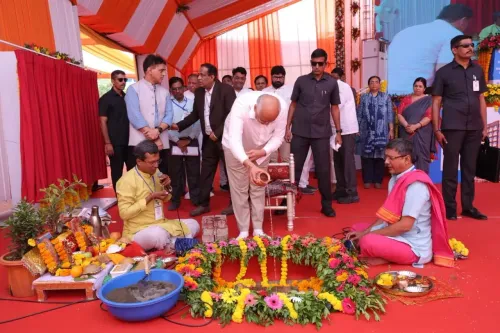
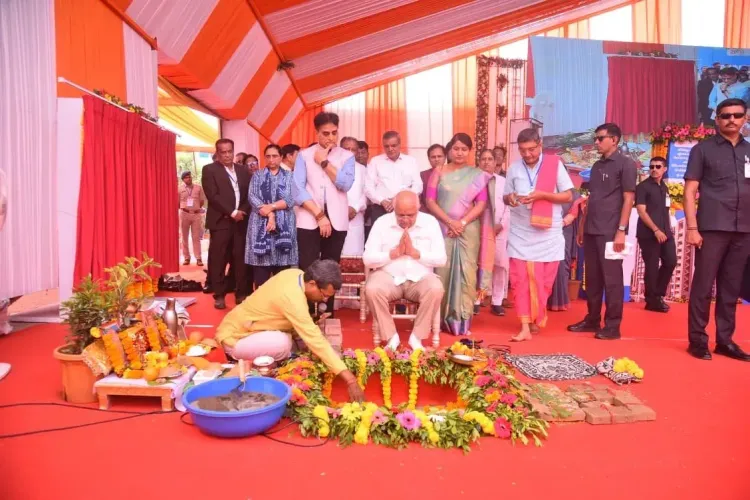
Chief Minister Bhupendra Patel broke ground on a ₹223 crore Institute of Neuroscience and Research Centre in Ahmedabad on 24 October 2026, as part of a single ceremony covering over ₹500 crore in Gujarat health infrastructure projects aimed at expanding specialised care statewide.
Key Takeaways
₹223 crore Institute of Neuroscience and Research Centre gets ceremonial groundbreaking in Ahmedabad .
Total health projects inaugurated or launched at the event exceed ₹500 crore in combined outlay.
CM Bhupendra Patel presided; Health MoS Praful Panseria and Urban Development MoS Darshana Vaghela were present.
The neuroscience institute will combine advanced treatment infrastructure with dedicated research capacity.
The investment extends Gujarat's long-running push to bring specialised tertiary care beyond major urban centres.
Gujarat's Mukhyamantri Amrutam Yojana (2012) forms the policy backbone for expanding healthcare access to low-income families.
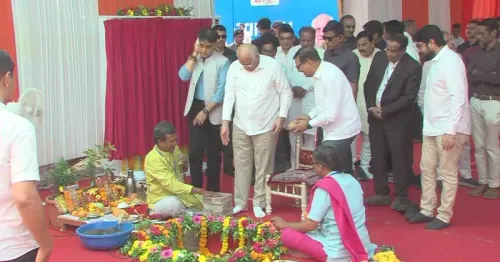
A single ceremony in Ahmedabad on Saturday, 24 October 2026 unlocked more than ₹500 crore worth of healthcare infrastructure for Gujarat — anchored by the foundation-laying of a state-of-the-art Institute of Neuroscience and Research Centre that will cost ₹223 crore to build. Chief Minister Bhupendra Patel presided over the event, signalling the state government's push to bring specialised tertiary care within reach of every corner of Gujarat, not just its largest cities.
A ₹223 Crore Bet on Brain Care
The centrepiece of the event was the khatmuhurt — the ceremonial groundbreaking — of the Institute of Neuroscience and Research Centre in Ahmedabad. At ₹223 crore, the facility is designed to be among the most advanced neuroscience destinations in western India, combining treatment infrastructure with dedicated research capacity. Neurological conditions — stroke, epilepsy, Parkinson's disease, spinal disorders — represent a rapidly growing burden on Indian public health, and purpose-built centres of this scale remain rare outside metro hospitals.
The institute's foundation marks a deliberate move to anchor high-end specialised care in Gujarat's own ecosystem, reducing the pressure on patients who currently travel to Mumbai or Delhi for advanced neurological treatment.
₹500 Crore-Plus Across the State in a Single Sitting
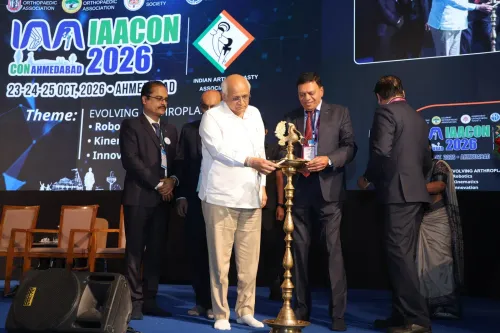
The neuroscience groundbreaking was only one piece of a larger bundle. The ceremony also saw the formal inauguration and foundation-laying of multiple health projects whose combined outlay crossed ₹500 crore. Gujarat has consistently used high-visibility, multi-project launch events to concentrate political and administrative momentum behind capital spending — a pattern that compresses timelines and keeps public attention on delivery rather than announcement alone.
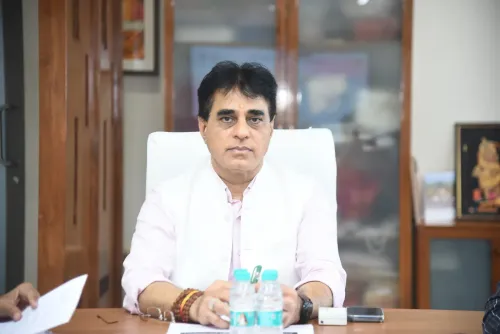
Health Minister of State Praful Panseria and Urban Development Minister of State Darshana Vaghela were present alongside other dignitaries, underscoring the cross-departmental coordination that large infrastructure rollouts demand.
Gujarat's Long Game on Specialised Healthcare Access
This investment sits inside a longer policy arc. Gujarat's Mukhyamantri Amrutam Yojana, launched in 2012, expanded financial protection for low-income families seeking tertiary care — but access to specialised facilities has remained geographically uneven. The current wave of infrastructure spending is designed to close that gap by building the physical capacity that the insurance scheme assumed would exist.
The broader pattern across economically advanced Indian states is clear: insurance coverage without specialist hospitals is an incomplete promise. By investing in neuroscience, oncology, and other high-acuity domains at the state level, Gujarat is betting that building supply will drive equitable access — rather than waiting for private capital to fill the void.
The next test will be speed of construction and the timeline to operationalise the neuroscience institute — because a groundbreaking only counts when the doors open.
Point of View
And a ₹223 crore dedicated facility signals that the state is moving beyond insurance-only solutions toward building actual specialist capacity. If executed on schedule, this could meaningfully reduce the patient exodus to Mumbai and Delhi that currently drains household finances across Gujarat. The real accountability test, however, arrives not at the groundbreaking but at the ribbon-cutting.
NationPress
24 Oct 2026
Frequently Asked Questions
What is the Institute of Neuroscience and Research Centre in Ahmedabad?
It is a proposed state-of-the-art facility dedicated to neuroscience treatment and research, to be built in Ahmedabad at a cost of ₹223 crore. Its foundation was laid by Gujarat Chief Minister Bhupendra Patel on 24 October 2026.
How much did Gujarat spend on health projects launched on 24 October 2026?
The total value of health projects inaugurated and ground-broken at the ceremony exceeded ₹500 crore, with the neuroscience institute alone accounting for ₹223 crore.
Who attended the health project launch ceremony in Ahmedabad?
Chief Minister Bhupendra Patel presided over the event. Health Minister of State Praful Panseria and Urban Development Minister of State Darshana Vaghela were also present, along with other dignitaries.
What is Gujarat's Mukhyamantri Amrutam Yojana?
Launched in 2012, the Mukhyamantri Amrutam Yojana is a Gujarat government scheme that provides financial protection for low-income families accessing tertiary and specialised healthcare services.
Why is a dedicated neuroscience institute significant for Gujarat?
Purpose-built neuroscience facilities are rare in public health infrastructure outside major metros. A dedicated institute in Ahmedabad would allow Gujarat residents to access advanced neurological care locally, reducing costly travel to Mumbai or Delhi.