CM Bhupendra Patel Champions Asiatic Lion Conservation on World Lion Day
Synopsis
On World Lion Day 2026, Gujarat Chief Minister Bhupendra Patel joined Porbandar celebrations via video conference, highlighting Project Lion, the expansion of lions across 11 districts, and the growth of a secondary population at Barda Wildlife Sanctuary as milestones in Asiatic lion conservation.
Key Takeaways
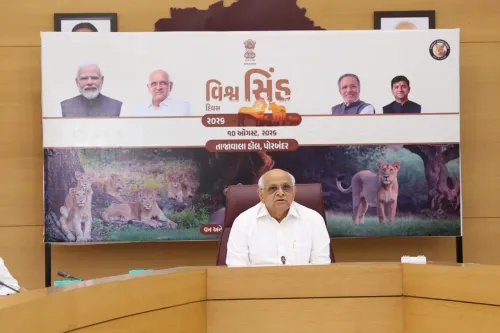
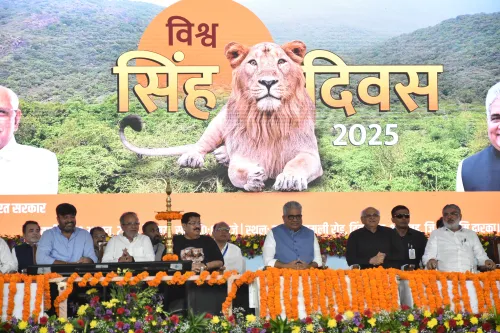
World Lion Day was celebrated in Porbandar, Gujarat on 10 August 2026 , with CM Bhupendra Patel joining via video conference.
Project Lion , launched under PM Narendra Modi, focuses on lion security, habitat restoration, and reducing human-animal conflict.
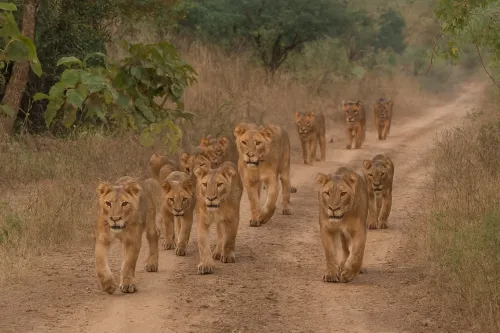
Gujarat's lion population has expanded its range to 11 districts , up from the historical Gir core area.
Barda Wildlife Sanctuary is being developed as an alternative lion habitat and now hosts approximately 26 lions .
Local communities are credited as key partners, with both emotional and economic ties to lion conservation cited as drivers of success.
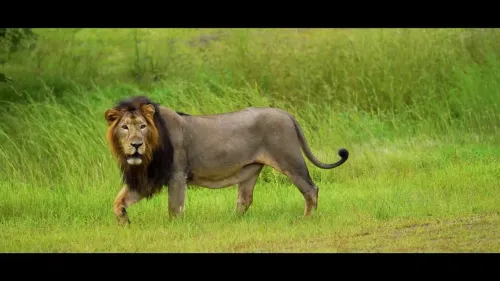
Gujarat remains the only natural habitat of Asiatic lions in the world, a distinction CM Patel called a matter of immense pride.
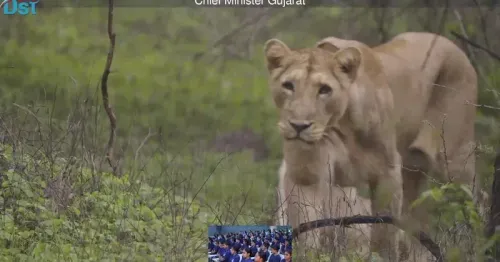
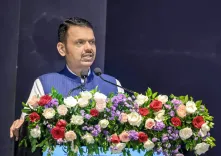
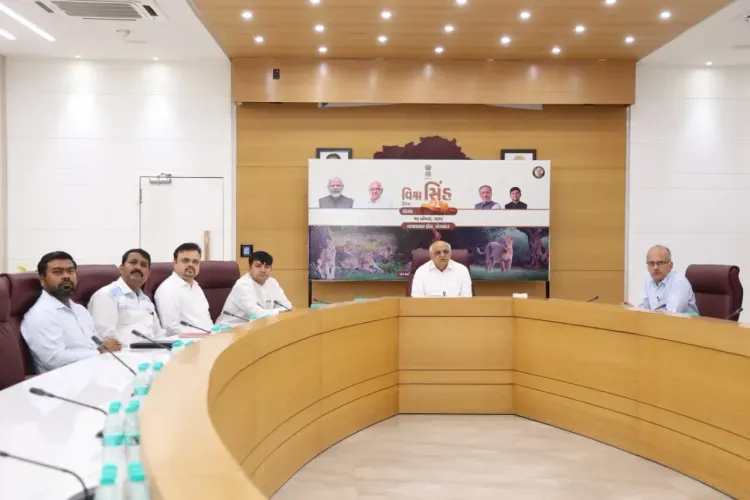
On World Lion Day, 10 August 2026, Gujarat Chief Minister Bhupendra Patel joined the state-level celebrations in Porbandar via video conference, using the occasion to reaffirm Gujarat's singular place in global conservation — as the only home on earth where Asiatic lions still roam wild.
Speaking in Gujarati, the Chief Minister declared: 'Simha aapni rashtriyatanu abhinna ang chhe' — 'The lion is an inseparable part of our national identity.' He pointed to the lion motif on India's national emblem as a symbol of shared pride, and underscored that Gujarat's role as the sole natural habitat of the Asiatic lion is a distinction the state must actively protect.
Project Lion: From Gir to a Wider Range
CM Patel highlighted 'Project Lion', the central government initiative launched under Prime Minister Narendra Modi, as the cornerstone of current conservation efforts. The scheme targets three interlocked challenges: securing the lions themselves, restoring degraded habitats, and reducing the friction that inevitably arises when large predators and human settlements share the same landscape. It follows the template of Project Tiger, which transformed India's tiger numbers over five decades, now applied to the Asiatic lion.
The results, according to the Chief Minister, are visible in the numbers. The lion population has grown steadily, and their range has now spread across 11 districts of Gujarat — a dramatic expansion from the historical concentration around Gir Wildlife Sanctuary, which was first notified in 1965 to protect the last surviving wild population. The Wildlife Protection Act of 1972 later cemented the legal scaffolding for that protection.
Barda Sanctuary: Building a Second Pride
Perhaps the most forward-looking detail in the Chief Minister's address was the progress at Barda Wildlife Sanctuary, being developed as an alternative lion habitat. CM Patel said approximately 26 lions are now present there — a figure he described as a matter of genuine joy. Creating a secondary population is a long-standing conservation priority: a single disease outbreak or natural disaster in Gir could, in theory, devastate the entire species. Barda is the insurance policy.
Communities at the Centre of Conservation
The Chief Minister reserved particular praise for local communities living alongside lions, noting that residents and the big cats have developed a bond that is both emotional and economic — 'emotion ane economy baneno sambandh'. This framing matters. Conservation science has repeatedly shown that when local people see a direct livelihood benefit from wildlife — through eco-tourism, forest-department employment, or compensation schemes — human-animal conflict drops and poaching pressures ease. CM Patel called on citizens to join a wider public-awareness drive to protect lions and nature together.
The next Asiatic lion population census and any formal announcement on translocation plans for Barda will be the clearest test of how much ground this decade of effort has actually gained.
Point of View
Linking Project Lion directly to PM Modi's leadership ahead of what will likely be a census year. The emphasis on Barda Sanctuary signals that the Centre and state are serious about de-risking the species from a single-site catastrophe, a move conservationists have advocated for decades. The 'emotion and economy' framing of community involvement also reflects a maturing approach: one that tries to convert potential poachers and conflict victims into conservation stakeholders. Whether the numbers cited hold up to independent census scrutiny will determine how durable this political narrative proves to be.
NationPress
10 Aug 2026
Frequently Asked Questions
What is Project Lion in India?
Project Lion is a central government initiative launched under Prime Minister Narendra Modi to protect Asiatic lions in Gujarat through improved security, habitat restoration, and mitigation of human-animal conflict, modelled on the earlier success of Project Tiger.
Where do Asiatic lions live in India?
Asiatic lions are found exclusively in Gujarat, making it the only place in the world where the species survives in the wild. Their range has expanded to cover 11 districts, with the Gir Wildlife Sanctuary as the historical core.
What is Barda Wildlife Sanctuary known for?
Barda Wildlife Sanctuary in Gujarat is being developed as an alternative habitat for Asiatic lions to reduce dependence on a single location. According to the Gujarat government, around 26 lions are now present there.
When is World Lion Day celebrated?
World Lion Day is observed every year on 10 August to raise global awareness about lion conservation and the threats facing lion populations worldwide.
Why is Gujarat important for Asiatic lion conservation?
Gujarat is the sole natural range of Asiatic lions, a subspecies distinct from African lions. The Gir Wildlife Sanctuary was notified in 1965 specifically to protect this last wild population, and the state has since expanded conservation efforts through Project Lion and community involvement.