CM Bhupendra Patel Hails PM-Family Care Tracker for Health
Synopsis
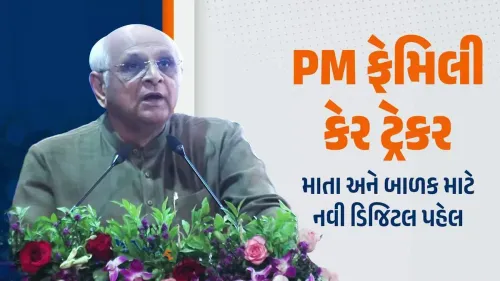
Gujarat Chief Minister Bhupendra Patel on 28 June 2026 endorsed the PM-Family Care Tracker on X, describing it as another opportunity to keep India at the forefront of health protection. The digital initiative aims to bring family-level health monitoring under a unified government platform.
Key Takeaways
Gujarat CM Bhupendra Patel publicly endorsed the PM-Family Care Tracker on 28 June 2026 via a Gujarati-language post on X.
The scheme is described as advancing health protection for a 'strong and secure India.' The post was accompanied by a video, indicating an active promotional or launch communication.
Gujarat is positioned as a front-runner in implementing central government digital health programmes.
The initiative aligns with India's broader Ayushman Bharat Digital Mission and preventive healthcare push.
Frontline workers such as ASHA workers are expected to be key partners in ground-level deployment.
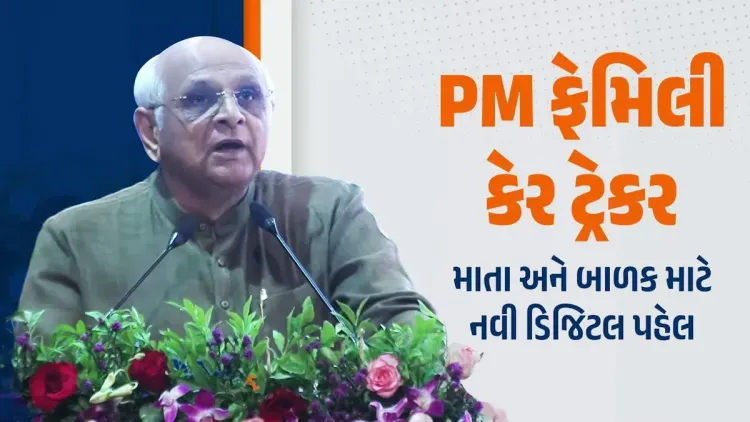
Gujarat Chief Minister Bhupendra Patel on Sunday, 28 June 2026 welcomed the PM-Family Care Tracker, calling it another opportunity to keep a strong and secure India at the forefront of healthcare protection.
Posting in Gujarati on X, CM Patel described the initiative as 'સશક્ત અને સુરક્ષિત ભારત' (a strong and secure India) moving forward in the domain of health protection. The post was accompanied by a video, signalling an official communication around the scheme's rollout or promotion.
Context
The PM-Family Care Tracker is a digital health initiative under the broader framework of the Union government's push to bring preventive and primary healthcare monitoring to Indian families. The scheme's name suggests a technology-driven tool designed to track the health status of family units, aligning with India's ongoing digital health mission.
CM Patel, a senior BJP leader and chief minister of one of India's most industrially and digitally advanced states, has consistently positioned Gujarat as a model implementer of central government welfare and health schemes.
Policy Backdrop
India's digital health architecture has expanded significantly in recent years, anchored by initiatives such as the Ayushman Bharat Digital Mission (ABDM), which aims to create a unified health identity for every citizen. A family-level care tracker would logically extend this infrastructure, enabling real-time monitoring of health parameters, vaccination records, and chronic disease management at the household level.
Gujarat has historically been among the early adopters of central health technology programmes, with strong state-level administrative capacity to deploy such tools at scale. The state's health department has previously integrated digital tools for maternal health, child immunisation, and non-communicable disease surveillance.
Stakeholders and Impact
The primary beneficiaries of a family care tracker are expected to be households across urban and rural Gujarat — and by extension, across India — who gain access to a structured, government-backed mechanism to monitor and manage their health proactively. Frontline health workers such as ASHA workers and ANMs (Auxiliary Nurse Midwives) are likely to be key implementation partners.
For the BJP government at both the Centre and in Gujarat, a visible health-tech initiative ahead of future electoral cycles reinforces the party's governance narrative around welfare delivery and digital empowerment. Civil society groups focused on public health have long advocated for family-level health tracking to address gaps in preventive care.
What's Next
With CM Patel publicly amplifying the PM-Family Care Tracker, Gujarat is expected to move swiftly on state-level rollout, potentially serving as a pilot model for other states. The accompanying video in the post is likely to detail the scheme's features, eligibility, and registration process for citizens.
As India deepens its digital health ecosystem, initiatives like the PM-Family Care Tracker could become central to the country's preventive healthcare strategy — shifting the focus from curative hospital-based care to continuous, community-level health monitoring for every family.
Point of View
Reinforcing Gujarat's reputation as a model BJP-governed state for welfare implementation. By framing the scheme in the language of national strength and security, the communication connects routine health policy to a broader ideological arc of 'Sashakt Bharat.' The move also signals that Gujarat intends to be among the first states to operationalise the tracker, giving the BJP a tangible governance achievement to showcase. In a landscape where health delivery has become a key electoral metric, such proactive amplification by state leadership carries both policy and political weight.
NationPress
29 Jun 2026
Frequently Asked Questions
What is the PM-Family Care Tracker?
The PM-Family Care Tracker is a central government digital health initiative designed to monitor and track the health status of Indian families, likely covering parameters such as vaccinations, chronic disease management, and preventive care under India's digital health mission framework.
What did Gujarat CM Bhupendra Patel say about the PM-Family Care Tracker?
CM Bhupendra Patel described the PM-Family Care Tracker as 'another opportunity' to keep a strong and secure India at the forefront of healthcare protection, posting in Gujarati on X on 28 June 2026.
Is the PM-Family Care Tracker available in Gujarat?
CM Patel's public endorsement and accompanying video suggest Gujarat is actively promoting or rolling out the PM-Family Care Tracker, though specific registration details would be available through official government channels.
How does the PM-Family Care Tracker relate to Ayushman Bharat?
The PM-Family Care Tracker appears to extend India's existing digital health infrastructure, including the Ayushman Bharat Digital Mission, by adding a family-level health monitoring layer to the government's unified health platform.
Who benefits from the PM-Family Care Tracker scheme?
The scheme is intended to benefit households across India by providing a structured, government-backed tool to monitor family health proactively, with frontline workers like ASHA workers expected to assist in implementation.