PM Family Care Tracker launched in Gujarat: Amit Shah unveils child welfare platform
Synopsis
Home Minister Amit Shah has launched a first-of-its-kind digital tracker in Gujarat that stitches together over 16 child welfare schemes — from polio vaccination alerts to school dropout flags — into one platform. If the pilot scales nationally, it could fundamentally change how India's fragmented welfare state reaches its 70 crore poorest children.
Key Takeaways
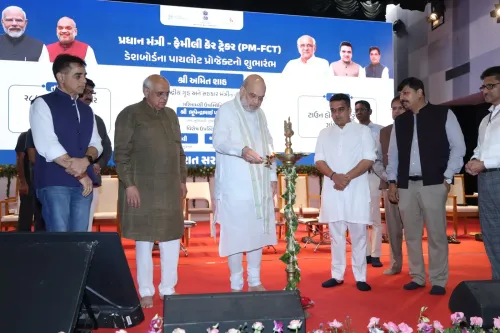
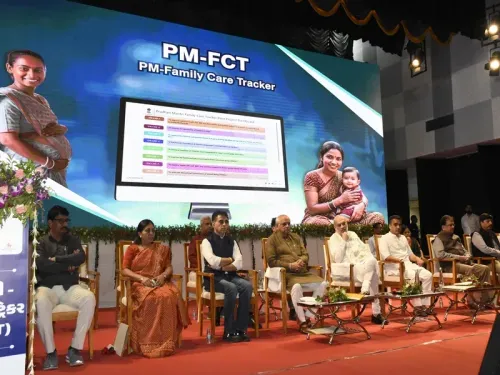
Home Minister Amit Shah launched the PM Family Care Tracker (PM-FCT) pilot in Gandhinagar, Gujarat on 28 June .
The platform monitors children's health, nutrition, education, and welfare from pregnancy to age 16 .
More than 16 schemes from four state departments — including Janani Suraksha Yojana, Mission Indradhanush, and PM CARES for Children — are integrated into the tracker.
Real-time alerts will be sent to taluka and district health officers , as well as the concerned MLA and MP , if a child misses a vaccine dose or drops out of school.
Every child will receive a unique digital identity linked to birth records to enable seamless, multi-scheme benefit delivery.
The pilot will be evaluated before any national expansion; no rollout timeline has been announced.
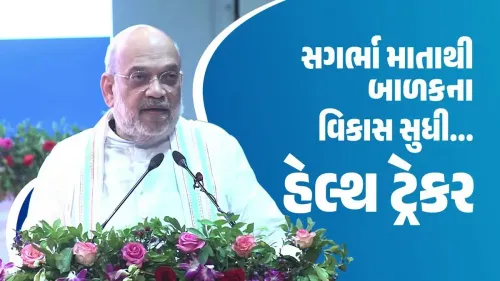
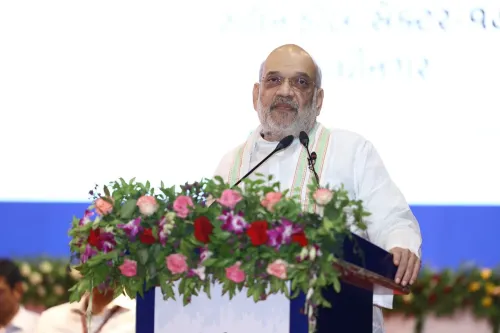
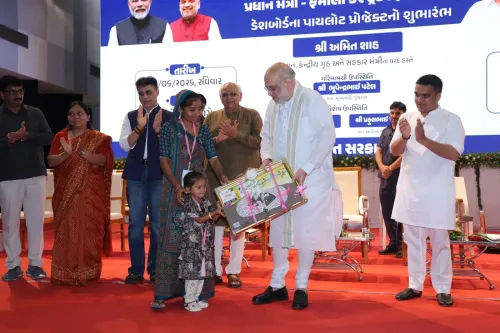
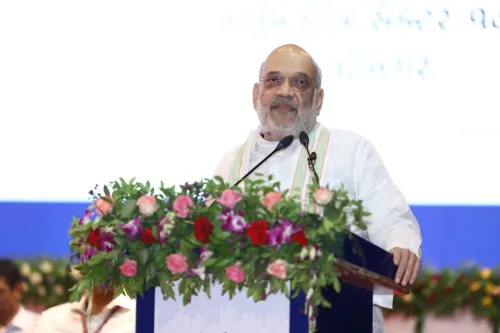
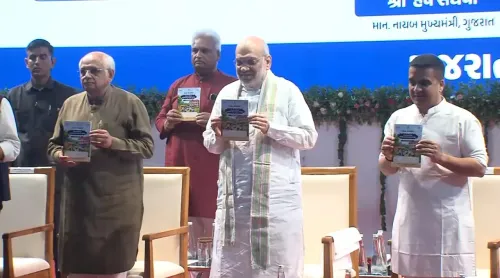
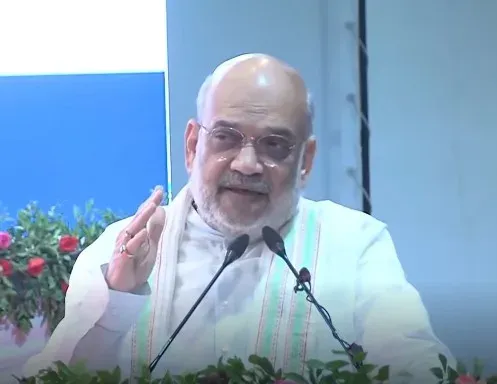
Union Home Minister Amit Shah on Sunday, 28 June launched the pilot project of the PM Family Care Tracker (PM-FCT) in Gandhinagar, describing it as an integrated digital platform designed to monitor the health, nutrition, education, and welfare of children from pregnancy through the age of 16 years. The initiative was unveiled in Shah's own Gandhinagar Lok Sabha constituency, marking a significant step in the Centre's push to unify fragmented welfare delivery for India's poorest families.
What the PM-FCT Does
The platform is built to track every stage of a child's development and generate real-time alerts whenever intervention is required. Shah said that if any child misses a dose of the polio vaccine, an alert would be immediately generated for the taluka and district health officers, with the information also reaching the concerned MLA and MP.
School attendance is also within the tracker's scope. If a girl attends school until Class 3 but fails to enrol in Class 4, her name would be flagged immediately, prompting visits by parent committee members and the school principal. If she still does not return, the matter would escalate to the taluka, district, MLA, and MP levels, Shah explained.
The system will additionally identify underweight children and those suffering from growth deficiencies, ensuring that appropriate schemes and nutritional support reach them without delay.
Schemes Integrated into the Platform
According to Shah, nearly 16 schemes from four state government departments have already been integrated into the platform. These include the Pradhan Mantri Matru Vandana Yojana, Janani Suraksha Yojana, Janani Shishu Suraksha Programme, Saksham Anganwadi Poshan, Universal Immunisation Programme, Mission Indradhanush, PM Poshan, Mission Vatsalya, the National Child Health Programme, the National Adolescent Health Programme, Sukanya Samriddhi Yojana, and the PM CARES for Children Scheme.
Shah added that 16 schemes of the Department of Social Justice and Empowerment for Dalit and tribal children, along with the National Child Labour Scheme, have also been brought under the same umbrella. Maternal healthcare will be monitored from pregnancy through the nursing period.
The Governance Problem It Aims to Solve
'The biggest challenges in governance have been the absence of a common identity, beneficiaries being left out, eligible people not receiving benefits, and the government itself not reaching them. The PM Family Care Tracker will address all these shortcomings together,' Shah said.
Every child will receive a unique digital identity linked to birth records, allowing benefits under different schemes to be delivered through a single common platform. This comes amid longstanding concerns that India's welfare architecture — spread across multiple ministries and departments — routinely leaves eligible beneficiaries uncovered due to data silos and administrative gaps.
Pilot Scope and Next Steps
Shah confirmed that the pilot project would be evaluated before being expanded further, expressing confidence that it would eventually establish a comprehensive monitoring system covering every child 'from the mother's womb until the age of 16 years.' The Gujarat rollout is being closely watched as a potential template for a national-scale deployment, though no timeline for expansion has been announced.
If the pilot demonstrates measurable impact on beneficiary coverage and early-intervention outcomes, it could reshape how India's child welfare architecture is administered at the last mile.
Point of View
Education, and social justice into a single real-time tracker — is precisely the kind of last-mile architecture India's welfare state has long needed. The harder question is whether a pilot in a relatively well-administered state like Gujarat will translate to Bihar, Jharkhand, or Uttar Pradesh, where beneficiary exclusion is most acute. The political economy is also worth noting: routing alerts to MLAs and MPs embeds elected representatives into administrative oversight, which could improve accountability or introduce patronage pressure, depending on implementation. The pilot's evaluation framework — what metrics will determine success — has not been made public, and that opacity is the single biggest risk to this otherwise well-designed initiative.
NationPress
27 Sept 2026
Frequently Asked Questions
What is the PM Family Care Tracker (PM-FCT)?
The PM Family Care Tracker is an integrated digital platform launched as a pilot project in Gujarat on 28 June by Home Minister Amit Shah. It monitors children's health, nutrition, education, and welfare from pregnancy until the age of 16, integrating over 16 central and state welfare schemes into a single platform.
Which schemes are integrated into the PM-FCT?
The platform integrates 16 schemes from four state departments, including the Pradhan Mantri Matru Vandana Yojana, Janani Suraksha Yojana, Mission Indradhanush, PM Poshan, Sukanya Samriddhi Yojana, PM CARES for Children, and the National Child Labour Scheme, among others. Schemes for Dalit and tribal children under the Department of Social Justice and Empowerment are also included.
How does the PM-FCT alert system work?
If a child misses a vaccine dose or a girl fails to enrol in the next school class, the system automatically generates alerts for taluka and district health or education officers, as well as the concerned MLA and MP. This multi-level escalation is designed to ensure no eligible child falls through administrative gaps.
Will the PM-FCT be expanded nationally?
Home Minister Shah confirmed that the Gujarat pilot will be evaluated before any further expansion. No national rollout timeline has been announced. The pilot's performance in Gujarat is expected to determine the template for a wider deployment.
Who does the PM Family Care Tracker cover?
The tracker covers children from pregnancy — monitoring maternal healthcare through the nursing period — until the age of 16. It specifically targets poor families and includes provisions for underweight children, school dropouts, and children from Dalit and tribal communities.