Modi govt uplifted 70 crore poor in 12 years, says HM Amit Shah
Synopsis
Home Minister Amit Shah used the launch of the PM Family Care Tracker in Gandhinagar to make a sweeping claim: that the Modi government has uplifted 70 crore poor Indians in 12 years — delivering homes, toilets, gas, food and healthcare where none existed. The PM-FCT pilot signals a shift from scheme-counting to family-level outcome tracking.
Key Takeaways
Home Minister Amit Shah on 28 June said the Modi government transformed lives of 70 crore poor people in 12 years .
Welfare delivery covered housing, electricity, sanitation, drinking water, cooking gas, food security and healthcare.
3 crore houses have been completed; 1 crore more are under construction.
Beneficiaries receive 5 kg of food grains and free medical treatment up to ₹5 lakh .
The PM Family Care Tracker (PM-FCT) pilot and Health Passports were launched in Gandhinagar to enable integrated monitoring of healthcare, nutrition and education for poor families.
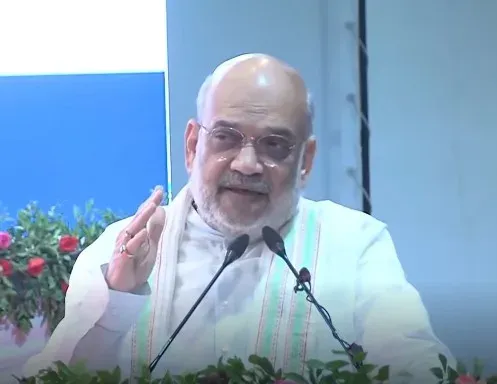
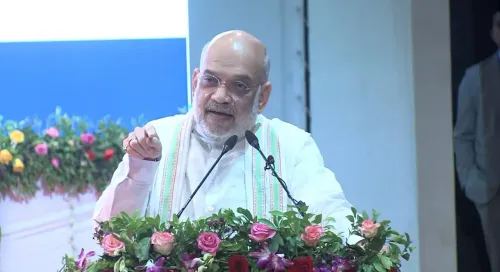
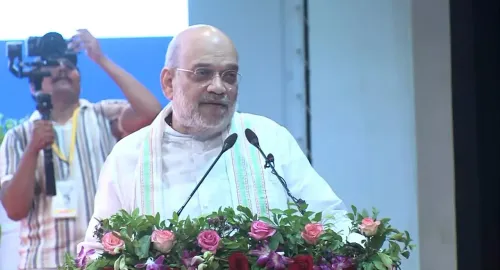
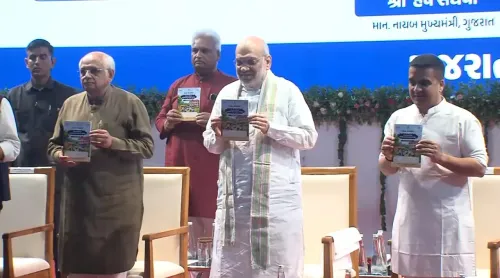
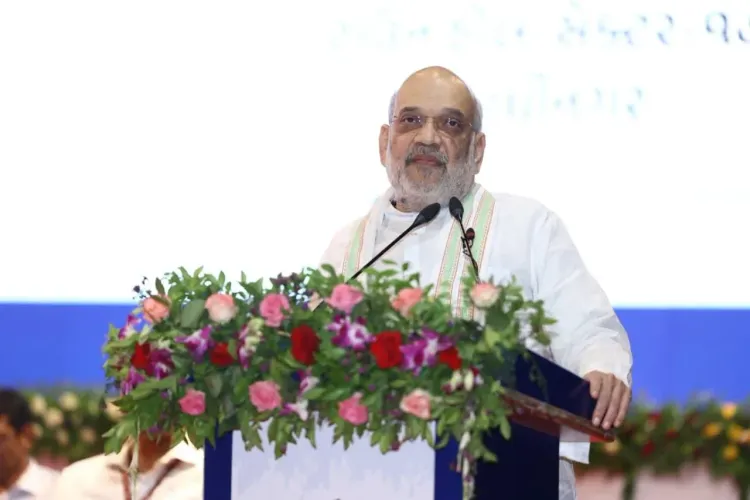
Union Home Minister Amit Shah on Sunday, 28 June declared that the Narendra Modi-led government had transformed the lives of 70 crore poor people over the past 12 years by delivering housing, electricity, sanitation, drinking water, cooking gas, food security and healthcare — calling it the country's most comprehensive poverty alleviation effort. Shah made the remarks in Gandhinagar after launching the PM Family Care Tracker (PM-FCT) pilot project and Health Passports.
Shah's Assessment of 12 Years of Welfare Delivery
Addressing the gathering, Shah said improving living standards for the poor had been the central priority of the government since 2014. 'Under the leadership of PM Modi, a comprehensive effort has been made to improve the standard of living of 70 crore poor people in this country,' he said. He drew on personal experience to illustrate the scale of deprivation that existed before these programmes were rolled out.
Recalling visits to the Purvanchal region of Uttar Pradesh before 2014, Shah described witnessing extreme poverty first-hand. 'People had no homes. If there were no home, there could be no electricity. There were countless houses without toilets. Even where there was a hut, there was no water supply inside,' he said.
What the Government Delivered, in Shah's Words
Shah listed the interventions the government had made: 'Within just 12 years, these 70 crore poor people have been provided with houses, electricity, tap water, toilets, gas cylinders, five kilograms of food grains, free medical treatment up to ₹5 lakh.' He added that 3 crore houses had already been completed under the housing scheme, with 1 crore more currently under construction.
Shah also highlighted the human dimension of the welfare push, noting that many beneficiaries had told him theirs was the first generation to live in homes with basic amenities. 'After witnessing five generations in their family, this is the first time they have entered a home that has gas, a toilet, drinking water, food grains, and electricity. The dream of five generations has been fulfilled within 12 years,' he said.
PM Family Care Tracker: The Next Phase
The launch of the PM Family Care Tracker (PM-FCT) pilot in Gandhinagar marks what Shah described as the next stage of welfare delivery. The system is designed to ensure children from poor families receive timely healthcare, nutrition and education services through integrated monitoring. The simultaneous rollout of Health Passports is intended to create portable health records for beneficiary families, enabling continuity of care across government schemes.
This comes amid a broader push by the Centre to shift welfare delivery from scheme-based silos toward family-level outcome tracking — a model that, if scaled, could reshape how India measures and delivers social protection. How the PM-FCT performs in its Gandhinagar pilot will determine whether the model is extended nationally.
Point of View
Not an independently verified outcome metric — and that distinction matters. The government's welfare infrastructure build-out since 2014 is real and documented, but 'transformation' implies sustained improvement in living standards, which requires longitudinal data beyond scheme coverage counts. The PM Family Care Tracker, if it delivers on its integrated monitoring promise, could actually generate that data for the first time — making it potentially more significant than the speech that launched it. The real test is whether the PM-FCT's outcome data will be made public and independently auditable, or whether it becomes another internal dashboard that feeds political messaging rather than policy correction.
NationPress
27 Sept 2026
Frequently Asked Questions
What did Amit Shah say about the Modi government's welfare record?
Home Minister Amit Shah said the Modi government had transformed the lives of 70 crore poor people over 12 years by providing housing, electricity, sanitation, drinking water, cooking gas, food grains and free healthcare up to ₹5 lakh. He made the remarks at a launch event in Gandhinagar on 28 June.
What is the PM Family Care Tracker (PM-FCT)?
The PM Family Care Tracker is a pilot project launched in Gandhinagar designed to ensure children from poor families receive timely healthcare, nutrition and education services through integrated monitoring. It was launched alongside Health Passports, which are intended to create portable health records for beneficiary families.
How many houses has the Modi government built under its housing scheme?
According to Shah, 3 crore houses have already been completed under the government's housing programme, with 1 crore more currently under construction.
What welfare benefits does Shah say poor families now receive?
Shah stated that 70 crore poor people have been provided with homes, electricity, tap water, toilets, gas cylinders, 5 kilograms of food grains per month, and free medical treatment up to ₹5 lakh under various central government schemes.
Where was the PM-FCT pilot launched and what does it aim to do?
The PM Family Care Tracker pilot was launched in Gandhinagar, Gujarat. It aims to shift welfare delivery from individual scheme monitoring to family-level outcome tracking, covering healthcare, nutrition and education for poor families in an integrated manner.