CM Bhupendra Patel holds Jan Sunavani in Dahod's tribal belt
Synopsis
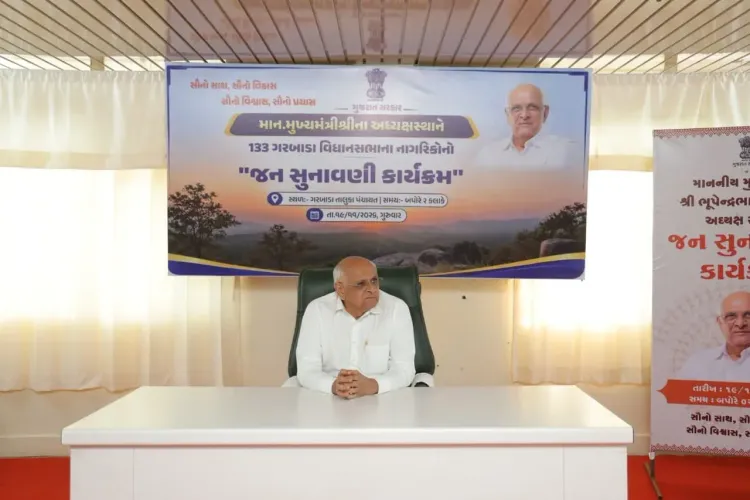
Chief Minister Bhupendra Patel conducted a Jan Sunavani public hearing at Garbada Taluka Panchayat in Dahod on November 19, 2026, listening to citizen grievances and directing officials to resolve them within fixed timelines, while highlighting welfare gains in Gujarat's tribal regions.
Key Takeaways
CM Bhupendra Patel held a Jan Sunavani public hearing at Garbada Taluka Panchayat Office, Dahod on November 19, 2026 .
He heard grievances directly from citizens and instructed administrative officers to resolve each issue swiftly and within stipulated timelines.
Patel credited PM Narendra Modi's guidance for welfare schemes and development works reaching the most remote tribal areas of Gujarat.
He highlighted improvements in education, health, and women's empowerment in interior tribal regions as a result of these scheme benefits.
Dahod has a large Scheduled Tribe population and is a priority district for Gujarat's tribal-belt governance outreach.
Gujarat has conducted taluka-level public hearings since at least the 2010s , with CM-level attendance adding direct administrative accountability.
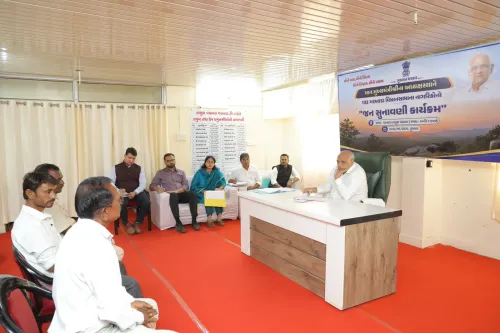
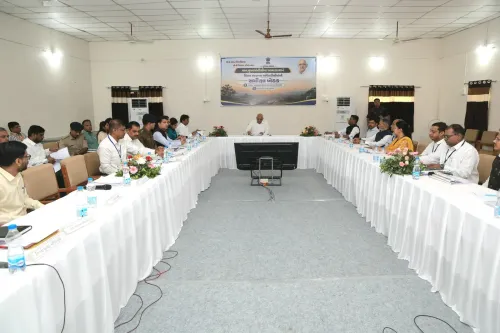
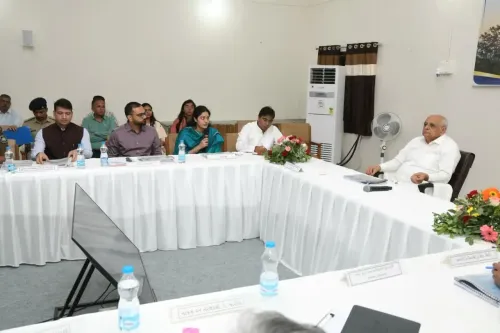
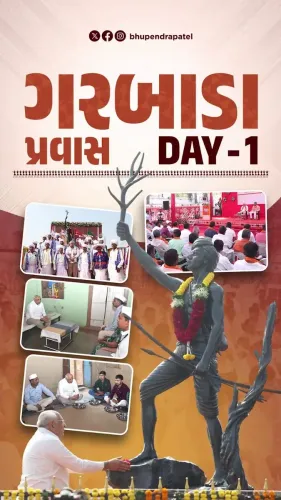
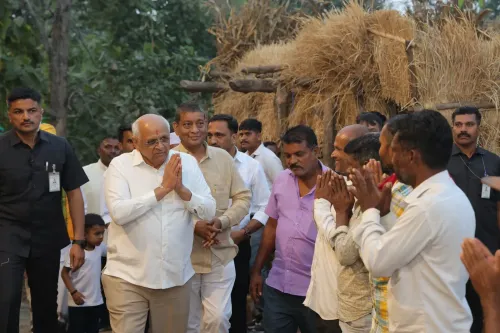
In the heart of Gujarat's eastern tribal district, Chief Minister Bhupendra Patel sat face-to-face with citizens at the Garbada Taluka Panchayat Office in Dahod on Thursday, November 19, 2026 — listening, not just governing. The visit, part of his ongoing district outreach tour, centred on a Jan Sunavani (public hearing) programme where residents brought forward their grievances and demands directly to the state's top executive.
What Dahod's citizens said — and what the CM ordered
The Jan Sunavani format is designed for unfiltered, direct dialogue: citizens queue up, speak their piece, and the administration responds on the spot. CM Patel heard a range of issues from local residents and issued instructions to officials to resolve each matter within a fixed time-limit. The Chief Minister's Office stated he directed tantravahakos — administrative officers — to act 'swiftly and within prescribed timelines.' The specifics of individual grievances raised at this sitting have not been officially detailed yet.
Tribal belt development at the centre of the CM's message
Patel told the gathering that under the guidance of Prime Minister Narendra Modi, welfare schemes and development works have now reached the most remote tribal areas of the state. He emphasised that this penetration of scheme benefits into the antariyaal aadijati vistaaro — interior tribal regions — has brought measurable change in education, health, and women's empowerment, pulling the people of the farthest corners into the mainstream of development.
Dahod district sits in eastern Gujarat and has a large Scheduled Tribe population. It is one of the state's most visited districts for development reviews and CM-level outreach, precisely because its tribal communities have historically been among the last to receive state services. The district's geography — hilly, forested, with dispersed habitations — has long made last-mile delivery a persistent challenge.
Gujarat's Jan Sunavani tradition and what it signals
Gujarat governments have conducted taluka-level public hearings under various formats since at least the 2010s. The practice of a sitting Chief Minister personally attending such sessions in a distant tribal taluka carries a pointed administrative signal: grievances cannot be buried in bureaucratic layers when the CM himself is in the room. For officials in the district, that presence alone tends to accelerate follow-through.
The broader pattern — CM Patel touring eastern tribal talukas, invoking PM Modi's welfare-delivery framework, and personally directing officials — reflects a consistent Gujarat governance posture: combine high-visibility outreach with accountability instructions, and frame tribal development as a national-priority mission rather than a state-level add-on.
How many of the grievances heard today translate into resolved cases on the ground will be the real measure of this visit — and that answer will come not from the podium, but from the villages.
Point of View
The visit serves a dual purpose: local grievance management and a broader political narrative of inclusive development reaching India's tribal periphery. The real test, as with all such hearings, is follow-through — whether the instructions issued to officials translate into resolved cases before the next CM visit. If they do, it reinforces a governance model; if they don't, the optics of outreach risk outpacing its substance.
NationPress
19 Nov 2026
Frequently Asked Questions
What is Jan Sunavani in Gujarat?
Jan Sunavani is a public hearing programme in Gujarat where citizens present their grievances and requests directly to senior government officials or the Chief Minister. Gujarat governments have run such taluka-level hearings since at least the 2010s as a last-mile grievance redressal mechanism.
Why did CM Bhupendra Patel visit Dahod?
CM Bhupendra Patel visited Dahod on November 19, 2026 to conduct a Jan Sunavani public hearing at the Garbada Taluka Panchayat Office, where he heard citizen grievances and directed officials to resolve them within fixed timelines.
What did CM Patel say about tribal development in Gujarat?
CM Patel stated that under Prime Minister Narendra Modi's guidance, welfare schemes and development works have reached remote tribal areas of Gujarat, bringing significant changes in education, health, and women's empowerment, and integrating people from the farthest regions into the development mainstream.
What is the significance of Dahod for tribal development in Gujarat?
Dahod is an eastern Gujarat district with a large Scheduled Tribe population and historically limited access to state services due to its hilly, forested terrain. It is a priority district for the Gujarat government's tribal-belt outreach and development reviews.
What instructions did CM Patel give to officials at the Garbada Jan Sunavani?
CM Patel directed administrative officers at the Garbada Taluka Panchayat to resolve the issues raised by citizens swiftly and within stipulated timeframes, ensuring the grievances heard during the public hearing receive timely action.