CM Bhupendra Patel Launches ₹410 Cr Projects in Surat
Synopsis
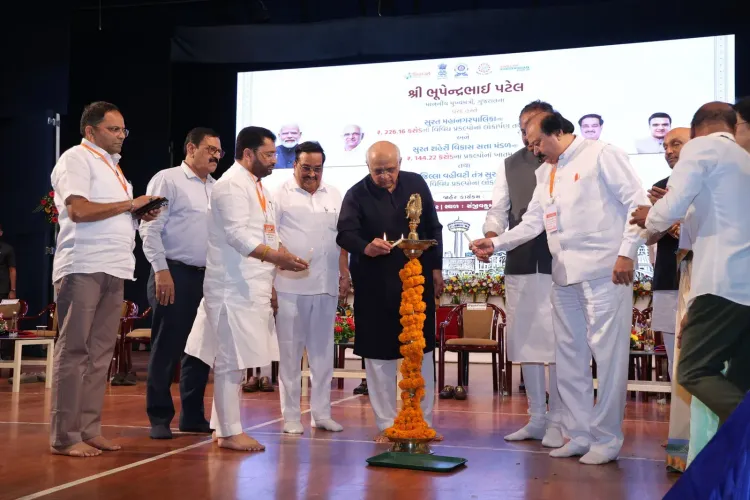
Gujarat Chief Minister Bhupendra Patel on October 25, 2026 inaugurated and broke ground on over ₹410 crore of projects in Surat — including a 50-bed hospital, flyover, smart classrooms, and PMAY 2.0 homes — through SMC, SUDA, and district administration.
Key Takeaways
Projects worth over ₹410 crore were inaugurated or had groundbreaking ceremonies in Surat on October 25, 2026 .
A new 50-bed hospital in the South Zone , fire stations, and a health centre were among the healthcare projects launched.
A new flyover bridge , modern shelter homes, sports facilities, and public gardens were added to Surat's civic infrastructure.
Smart classrooms, new schools, and modernised anganwadis formed the education component of the package.
Housing units under Pradhan Mantri Awas Yojana 2.0 (PMAY 2.0) were also included in the announcements.
Projects were executed jointly by SMC , SUDA , and the district administration.
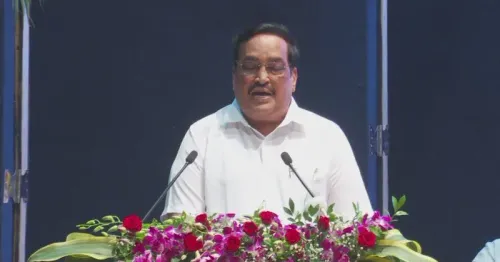
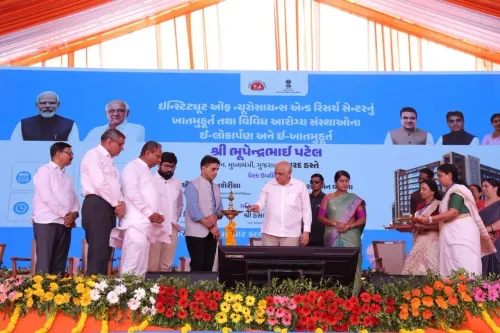
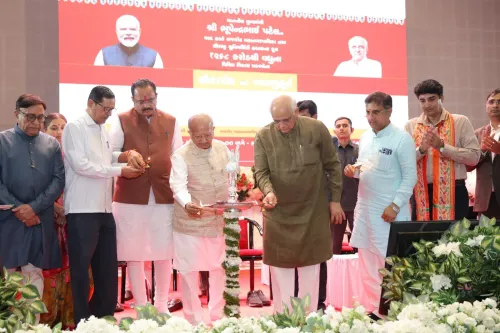
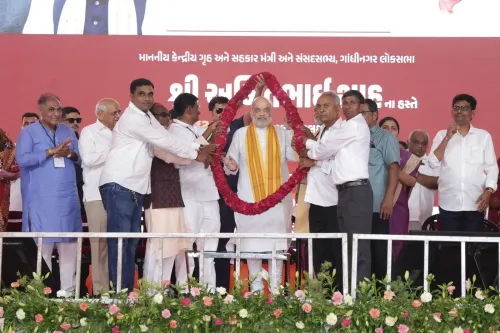
Surat, Gujarat's diamond capital, got a multi-crore infrastructure push on Sunday, October 25, 2026, as Gujarat Chief Minister Bhupendra Patel inaugurated and broke ground on projects worth over ₹410 crore — spanning healthcare, education, housing, and roads — delivered through the combined machinery of the Surat Municipal Corporation (SMC), the Surat Urban Development Authority (SUDA), and the district administration.
Sharing the milestone on X, CM Patel wrote that Gujarat's cities are becoming 'outstanding examples of high-quality infrastructure, excellent civic amenities and sustainable development' under the leadership of Prime Minister Narendra Modi, and dedicated the day's works to improving the 'ease of living' for Surat's citizens.
A 50-Bed Hospital, Fire Stations, and a Flyover — What Got Delivered
The centrepiece of the day's inaugurations is a new 50-bed hospital in Surat's South Zone, plugging a gap in secondary healthcare for one of the city's fastest-growing residential corridors. Alongside it, state-of-the-art fire stations and a new health centre were formally opened, shoring up emergency-response capacity in a city that recorded among the fastest urban-population growth rates in India over the past decade.
On the infrastructure side, a new flyover bridge was commissioned to ease chronic traffic bottlenecks, while modern shelter homes, sports facilities, and public gardens rounded out the civic amenities package. Each project category reflects the layered urban-development template Gujarat has refined across multiple election cycles — roads, health, green spaces, and recreation bundled into a single announcement event.
Smart Classrooms, New Schools, and PMAY 2.0 Homes
The education basket includes smart classrooms, new school buildings, and modernised anganwadis — early-childhood centres that double as the state's grassroots nutrition network. These join housing units sanctioned under Pradhan Mantri Awas Yojana 2.0 (PMAY 2.0), the Centre's urban affordable-housing drive that targets ownership for lower-income city dwellers.
PMAY Urban was first launched in 2015; its second phase sharpens the focus on cities like Surat where migration-driven demand has kept housing costs persistently high. Surat's inclusion in the Smart Cities Mission — also from 2015 — has layered additional central funding onto state and civic budgets, giving the city repeated rounds of integrated infrastructure upgrades.
Surat's Urban Momentum and the Gujarat Model's Latest Chapter
The diamond and textile hub has long been a showcase for Gujarat's urban-development pitch. CM Patel, who took charge in September 2021, has closely aligned his tenure's infrastructure narrative with PM Modi's Smart City and PMAY credentials — a political geometry that connects state achievement to the Centre's flagship schemes, particularly visible in the run-up to civic and assembly election cycles.
For Surat residents, the immediate question is delivery timelines: the south-zone hospital and the PMAY 2.0 housing units, in particular, will be the projects most closely watched by the city's rapidly expanding lower-middle-class neighbourhoods. Infrastructure announcements in Gujarat have historically translated into ground-level work at a faster clip than the national average — but with ₹410 crore disbursed across multiple agencies, coordination between SMC, SUDA, and district administration will be the real test.
A city that has built its identity on precision — cutting diamonds to fractions of a millimetre — now asks its government to match that exactness in delivering civic promises on schedule.
Point of View
Smart Cities) with state and civic resources into a single high-visibility event, linking the Chief Minister's delivery credentials directly to the Prime Minister's flagship programmes. For CM Bhupendra Patel, Surat — the party's most reliable urban stronghold — is a natural stage to reinforce the 'Gujarat Model' narrative. The inclusion of PMAY 2.0 housing is particularly significant, as urban affordable housing has emerged as a key BJP outreach vector in migrant-heavy industrial cities. Whether the announced timelines survive the coordination demands of three separate agencies will determine how durably this event translates into ground-level political capital.
NationPress
25 Oct 2026
Frequently Asked Questions
What projects were inaugurated in Surat by CM Bhupendra Patel?
CM Bhupendra Patel inaugurated and broke ground on projects worth over ₹410 crore in Surat on October 25, 2026, including a 50-bed hospital in the South Zone, fire stations, a flyover bridge, smart classrooms, new schools, modernised anganwadis, shelter homes, sports facilities, gardens, and PMAY 2.0 housing units.
What is PMAY 2.0 and how does it relate to Surat?
Pradhan Mantri Awas Yojana 2.0 (PMAY 2.0) is the Centre's updated urban affordable-housing scheme, building on the original 2015 programme. In Surat, PMAY 2.0 housing units were among the projects included in the October 25, 2026 inauguration event.
What is SUDA and what role did it play in Surat's development projects?
SUDA stands for Surat Urban Development Authority, the statutory body responsible for urban planning and development in and around Surat. Along with the Surat Municipal Corporation (SMC) and the district administration, SUDA co-executed the ₹410 crore project package announced on October 25, 2026.
How is Surat connected to India's Smart Cities Mission?
Surat was selected under the Smart Cities Mission in 2015, which unlocked central government funding for integrated urban infrastructure upgrades. This has enabled multiple rounds of combined state-central investments in roads, health, education, and housing across the city.
What is the significance of the South Zone hospital in Surat?
The new 50-bed hospital in Surat's South Zone addresses a healthcare gap in one of the city's fastest-growing residential areas. It was among the key healthcare projects inaugurated by CM Bhupendra Patel on October 25, 2026, alongside new fire stations and a health centre.