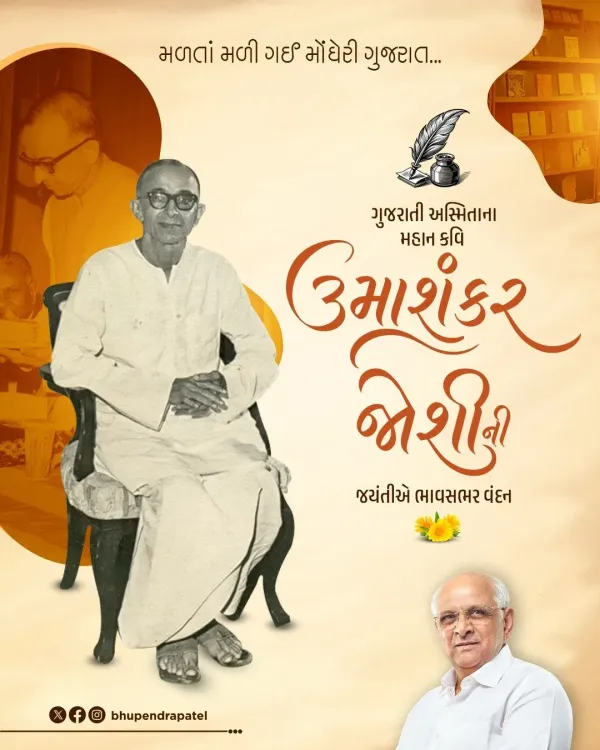
CM Bhupendra Patel Pays Tribute to Poet Umashankar Joshi on Birth Anniversary
Synopsis
Gujarat Chief Minister Bhupendra Patel on 21 July 2026 paid tribute to Jnanpith laureate Umashankar Joshi on his birth anniversary, invoking the poet's iconic lines on Gujarati identity and universal humanism to underscore the state's commitment to literary and cultural heritage.
Key Takeaways
Gujarat Chief Minister Bhupendra Patel paid tribute to poet Umashankar Joshi on his birth anniversary on 21 July 2026 .
Umashankar Joshi (1911–1988) was a leading Gujarati poet, essayist, and scholar renowned for blending regional identity with universal humanism.
Joshi received the Jnanpith Award in 1967 for his collection Nishith , becoming the first Gujarati writer to win India's highest literary honour.
CM Patel cited Joshi's celebrated lines 'ગુજરાત મોરી મોરી રે' and 'વ્યક્તિ મટી બનું વિશ્વમાનવી' as timeless verses awakening cultural pride and global consciousness.
The tribute reflects Gujarat's longstanding tradition of state-level commemoration of classical Gujarati litterateurs to promote mother-tongue education and heritage preservation.
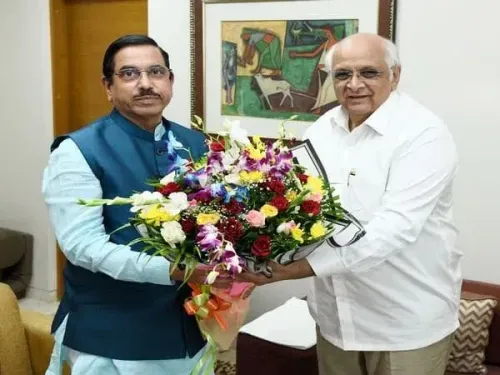
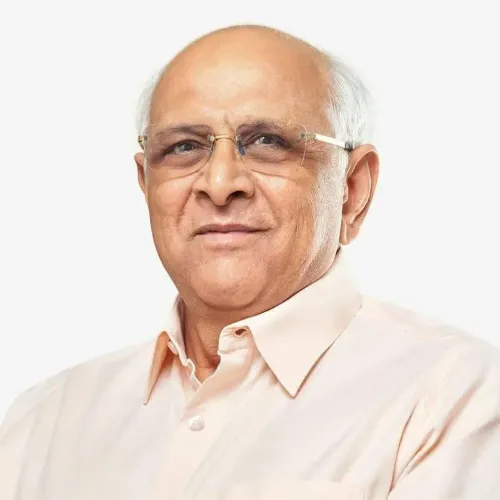
Gujarat Chief Minister Bhupendra Patel on Tuesday, 21 July 2026, paid tribute to celebrated Gujarati poet and Jnanpith laureate Umashankar Joshi on his birth anniversary, honouring the literary icon's enduring contribution to Gujarati language and culture.
Posting in Gujarati on X, Chief Minister Patel offered heartfelt respects — 'ભાવપૂર્ણ વંદન' (reverential salutations) — to Joshi, describing him as an immortal wordsmith of Gujarati literature. He specifically cited two of Joshi's most celebrated lines: 'ગુજરાત મોરી મોરી રે' ('My beloved Gujarat') and 'વ્યક્તિ મટી બનું વિશ્વમાનવી' ('Let me transcend the individual and become a citizen of the world'), calling them timeless verses that have awakened both regional identity and universal consciousness.
Context
Umashankar Joshi (1911–1988) stands as one of the towering figures of modern Gujarati literature. A poet, essayist, and scholar of exceptional range, he wrote works that wove together deep pride in Gujarati culture with a broad cosmopolitan humanism. His verse remains widely read in schools, universities, and literary circles across Gujarat.
Chief Minister Patel noted that Joshi's words continue to inspire love for literature, pride in the mother tongue, and a commitment to preserving Gujarat's rich cultural heritage — values the Chief Minister called essential for future generations.
Policy Backdrop
Umashankar Joshi was conferred the Jnanpith Award in 1967 for his poetry collection Nishith, making him the first Gujarati writer to receive India's highest literary honour. The Jnanpith Award, instituted in 1961, is awarded annually for outstanding contribution to literature in any scheduled Indian language.
Gujarat governments have, over decades, periodically issued formal tributes to prominent 20th-century Gujarati litterateurs on their birth anniversaries. These commemorations serve to reinforce linguistic continuity and the state's commitment to mother-tongue education — a tradition rooted in the reorganisation of linguistic states in the 1960s.
Stakeholders and Impact
The tribute resonates primarily with the Gujarati literary community, educators, and students of regional literature across the state. Joshi's dual emphasis on regional rootedness and universal outlook has made his work a touchstone for discussions on cultural identity in a globalised era.
By publicly invoking Joshi's most recognisable lines, the Chief Minister signals the state's continued institutional respect for classical Gujarati literary figures and their role in shaping civic and cultural values.
What's Next
Birth anniversaries of celebrated litterateurs in Gujarat often prompt state cultural departments and academic institutions to organise seminars, recitation events, and curriculum reviews referencing classical Gujarati texts. Observers of state cultural policy will watch for any announcements regarding literary commemorations or mother-tongue education initiatives in the coming academic year.
Joshi's legacy — bridging regional pride with universal humanism — continues to offer a framework for Gujarat's cultural discourse as the state balances heritage preservation with contemporary educational priorities.
Point of View
The first Gujarati Jnanpith winner, also subtly reinforces the narrative of Gujarati exceptionalism that has been a consistent thread in state political communication. Such tributes, while ceremonial, carry policy undertones: they signal continued state support for mother-tongue education and Gujarati cultural institutions at a time when regional language advocacy is gaining renewed political salience across India.
NationPress
21 Jul 2026
Frequently Asked Questions
Who was Umashankar Joshi?
Umashankar Joshi (1911–1988) was a celebrated Gujarati poet, essayist, and scholar best known for works that combined deep regional identity with universal humanism. He was the first Gujarati writer to receive the Jnanpith Award, India's highest literary honour, in 1967.
Why did CM Bhupendra Patel pay tribute to Umashankar Joshi?
Gujarat Chief Minister Bhupendra Patel paid tribute to Umashankar Joshi on his birth anniversary on 21 July 2026, honouring the poet's lasting contribution to Gujarati literature, cultural identity, and the promotion of mother-tongue pride.
What is the Jnanpith Award and when did Umashankar Joshi receive it?
The Jnanpith Award, instituted in 1961, is India's highest literary honour awarded for outstanding contribution to literature in any scheduled Indian language. Umashankar Joshi received it in 1967 for his poetry collection Nishith, becoming the first Gujarati writer to win the award.
What are Umashankar Joshi's most famous lines?
Two of Umashankar Joshi's most celebrated lines are 'Gujarat Mori Mori Re' (My beloved Gujarat), expressing deep love for the region, and 'Vyakti Mati Banu Vishwamanavi' (Let me transcend the individual and become a citizen of the world), reflecting his universal humanist outlook.
What is the significance of Gujarat CM tributing Gujarati poets?
Gujarat governments have a longstanding tradition of issuing formal tributes to prominent Gujarati litterateurs on their birth anniversaries. These commemorations reinforce the state's commitment to mother-tongue education, cultural heritage preservation, and regional linguistic identity.