Kangana Ranaut recalls being locked in Parliament as protesters marched

Synopsis
Kangana Ranaut says MPs were so rattled by the march toward Parliament that lawmakers were locked inside even after the House adjourned. The flashpoint: Sonam Wangchuk's removal from Jantar Mantar after 21 days of fasting over the NEET paper leak — a protest that has now reached the steps of India's legislature.
Key Takeaways
Kangana Ranaut told reporters on 21 July that all parliamentarians were locked inside Parliament as protesters marched toward the complex.
She praised Delhi Police for acting as a ‘shield’ and preventing harm to lawmakers.
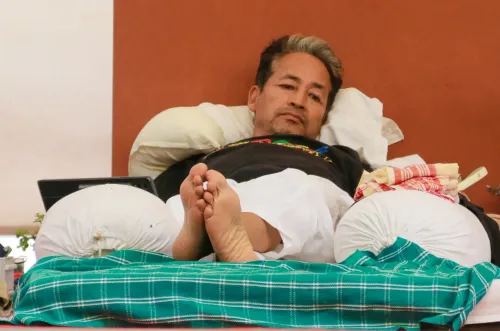
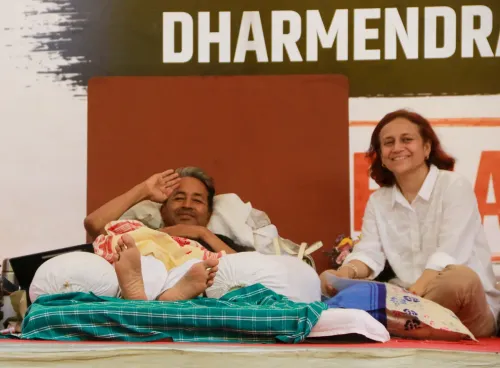
Protests escalated after climate activist Sonam Wangchuk was removed from Jantar Mantar on 18 July following 21 days of an indefinite hunger strike.
Wangchuk has been demanding the resignation of Union Education Minister Dharmendra Pradhan over alleged exam irregularities.
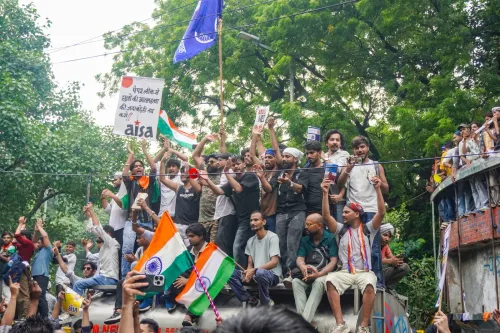
On 20 July , protesters at Jantar Mantar were lathi-charged, triggering violent clashes with law enforcement.
Wangchuk entered day 23 of his hunger strike on 21 July , with no government response to his demands reported.
Actress and Bharatiya Janata Party (BJP) Member of Parliament Kangana Ranaut on Tuesday, 21 July said that the situation at the Parliament spiralled out of control as protesters marched toward the complex amid the ongoing political unrest in New Delhi. Speaking to reporters outside Parliament, Ranaut described a tense atmosphere inside the building, with MPs reportedly unable to move even after the House was adjourned.
What Kangana Ranaut Said
Recounting the events, Ranaut said, “You were also inside. You saw how scared everyone was. The gates were also closed. All the parliamentarians were also locked inside. When the house was adjourned, we were not able to move anywhere. You saw how the mob was attacking us inside. At one point, we were afraid that they would attack us.”
She also credited Delhi Police for shielding lawmakers from the agitating crowd. “But I appreciate the Delhi Police. They were like a shield for us. They took the hit themselves. But they didn’t let the people be harmed. I am very grateful to them,” she added.
Background: The Wangchuk Protest and NEET Paper Leak
The demonstrations intensified following the removal of climate activist and educator Sonam Wangchuk from the protest site at Jantar Mantar in the early hours of 18 July, after he completed 21 days of an indefinite hunger strike. Authorities shifted him to a hospital, citing deteriorating health, medical advice, and compliance with a Delhi High Court order.
Wangchuk had been on the hunger strike demanding the resignation of Union Education Minister Dharmendra Pradhan over alleged irregularities in competitive examinations. By 21 July, he had entered day 23 of his fast.
The broader protest movement was further fuelled by the NEET paper leak controversy, which brought the issue of exam fraud in Indian academia to a boiling point. On 20 July, protesters at Jantar Mantar were lathi-charged, leading to violent clashes with law enforcement. Demonstrations have since spread to major cities including New Delhi and Mumbai.
Scale of the Unrest
The paper leak controversy and the treatment of Wangchuk have converged into a broader public outcry over the integrity of India’s education and examination systems. Notably, this is not an isolated episode — concerns over exam irregularities have surfaced repeatedly in recent years, but the NEET controversy and Wangchuk’s prolonged fast appear to have given the movement unusual momentum.
The decision by authorities to forcibly remove Wangchuk from Jantar Mantar — rather than allow the hunger strike to conclude — is widely seen as the immediate trigger for the march toward Parliament.
What Happens Next
With Wangchuk continuing his fast and no public indication of a government response to his demands, further protests remain likely. The political pressure on Union Education Minister Dharmendra Pradhan is expected to intensify as opposition parties continue to raise the issue inside and outside Parliament.
Point of View
But it should be read alongside the broader question of why the protest reached that pitch in the first place. The forced removal of Sonam Wangchuk after 21 days of fasting — rather than any substantive government engagement — was the direct trigger for the march. The NEET paper leak is not a fringe grievance; it has shaken public confidence in one of India’s most consequential examination systems. Praising the police for containment, without acknowledging the underlying institutional failure that put protesters on the street, risks missing the story within the story.
NationPress
21 Jul 2026
Frequently Asked Questions
Why were MPs reportedly locked inside Parliament on 21 July?
According to BJP MP Kangana Ranaut, the gates of Parliament were closed and parliamentarians were unable to leave even after the House was adjourned, as a large crowd of protesters marched toward the complex. She described the atmosphere inside as fearful.
Who is Sonam Wangchuk and why is he on a hunger strike?
Sonam Wangchuk is a climate activist and educator who began an indefinite hunger strike demanding the resignation of Union Education Minister Dharmendra Pradhan over alleged irregularities in competitive exams, including the NEET paper leak. By 21 July, he had been fasting for 23 days.
What triggered the march toward Parliament?
The immediate trigger was the forcible removal of Sonam Wangchuk from the Jantar Mantar protest site by Delhi Police on 18 July, after he completed 21 days of fasting. Authorities cited his deteriorating health, medical advice, and a Delhi High Court order for the move.
What happened at Jantar Mantar on 20 July?
On 20 July, protesters gathered at Jantar Mantar were lathi-charged by police, leading to violent clashes between demonstrators and law enforcement. The incident further inflamed public sentiment ahead of the march toward Parliament.
What is the NEET paper leak controversy?
The NEET paper leak refers to alleged irregularities in the National Eligibility cum Entrance Test, India’s primary medical admissions examination. The controversy has sparked widespread protests across major Indian cities, including New Delhi and Mumbai, and has become a central demand in Sonam Wangchuk’s hunger strike.