CM Bhupendra Patel Performs Shastrapujan on Vijayadashami
Synopsis
Gujarat Chief Minister Bhupendra Patel performed the Shastrapujan ritual with security personnel at his Gandhinagar residence on Vijayadashami 2026, continuing a ceremonial tradition originally started by PM Narendra Modi during his Gujarat Chief Ministership.
Key Takeaways
Gujarat CM Bhupendra Patel performed Shastrapujan on Vijayadashami, October 20, 2026 at his official Gandhinagar residence.
The ritual was conducted with full Vedic rites alongside security personnel on duty at the CM's residence.
The tradition was originally initiated by Prime Minister Narendra Modi during his tenure as Chief Minister of Gujarat .
Patel urged security personnel to combine duty with sensitivity, compassion, and human values as part of their karmayoga .
The ceremony reflects a broader practice of Ayudha Puja on Dussehra observed across India, particularly in BJP-led states .
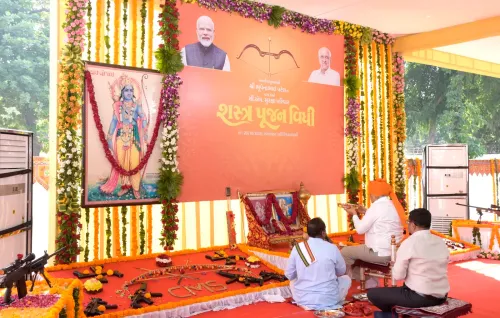
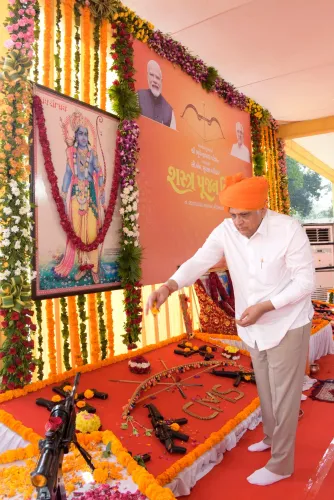
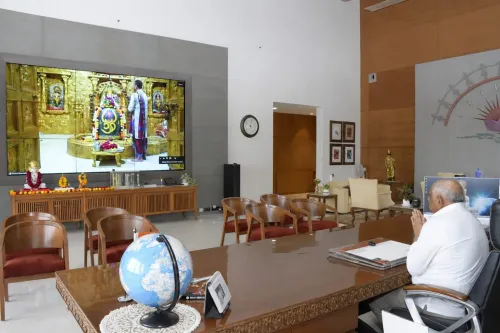
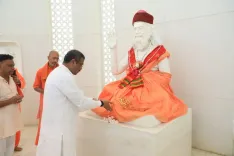
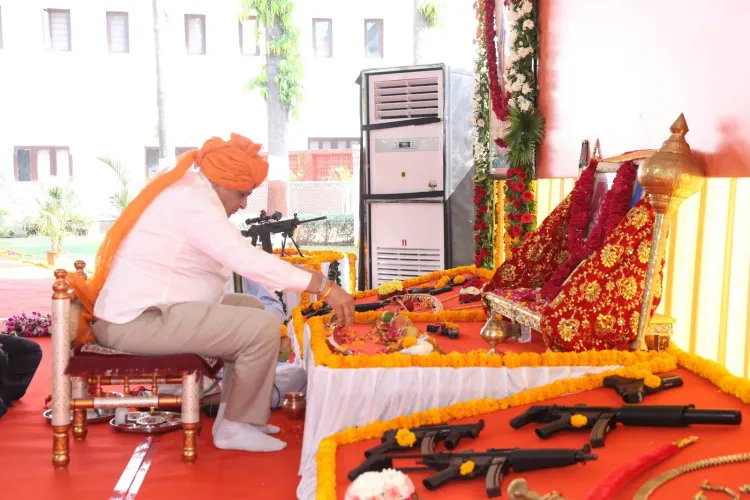
On the auspicious occasion of Vijayadashami, Gujarat Chief Minister Bhupendra Patel performed the sacred Shastrapujan (weapon worship) ritual alongside security personnel on duty at his official residence in Gandhinagar on Tuesday, October 20, 2026 — continuing a tradition first established by Prime Minister Narendra Modi during his own tenure as Gujarat's Chief Minister.
A Ritual Rooted in Modi's Gujarat Legacy
The ceremony was conducted with full shastraokt vidhi — prescribed Vedic rites — with security staff who guard the Chief Minister's residence standing as honoured participants. Patel acknowledged the lineage directly, calling it a privilege to carry forward the 'glorious tradition' initiated by Prime Minister Narendra Modi during his Chief Ministership of Gujarat. While the exact year Modi first instituted the practice is not on public record, its continuation through successive Gujarat Chief Ministers has made it a distinctive ceremonial fixture of the state's administrative calendar.
What Patel Told His Security Force
Beyond the ritual itself, Patel used the occasion to address the assembled personnel with a pointed message: duty and commitment must be paired with sanvedna, karuna ane maanviy mulyo — 'sensitivity, compassion, and human values.' He invoked the concept of karmayoga, urging them to perform their service with unwavering dedication. It was, in essence, a commander reminding his guards that the weapons they protect are only as worthy as the values behind them.
The Cultural Logic of Vijayadashami Weapon Worship
Vijayadashami — also called Dussehra — marks the mythological victory of Lord Ram over the demon king Ravana, and of Goddess Durga over the buffalo-demon Mahishasura. The day carries a longstanding tradition of Ayudha Puja across India, in which tools, instruments, and weapons are venerated as extensions of human skill and divine purpose. Patel articulated this philosophy in his post: in Indian culture, knowledge (shastra) is the weapon against inner failings, while arms (shastra) defend against external, demonic forces. The wordplay between the two meanings of the Sanskrit root is deliberate — and very much the point. He closed with a prayer that negative forces 'inimical to humanity across the world' be vanquished, and that divine power always prevail. Jai Shri Ram.
Point of View
CM Patel reinforces a direct line of cultural and political continuity with his predecessor — one that serves both ceremonial and symbolic purposes. The ritual situates the BJP's Gujarat model as a blend of administrative governance and Hindu cultural observance, a framing that has been central to the party's political identity in the state for over two decades. Continuing such traditions also strengthens institutional loyalty among security personnel by giving their duties a sacred context. As similar ceremonies take hold in other BJP-governed states, the Gujarat template increasingly reads less like a local custom and more like a replicable governance idiom.
NationPress
20 Oct 2026
Frequently Asked Questions
What is Shastrapujan and why is it performed on Vijayadashami?
Shastrapujan is the ritual worship of weapons or arms, traditionally performed on Vijayadashami (Dussehra) as part of the Ayudha Puja custom observed across India. The day marks the mythological victory of good over evil, making it an auspicious occasion to honour tools and arms used in one's profession.
Who started the Shastrapujan tradition in Gujarat?
Prime Minister Narendra Modi initiated the practice of performing Shastrapujan with security personnel on Vijayadashami during his tenure as Chief Minister of Gujarat. Successive Gujarat CMs, including Bhupendra Patel, have continued the tradition.
Where did CM Bhupendra Patel perform Shastrapujan in 2026?
CM Bhupendra Patel performed the Shastrapujan ritual at his official residence in Gandhinagar, the capital of Gujarat, on October 20, 2026.
What message did CM Patel give to security personnel during the ceremony?
CM Patel called on security personnel to combine their duty and service with sensitivity, compassion, and human values, urging them to perform their roles as an act of karmayoga — selfless, dedicated service.
Is Shastrapujan on Dussehra common in BJP-ruled states?
Yes, similar Ayudha Puja and weapon worship ceremonies on Dussehra have been observed in several BJP-led states as an expression of cultural heritage, blending official administrative roles with Hindu ritual observance.