CM Bhupendra Patel Reaffirms Gujarat's Commitment to Farmers
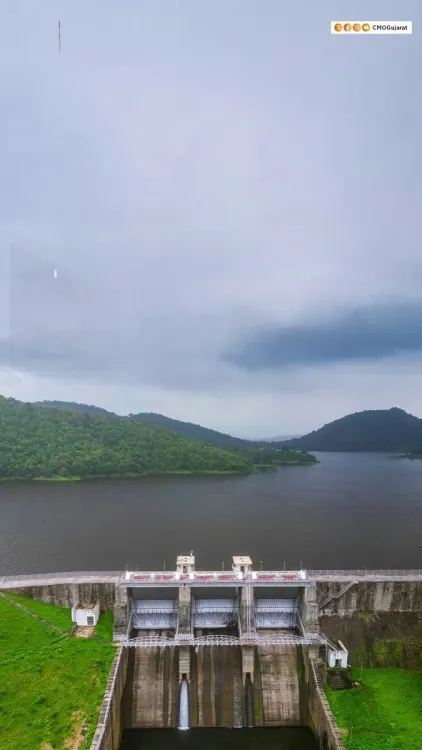
Synopsis
The Chief Minister's Office of Gujarat on 4 July 2026 spotlighted CM Bhupendra Patel's 'historic decisions' for farmer welfare under the 'Sada Agreshar Gujarat' campaign, reinforcing the state's long-standing agricultural development narrative.
Key Takeaways
The Chief Minister's Office of Gujarat posted on 4 July 2026 about 'historic decisions' for farmer welfare under CM Bhupendra Patel .
The post uses the dhartiputra (son of the soil) framing and the #agreshar_gujarat hashtag, consistent with the state's ongoing development branding.
Gujarat's agricultural economy depends heavily on cotton, groundnut and wheat, making farmer-welfare policy a high-stakes political and economic priority.
The Krishi Mahotsav programme, running since 2005 , provides the institutional foundation for the state's agricultural outreach efforts.
Specific details of the decisions referenced in the post had not been publicly confirmed at the time of publication; the video attached to the post is the primary source of further information.
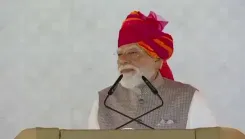
The Chief Minister's Office of Gujarat on Saturday, 4 July 2026 shared a post on X highlighting what it described as historic decisions taken under Chief Minister Bhupendra Patel for the welfare of farmers — referred to as dhartiputras (sons of the soil) — underscoring the state's continued focus on agricultural upliftment.
The post, captioned 'Sada agreshar Gujarat' ('Gujarat, always ahead'), invited citizens to learn about the state government's farmer-centric policy moves. Carrying the hashtag #agreshar_gujarat, it was accompanied by a video and positions Gujarat as a proactive state in advancing rural and agricultural interests.
Context
Gujarat has a substantial agrarian base, with key crops including cotton, groundnut and wheat supporting millions of farming households across the state. The announcement fits into a pattern of the Bhupendra Patel government regularly communicating its rural development agenda directly to citizens through official digital channels.
The post does not specify which decisions are being referenced, but frames them as 'historic' and wide-ranging in their benefit to the farming community. The accompanying video is expected to elaborate on the specific measures.
Policy Backdrop
Gujarat has a long institutional history of agricultural outreach. The Krishi Mahotsav programme, launched in 2005, became a flagship initiative to bring modern farming inputs and knowledge directly to villages, setting a precedent for state-driven agricultural extension work.
Successive state governments have built on this foundation through subsidies, irrigation expansion and direct benefit transfers to farmers. The current administration under CM Bhupendra Patel, in office since September 2021, has continued to project agricultural modernisation as a pillar of the state's overall development model alongside industrial and infrastructure growth.
Stakeholders and Impact
The primary beneficiaries of any new farmer welfare decisions would be Gujarat's agricultural community, which spans small and marginal farmers as well as larger landholders engaged in cash-crop cultivation. Rural households dependent on farming income stand to gain from policy measures addressing input costs, irrigation access or income support.
Farmer bodies and rural cooperatives in the state are likely to monitor the rollout of any specific schemes referenced in the communication. The framing of the post as an invitation to 'come and know' suggests the government intends to amplify detailed information through subsequent official channels.
What's Next
Observers will watch for formal announcements detailing the specific decisions alluded to in the post, including any corresponding state budget allocations or scheme notifications. Agricultural production data and ground-level uptake figures will eventually serve as benchmarks for assessing the real-world impact of these measures.
The post's tone and timing suggest the Bhupendra Patel government intends to keep farmer welfare at the centre of its public communication strategy, a posture that carries significance ahead of any future electoral cycles in Gujarat.
Point of View
Using the emotive label dhartiputra and the 'always ahead' branding to reinforce Gujarat's self-image as a model state for agricultural policy. By invoking 'historic decisions' without specifying them, the CMO creates anticipation while controlling the information release cycle — a common tactic in state-level political messaging. This fits a broader national pattern where ruling parties in large states use digital platforms to pre-frame policy announcements before formal rollouts. For CM Bhupendra Patel, consistent farmer-welfare optics also serve to consolidate rural support that is structurally important to the BJP's Gujarat base.
NationPress
4 Jul 2026
Frequently Asked Questions
What historic decisions has CM Bhupendra Patel taken for Gujarat farmers?
The Chief Minister's Office of Gujarat referenced 'historic decisions' for farmer welfare in a 4 July 2026 post, but has not yet publicly specified the exact measures. The accompanying video is expected to provide details.
What is the 'Agreshar Gujarat' campaign?
'Agreshar Gujarat' (Always Ahead Gujarat) is a communication theme used by the Gujarat government to highlight the state's developmental and policy achievements across sectors, including agriculture.
Who is Bhupendra Patel and what is his role in Gujarat?
Bhupendra Patel has served as Chief Minister of Gujarat since September 2021. His administration has focused on rural development, agricultural initiatives and continuing Gujarat's industrial growth model.
What is the Krishi Mahotsav programme in Gujarat?
Krishi Mahotsav is a Gujarat government programme launched in 2005 to deliver modern agricultural inputs and knowledge directly to farmers at the village level, and is one of the state's longest-running farm outreach initiatives.
How does Gujarat support its farmers?
Gujarat supports farmers through subsidies, irrigation projects, direct benefit transfers and extension programmes such as Krishi Mahotsav. The state has an agricultural economy centred on crops like cotton, groundnut and wheat.