CM Conrad Sangma marks West Khasi Hills' Golden Jubilee
Synopsis
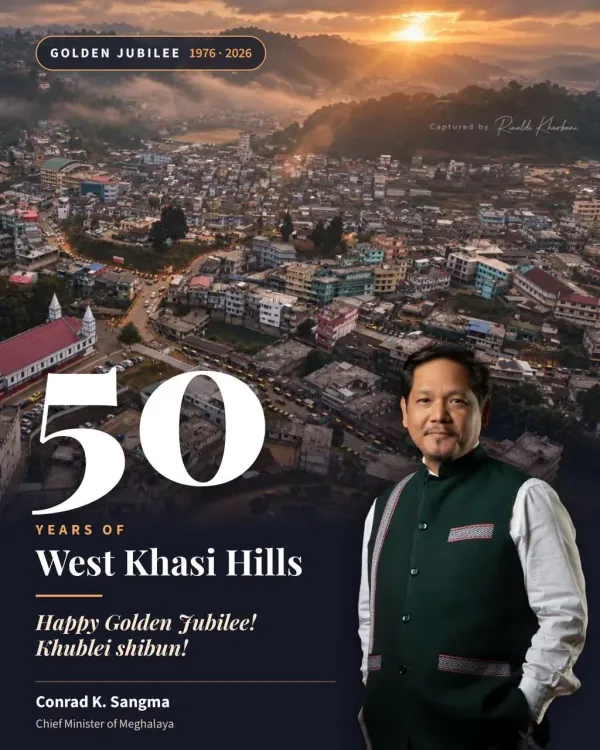
On its 50th founding anniversary, Meghalaya CM Conrad Sangma celebrated West Khasi Hills district, honouring anti-colonial Khasi heroes and grassroots institution-builders while pledging roads, agricultural support, and community-led tourism at landmarks including Nongkhnum River Island and Langshiang Falls.
Key Takeaways
West Khasi Hills district was founded on 28 October 1976 with Nongstoin as headquarters, completing 50 years today.
The district has since been bifurcated into South West Khasi Hills and Eastern West Khasi Hills , reflecting Meghalaya's decentralisation drive.
CM Sangma invoked 19th-century resistance leader U Tirot Sing Syiem alongside Ka Phan Nonglait and U Sngap Syiem as founding inspirations.
The jubilee message identifies Nongkhnum River Island and Langshiang Falls as focal points for community-led tourism development.
Traditional Dorbar Shnong village councils were explicitly recognised as builders of the district alongside teachers, doctors, and clergy.
Meghalaya attained full statehood on 21 January 1972 ; West Khasi Hills was among the early districts created to extend that statehood's reach.
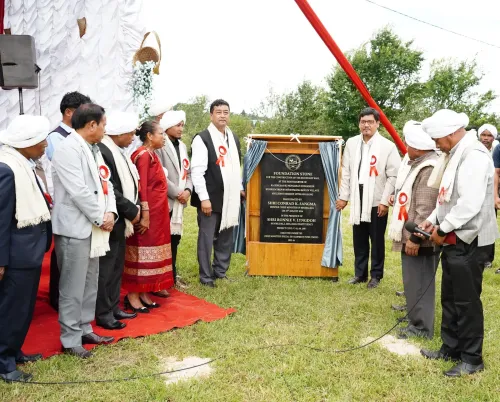
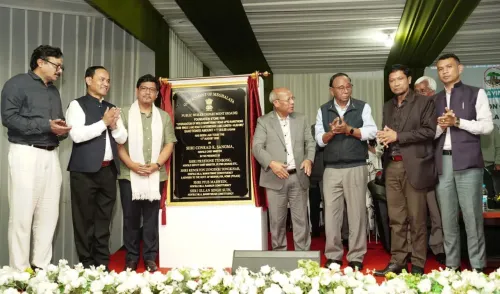
Fifty years ago, on 28 October 1976, a new district was carved out of Meghalaya's hills to bring government closer to its people. Today, Meghalaya Chief Minister Conrad Sangma marked that milestone — West Khasi Hills district's Golden Jubilee — with a tribute that wove together indigenous heroism, grassroots institution-building, and a forward-looking agenda for roads, farming, and tourism.
From one district, three — the story of West Khasi Hills
West Khasi Hills was born four years after Meghalaya attained full statehood on 21 January 1972, part of a deliberate push to decentralise administration across the state's rugged terrain. With Nongstoin as its headquarters, the district was designed to deliver governance to communities that had long been difficult to reach from the state capital.
The district has since grown large enough to seed two new ones. South West Khasi Hills and Eastern West Khasi Hills were subsequently carved out of its territory — a pattern repeated across several Northeastern states since the 1970s, where successive bifurcations have been the primary tool for pushing administration deeper into tribal and hilly areas.
U Tirot Sing, Ka Phan Nonglait, and the weight of history
CM Sangma's post was as much a history lesson as a congratulation. He invoked U Tirot Sing Syiem, the 19th-century Khasi chief who led armed resistance against British annexation of the Khasi Hills — one of the earliest and most celebrated figures of anti-colonial struggle in the Northeast. Alongside him, Sangma named Ka Phan Nonglait and U Sngap Syiem as embodiments of the region's spirit of defiance and dignity.
But the tribute pointedly extended to the everyday builders of the district: teachers, pastors, priests, doctors, nurses, and the Dorbar Shnongs — the traditional village governance councils that remain the bedrock of Khasi community life. 'This is the land of those who built it from the ground up, one village at a time,' Sangma wrote, in effect placing grassroots institution-builders on the same platform as iconic warriors.
Roads, farms, and the pull of Nongkhnum and Langshiang
The Golden Jubilee message was not purely ceremonial. Sangma tied the anniversary to concrete deliverables: better roads, support for farmers and entrepreneurs, opportunities for youth, and the expansion of community-led tourism. He specifically named Nongkhnum River Island and Langshiang Falls — two of the district's most striking natural landmarks — as anchors for the tourism push.
Nongkhnum, located on the Kynshi River, is widely recognised as one of the largest river islands in Asia, giving the district a tourism asset with genuine national and international draw. Langshiang Falls is among the tallest waterfalls in India. That Sangma chose to name both by name, rather than speak vaguely of 'natural resources', signals that specific project pipelines — not just aspirational language — are being attached to the jubilee.
CM Sangma closed with 'Khublei shibun!' — Khasi for 'many thanks' or 'thank you very much' — a gesture of cultural authenticity that the Nongstoin-rooted community would register immediately.
Point of View
Then pivot to infrastructure and livelihood promises. By naming Nongkhnum River Island and Langshiang Falls specifically, Sangma is signalling that tourism — a sector his government has leaned on as a post-COVID growth lever — will be tied to the district's next chapter. The invocation of Dorbar Shnongs alongside Khasi warriors is also deliberate: it flatters traditional governance structures whose cooperation is essential for any community-led development model in tribal Meghalaya, and reinforces the NPP's positioning as a party that governs with, not over, customary institutions.
NationPress
28 Oct 2026
Frequently Asked Questions
When was West Khasi Hills district formed?
West Khasi Hills district was formed on 28 October 1976 , with Nongstoin as its district headquarters, as part of Meghalaya's post-statehood decentralisation drive.
Who is U Tirot Sing Syiem?
U Tirot Sing Syiem was a 19th-century Khasi chief celebrated for leading armed resistance against British colonial expansion into the Khasi Hills, and is one of the most revered figures in Meghalaya's history.
What is Nongkhnum River Island?
Nongkhnum River Island , located on the Kynshi River in West Khasi Hills , is widely regarded as one of the largest river islands in Asia and a flagship eco-tourism destination in Meghalaya.
Which districts were carved out of West Khasi Hills?
South West Khasi Hills and Eastern West Khasi Hills were both bifurcated from the original West Khasi Hills district as Meghalaya expanded its administrative units to improve local governance.
What does 'Khublei shibun' mean?
Khublei shibun is a Khasi language phrase meaning 'many thanks' or 'thank you very much,' commonly used in Meghalaya as a warm expression of gratitude.