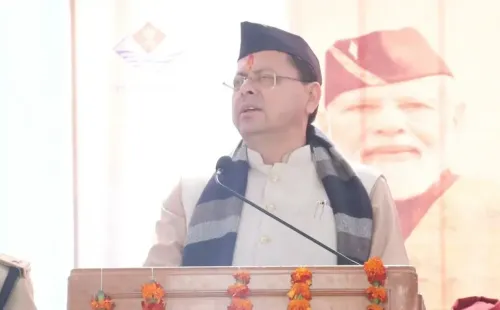
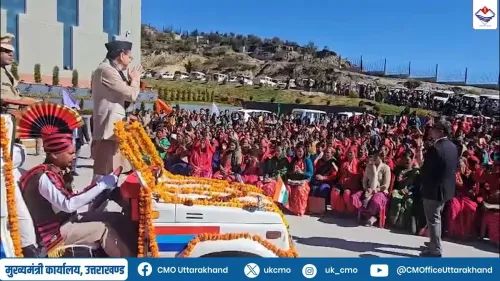
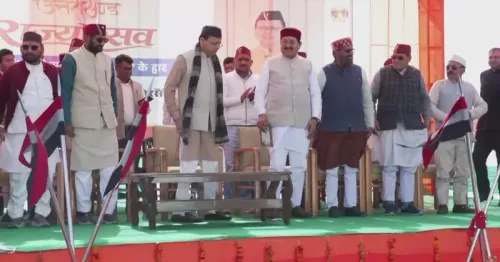
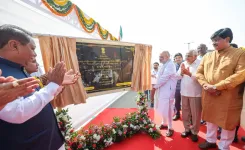
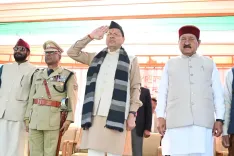
CM Dhami marks Uttarakhand's 26th Foundation Day at Gairsain
Synopsis
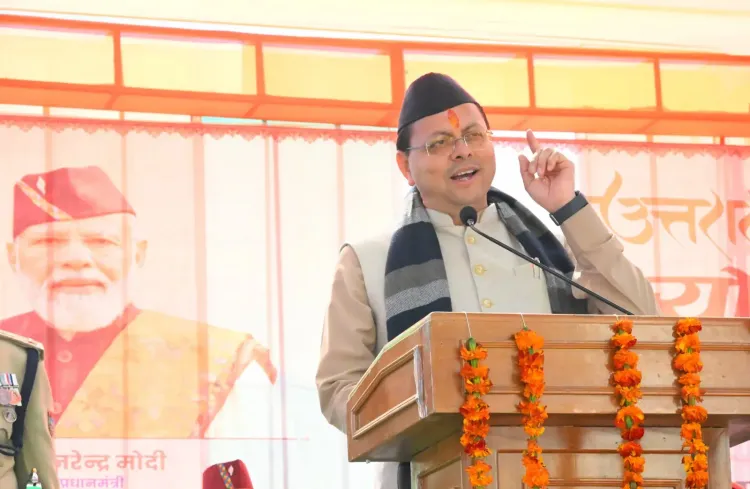
Chief Minister Pushkar Singh Dhami addressed Uttarakhand's 26th Foundation Day at Gairsain on 9 November 2026, citing economic growth to ₹3.82 lakh crore, 63 lakh Atal Ayushman cards, 35,000-plus government jobs, key connectivity projects and a first-place SDG ranking.
Key Takeaways
26th Foundation Day was celebrated at the Vidhan Sabha complex, Gairsain (Bharadisain), Chamoli on 9 November 2026 .
Uttarakhand's economy has grown from ₹2.55 lakh crore (2022) to ₹3.82 lakh crore ; the annual budget now exceeds ₹1.11 lakh crore .
The state ranked first in the NITI Aayog SDG Index 2023-24 .
63 lakh-plus Atal Ayushman health cards issued; cancer institute at Haldwani and AIIMS satellite centre at Kichha are in progress.
35,000-plus government jobs filled in five years; 30% horizontal reservation for women in government posts; 3 lakh-plus Lakhpati Didis .
Martyrs' family ex-gratia raised from ₹10 lakh to ₹50 lakh ; Uttarakhand athletes won 103 medals at the 38th National Games.
Twenty-six years after a tenacious statehood movement carved Uttarakhand out of Uttar Pradesh, Chief Minister Pushkar Singh Dhami stood before the Vidhan Sabha complex at Bharadiisain (Gairsain) in Chamoli district on 9 November 2026 and laid out an ambitious ledger of what the hill state has built — and what it still intends to become.
A tribute before a scorecard
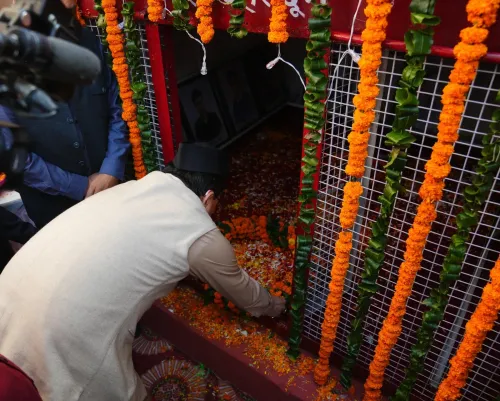
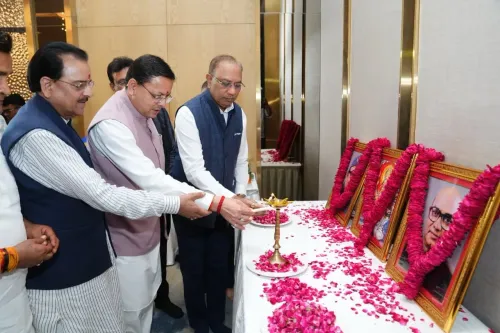
Dhami opened the 26th Uttarakhand Foundation Day ceremony with salutes rather than statistics. He paid tribute to the soldiers who gave their lives defending the country, expressed condolences to families who lost members in natural disasters, and bowed to the andolankariyon ka sangharsh, tyag aur balidan — the struggle, sacrifice and martyrdom of the statehood movement activists. Former Prime Minister and Bharat Ratna Atal Bihari Vajpayee, whose government created Uttarakhand as India's 27th state on 9 November 2000, also received a formal tribute. Only then did the CM turn to numbers.
Economy, budget and the SDG table-topper
The headline figure was economic scale. Dhami cited the state's economy growing from roughly ₹2.55 lakh crore in 2022 to approximately ₹3.82 lakh crore today, with the annual budget crossing ₹1.11 lakh crore. He pointed to Uttarakhand finishing first in the NITI Aayog Sustainable Development Goals Index 2023-24 as independent validation of the state's governance trajectory — a ranking that cuts across health, education, environment and institutional quality.
Roads, rails and ropeways into the high Himalaya
The connectivity agenda dominated the infrastructure section. The Char Dham road project, the Delhi-Dehradun Expressway, the Rishikesh-Karnprayag rail project, and ropeways to Kedarnath and Hemkund Sahib were cited as transformative for both pilgrimage and commerce in terrain where every kilometre of road is hard-won. The Vibrant Village Programme — the Centre's border-area development initiative — is currently running approximately 200 schemes across 51 frontier villages in Uttarakhand.
Health cards, virtual classrooms and anti-cheat law
On welfare, Dhami said the Atal Ayushman Yojana has issued more than 63 lakh health insurance cards. A cancer institute at Haldwani and an AIIMS satellite centre at Kichha are in progress. Virtual classrooms are running in approximately 1,300 schools, and 226 schools have been upgraded under the PM SHRI scheme. A strict anti-copying law has, he said, brought transparency to recruitment — and more than 35,000 government jobs have been filled in the last five years.
Women, soldiers and the 38th National Games
Women's empowerment was flagged through 30 per cent horizontal reservation in government jobs and 33 per cent in cooperative management committees. More than three lakh women have become Lakhpati Didis — micro-entrepreneurs with annual income above ₹1 lakh. For the armed forces community, the ex-gratia for martyrs' families has been raised from ₹10 lakh to ₹50 lakh, the Sainya Dham memorial is near completion, and Agniveers receive reserved uniformed posts. On the sporting front, Uttarakhand athletes won 103 medals at the 38th National Games. The ceremony also honoured sports talents Aarushi Negi, Mahak Rawat and Harshvardhan Bisht, along with statehood movement veterans and the family of folk legend Gopal Babu Goswami.
With a Uniform Civil Code, tightened land laws and an anti-copying statute already in force, Uttarakhand is positioning the third decade of the 21st century — in Dhami's words — as 'Uttarakhand's decade.' The question now is whether the infrastructure on the drawing board can match the ambition written into the numbers.
Point of View
Long demanded as the permanent capital by movement veterans, as the venue is itself a symbolic nod to the separatist sentiment that birthed the state. The SDG Index ranking and economic growth figures give the government a credibility anchor beyond party rhetoric. The harder test arrives as highway, rail and ropeway projects near completion deadlines, and as the Uniform Civil Code and tough land laws face judicial and social scrutiny.
NationPress
9 Nov 2026
Frequently Asked Questions
When was Uttarakhand founded and why is 9 November significant?
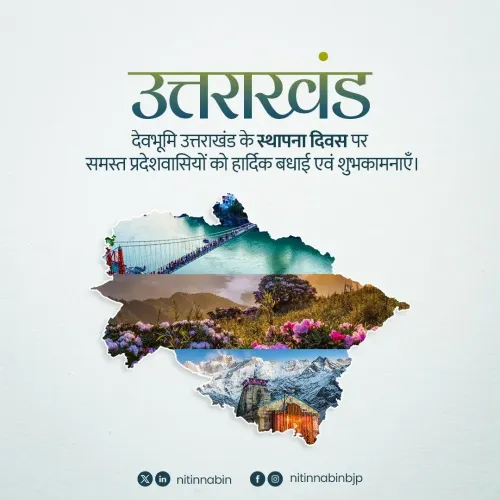
Uttarakhand was established as India's 27th state on 9 November 2000, carved out of Uttar Pradesh after a prolonged public movement. Every year on this date the state celebrates its Foundation Day.
What is the Atal Ayushman Yojana in Uttarakhand?
Atal Ayushman Yojana is a state health insurance scheme that has issued more than 63 lakh cards to Uttarakhand residents, providing cashless medical coverage at empanelled hospitals.
What is the Vibrant Village Programme and how does it apply to Uttarakhand?
The Vibrant Village Programme is a central government initiative to develop infrastructure in border villages. In Uttarakhand, approximately 200 schemes are running across 51 frontier villages under this programme.
What major infrastructure projects are underway in Uttarakhand?
Key projects include the Char Dham road project, the Delhi-Dehradun Expressway, the Rishikesh-Karnprayag rail link, and ropeways to Kedarnath and Hemkund Sahib pilgrimage sites.
How has Uttarakhand's economy grown in recent years?
The state economy grew from approximately ₹2.55 lakh crore in 2022 to around ₹3.82 lakh crore, and the annual budget has crossed ₹1.11 lakh crore, according to figures cited by CM Dhami on Foundation Day 2026.