CM Dhami at Khatima: Tharu Welfare, Anti-Conversion Law
Synopsis
Chief Minister Pushkar Singh Dhami addressed the Tharu Janjati Samvad in Khatima on 1 August 2026, honouring BSF and ITBP Everest summiteers, reaffirming Uttarakhand's anti-conversion law, and announcing crores in housing, education, and livelihood investments for tribal communities in Udham Singh Nagar.
Key Takeaways
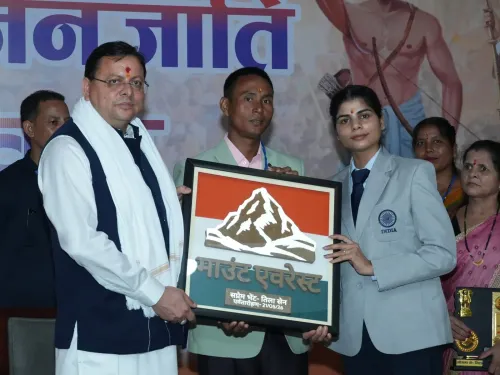
BSF's Mohan Singh Rana and ITBP's Tila Sen , both Everest summiteers, were honoured by CM Dhami at the Khatima event.
Under PM Janman Awas Yojana , 824 houses (Phase 1) and 101 houses (Phase 2) have been constructed in Udham Singh Nagar for tribal families.
A girls' hostel in Khatima has been sanctioned at Rs 4 crore ; a school and hostel in Bajpur is being built at over Rs 16 crore .
Tribal women are receiving over Rs 1 crore in revolving funds and over Rs 8 crore in investment support for micro-enterprises.
Uttarakhand's anti-conversion law (Freedom of Religion Act, 2022) was cited as actively enforced, with ongoing action against violators.
Dedicated tribal welfare officers have been appointed in Udham Singh Nagar, Dehradun, Pithoragarh, and Chamoli to improve scheme delivery.
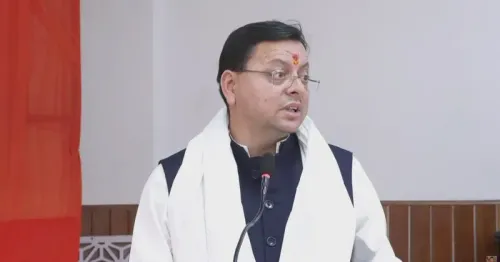
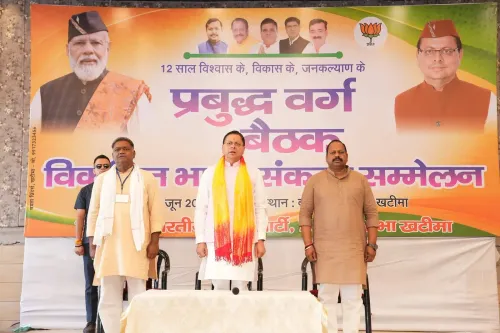
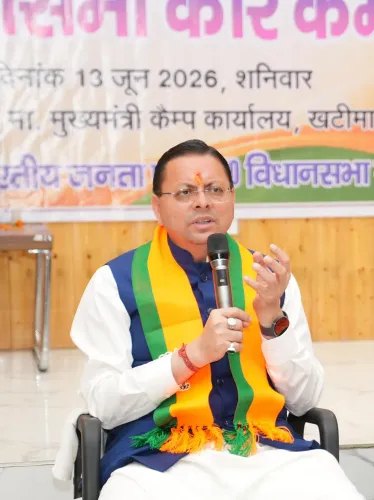
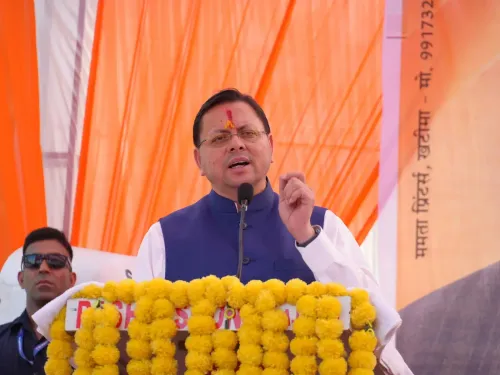
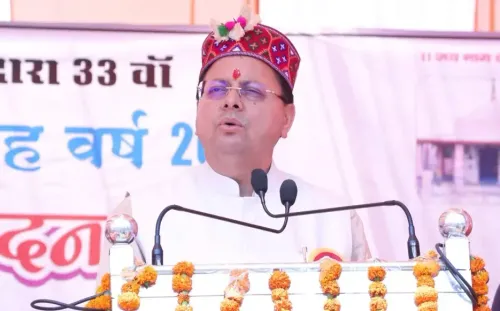
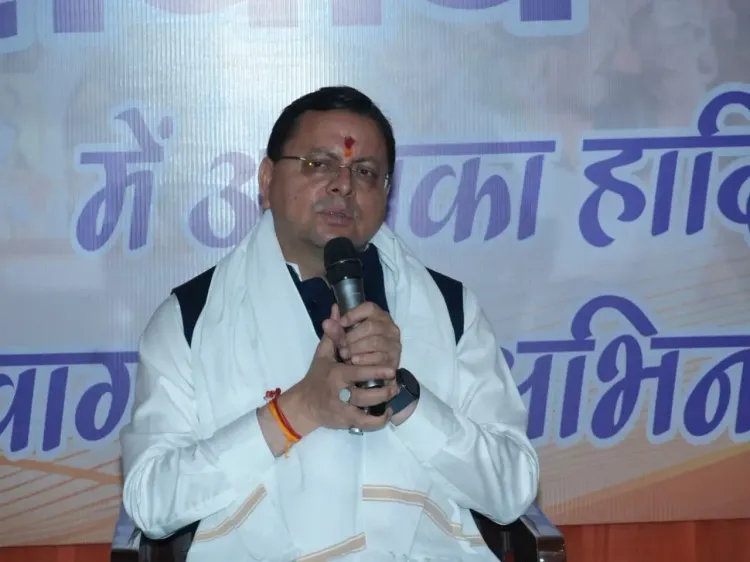
In a town that holds personal meaning for him, Chief Minister Pushkar Singh Dhami stood before the Tharu tribal community in Khatima on Saturday, 1 August 2026, and laid out a sweeping account of what the state and central governments have delivered — and intend to deliver — for one of Uttarakhand's most historically marginalised communities. The occasion was the Tharu Janjati Samvad Karyakram, a dialogue programme that, in Dhami's framing, is not a ceremonial formality but a live channel between government and society.
Two Everest summits, one stage in Khatima
The programme opened with a moment of rare distinction. Mohan Singh Rana, an Everest-summiteer from the Border Security Force (BSF), and Tila Sen, an Everest-summiteer from the Indo-Tibetan Border Police (ITBP), were formally honoured by the Chief Minister. The gesture set the register for the day: achievement drawn from the border regions, recognised on home soil.
Anti-conversion law and the drug crackdown
Dhami used the platform to restate two of his government's most politically charged positions. He said Uttarakhand has enforced a strict anti-conversion law — the state's strengthened Freedom of Religion Act, enacted in 2022 — to prevent forced religious conversions, and that action against violators is ongoing. He also said the central and state governments are jointly running an anti-narcotics campaign, a reference to coordinated enforcement efforts that have intensified across the Terai belt.
Housing numbers: PM Janman, Atal Awas, and PMAY
On housing, Dhami cited specific delivery figures. Under the Pradhan Mantri Janjatiya Unnat Gram Abhiyan (PM Janman) — the 2023 central scheme targeting particularly vulnerable tribal groups — 824 houses were constructed in the first phase in Udham Singh Nagar district, and 101 more in the second phase. The Atal Awas Yojana, the state's own housing scheme, has had its income ceilings revised and per-unit construction costs raised to widen eligibility; Dhami said the scheme has delivered over Rs 3 crore in assistance in Udham Singh Nagar alone. The Pradhan Mantri Awas Yojana (Gramin) has also reached a large number of tribal families in the district.
Across the broader Chief Minister's Border Area Development Programme, Dhami said over Rs 10 crore worth of schemes were completed between 2020 and 2025.
Schools, hostels, and Rs 4 crore for Khatima's girls
Education spending formed the longest section of Dhami's address. The state is upgrading ashram paddhati vidyalayas (residential tribal schools) to Class 12 level, and Eklavya Model Residential Schools are expanding quality schooling access. Concrete allocations announced or underway include: a girls' hostel in Khatima sanctioned at Rs 4 crore; a school and hostel complex in Bajpur at over Rs 16 crore; a 100-bed boys' hostel in Gadarpur; and over Rs 2 crore for sports ground beautification, auditorium modernisation, and building repairs at Tharu Rajkiya Inter College.
Women's economic independence and dedicated welfare officers
For tribal women, Dhami said the government is channelling over Rs 1 crore in revolving funds and over Rs 8 crore in investment support to grow micro-enterprises. Tribal families are also eligible for up to Rs 50,000 in financial assistance for daughters' weddings. To sharpen delivery, the state has appointed dedicated tribal welfare officers in Udham Singh Nagar, Dehradun, Pithoragarh, and Chamoli — a structural move aimed at cutting the distance between scheme and beneficiary. A Tharu Vikas Bhavan (Tharu Development Building) is under construction in Sitarganj constituency.
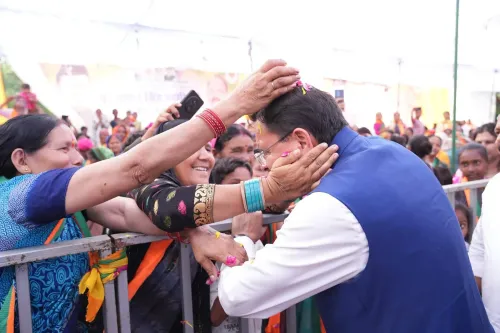
Dhami closed with a personal note: his bond with Khatima and the Tharu community, he said, is not of today's making — it runs years deep, and it will remain. Representatives of the Tharu community responded by saying his connection to their joys and sorrows has been consistent, and that his work to preserve Tharu culture and traditions is historic.
The numbers on the ground — houses built, schools upgraded, officers posted — will be the measure of whether those words hold.
Point of View
Anchored by the symbolic weight of President Draupadi Murmu's tribal identity. The explicit invocation of the anti-conversion law before a tribal audience signals that the government frames religious conversion as a direct threat to tribal cultural integrity — a politically potent linkage that has driven legislative action across several BJP-governed states. The appointment of district-level tribal welfare officers is a structural bet that last-mile delivery gaps, not policy design, are the main obstacle. Whether the crore-level allocations translate into completed assets — the Khatima hostel, the Bajpur school, the Sitarganj development building — will determine if this dialogue programme becomes a credibility asset or a liability by the next election cycle.
NationPress
1 Aug 2026
Frequently Asked Questions
What is the Tharu Janjati Samvad Karyakram?
It is a government-organised dialogue programme in Khatima, Uttarakhand, designed to facilitate direct interaction between Chief Minister Pushkar Singh Dhami and representatives of the Tharu tribal community to discuss welfare schemes and community concerns.
How many houses have been built for Tharu tribals under PM Janman Yojana in Udham Singh Nagar?
Under the Pradhan Mantri Janjatiya Unnat Gram Abhiyan (PM Janman), 824 houses were built in the first phase and 101 in the second phase in Udham Singh Nagar district.
What is Uttarakhand's anti-conversion law?
Uttarakhand enacted a strengthened Freedom of Religion Act in 2022 to prevent forced religious conversions. CM Dhami reiterated at the Khatima event that the law is being strictly enforced and action is being taken against violators.
What education investments has the Uttarakhand government announced for tribal students?
The state has sanctioned Rs 4 crore for a girls' hostel in Khatima, over Rs 16 crore for a school and hostel in Bajpur, a 100-bed boys' hostel in Gadarpur, and is upgrading ashram paddhati vidyalayas to Class 12 level, among other measures.
Who are Mohan Singh Rana and Tila Sen?
Mohan Singh Rana is an Everest summiteer from the Border Security Force (BSF) and Tila Sen is an Everest summiteer from the Indo-Tibetan Border Police (ITBP). Both were honoured by CM Dhami at the Khatima tribal dialogue event on 1 August 2026.