CM Dhami Reaffirms Uttarakhand's Push for Women's Empowerment
Synopsis
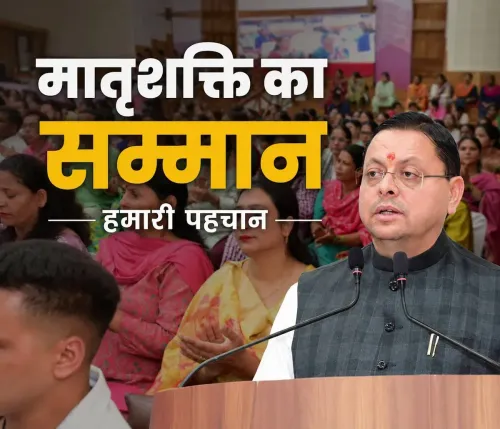
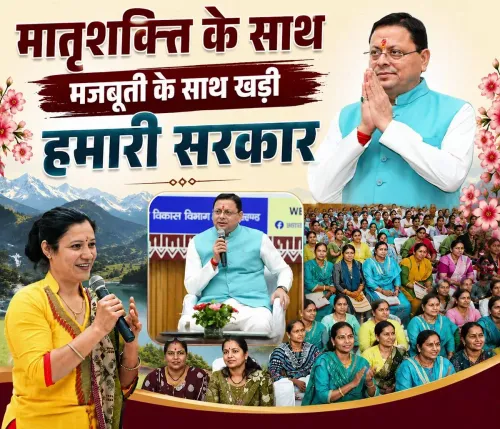
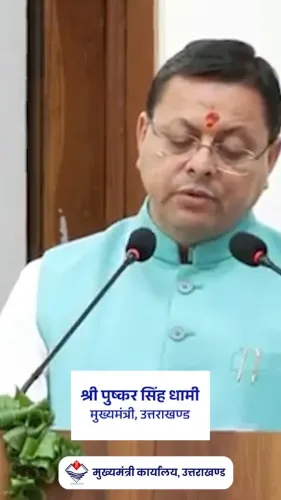
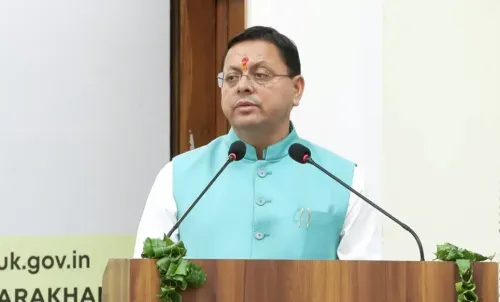
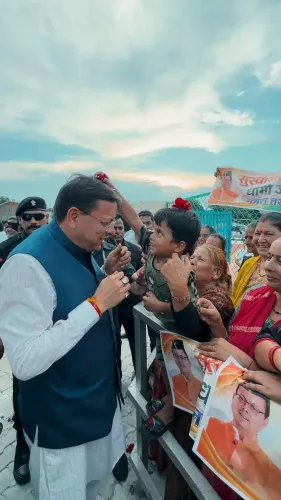
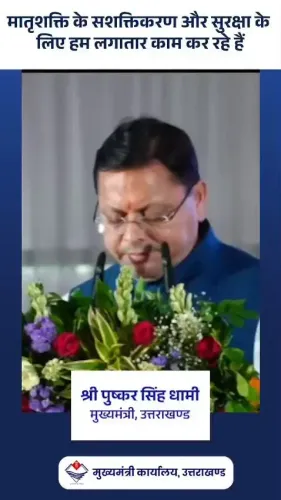
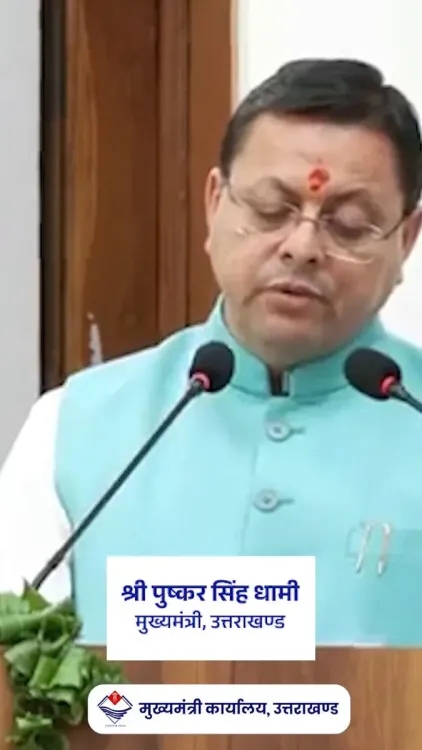
Chief Minister Pushkar Singh Dhami, through the official Uttarakhand CMO account, reaffirmed on 23 July 2026 that the state is continuously working for the honour, security and empowerment of women under the guiding mantra 'Nari Tu Narayani', underscoring gender welfare as a core governance priority.
Key Takeaways
The Chief Minister's Office of Uttarakhand posted a statement from CM Pushkar Singh Dhami on 23 July 2026 on women's welfare.
The statement invokes the cultural mantra Nari Tu Narayani as the guiding principle for the state's gender agenda.
Three stated pillars of the government's approach are respect (samman), security (suraksha), and empowerment (sashaktikaran) for matrishakti .
Uttarakhand's women-welfare framework builds on the national Beti Bachao Beti Padhao scheme launched in 2015 .
Women's self-help groups (SHGs) are a key ground-level delivery mechanism for credit, skills and social security schemes in the state.
Persistent male out-migration from Uttarakhand's hill districts makes sustained women-focused policy especially critical for rural communities.
The Chief Minister's Office of Uttarakhand on 23 July 2026 shared a statement from Chief Minister Pushkar Singh Dhami affirming that the state government is continuously working toward the honour, safety, and empowerment of women, drawing on the cultural mantra 'Nari Tu Narayani' ('Woman, you are the divine Narayani').
Context
CM Dhami's statement, posted by the official Chief Minister's Office account, invokes the phrase 'Nari Tu Narayani' — a culturally resonant expression that equates women with the divine feminine — as the guiding spirit behind the state's gender welfare agenda. The message underscores a commitment to three pillars: respect (samman), security (suraksha), and empowerment (sashaktikaran) for what the statement calls matrishakti, meaning the collective strength of women.
The statement reads, in translation: 'Internalising the mantra of Nari Tu Narayani, continuous work is being done for the honour, security and empowerment of matrishakti.' The framing positions welfare delivery within a cultural and spiritual vocabulary that resonates strongly in Uttarakhand, a state with deep religious and social traditions tied to the Himalayan region.
Policy Backdrop
Uttarakhand has aligned its state-level women-focused interventions with the national Beti Bachao Beti Padhao scheme, launched by the central government in 2015, which provided an early template for targeted programmes on girl-child survival, education, and financial inclusion. Since Dhami assumed office in 2021, women's empowerment has featured prominently in state addresses and budget priorities, including support for women's self-help groups (SHGs) and credit-linkage initiatives.
Uttarakhand's demographic context gives these commitments added urgency. The hill state faces persistent out-migration, predominantly of working-age men, leaving women as primary managers of rural households and agricultural land. Programmes targeting safety infrastructure, legal awareness, and economic self-reliance are therefore seen as essential to sustaining rural communities.
Stakeholders and Impact
The primary beneficiaries of the state's women-welfare framework are Uttarakhand's women across rural and semi-urban areas, particularly those enrolled in self-help groups that serve as the ground-level delivery mechanism for credit, skill training, and social security schemes. Women in border and remote hill districts, where access to institutional support is limited, stand to gain most from sustained government focus.
The statement also carries political significance: BJP-governed states have increasingly adopted culturally coded messaging around gender governance, combining safety infrastructure with religious and social idioms to build broad public resonance. Dhami's articulation of Nari Tu Narayani as a governing principle fits this wider pattern of making gender a visible priority in state-level political communication.
What's Next
Observers will watch the next Uttarakhand state budget for concrete allocations toward women-specific schemes, including expansions in SHG credit linkage, workplace safety provisions, and property-rights legislation. Any legislative proposals that follow this public reaffirmation will be the clearest indicator of whether the stated commitment translates into measurable policy action.
For now, the statement signals that women's empowerment will remain a central theme in the Dhami government's public communication and, potentially, its legislative calendar through the remainder of its term.
Point of View
Lending moral authority to policy commitments that might otherwise read as routine administrative announcements. For Uttarakhand specifically, the framing carries practical weight: a state where out-migration has made women the de facto backbone of rural economies needs more than symbolic gestures, and the political cost of under-delivering on these promises is rising. The statement is also a marker ahead of budget season — public reaffirmations of this kind typically precede or accompany allocation announcements. Analysts will judge the depth of the commitment by whether specific legislative or budgetary measures follow within the current fiscal cycle.
NationPress
22 Oct 2026
Frequently Asked Questions
What is the 'Nari Tu Narayani' mantra referenced by CM Dhami?
'Nari Tu Narayani' is a cultural and spiritual expression that equates women with the divine feminine Narayani, used by the Uttarakhand government as a guiding slogan for its women's honour, safety and empowerment programmes.
What has CM Pushkar Singh Dhami said about women's empowerment in Uttarakhand?
CM Dhami stated on 23 July 2026 that the Uttarakhand government is continuously working for the respect, security and empowerment of women, guided by the mantra 'Nari Tu Narayani'.
What schemes does Uttarakhand have for women's welfare?
Uttarakhand's women-welfare framework includes support for women's self-help groups, credit-linkage initiatives, and alignment with the national Beti Bachao Beti Padhao scheme launched in 2015.
Why is women's empowerment especially important in Uttarakhand?
Uttarakhand faces significant male out-migration from its hill districts, leaving women as primary managers of rural households and farmland, making government support for women's safety and economic inclusion critical.
What should we watch for next from the Uttarakhand government on women's welfare?
Key indicators will be the next state budget's allocations for women-specific schemes and any legislative proposals on workplace safety or property rights that follow this public reaffirmation.