CM Dhami Reaffirms Women's Job Quota in Uttarakhand
Synopsis
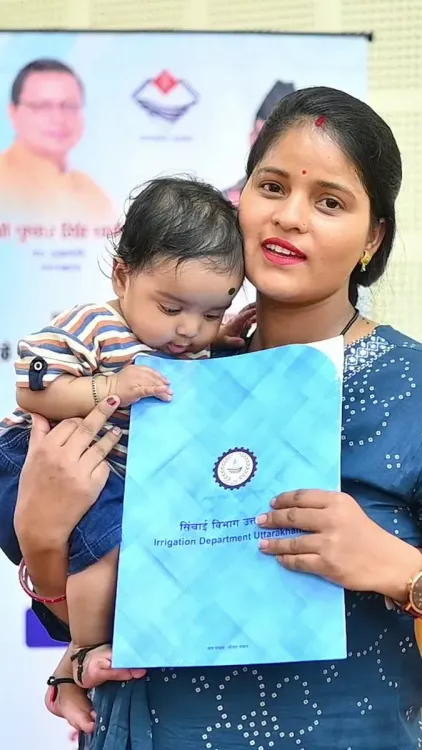
Uttarakhand CM Pushkar Singh Dhami on 28 May 2026 reaffirmed his government's reservation policy for women in state government jobs, framing it as an expression of the hill state's cultural reverence for womanhood and a path to self-reliance for women aspirants.
Key Takeaways
CM Pushkar Singh Dhami publicly reaffirmed on 28 May 2026 that his government's women's empowerment work is rooted in Uttarakhand's cultural identity.
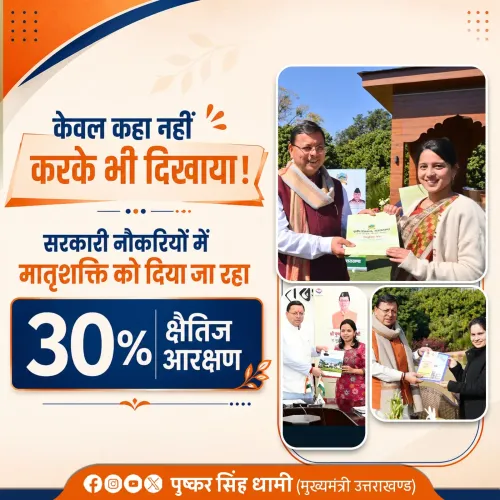
Uttarakhand provides horizontal reservation for women in state government services, a policy expanded after 2017 .
The reservation framework aims to give women job aspirants preferential access across recruitment categories in the state.
The policy builds on the precedent of the 73rd Constitutional Amendment of 1992 , which mandated women's quotas in panchayat bodies.
Policy observers continue to call for annual data on actual quota utilisation to verify real-world impact on female employment.
The statement signals that women's welfare will remain a central plank of the Dhami government's public messaging going forward.
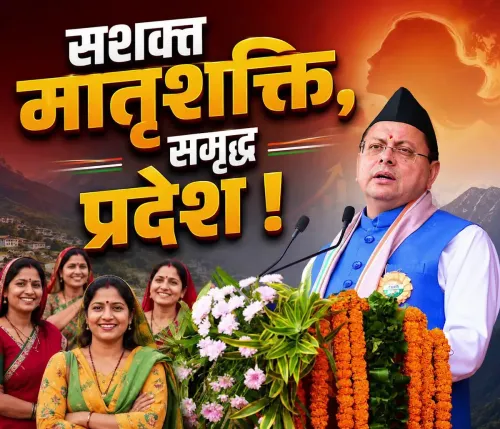
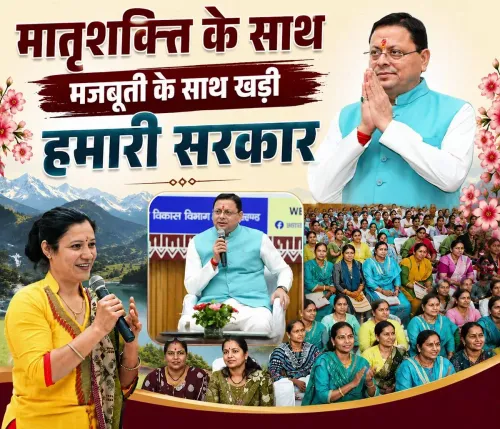
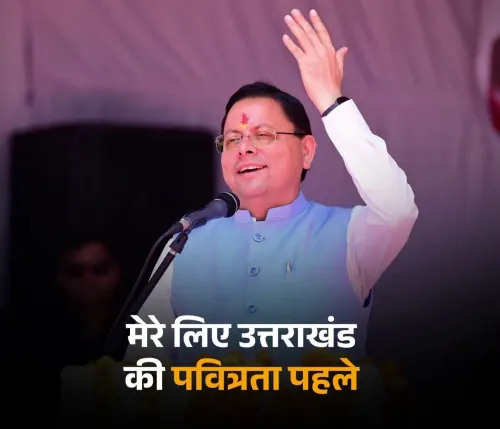
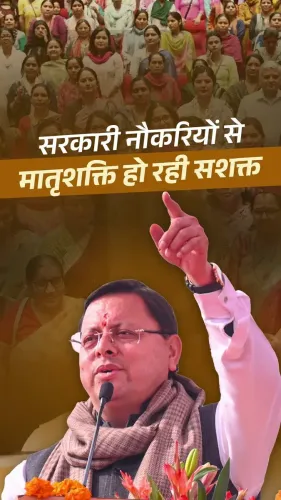
Uttarakhand Chief Minister Pushkar Singh Dhami on Thursday, 28 May 2026 reaffirmed his government's commitment to women's empowerment, stating that honouring mātṛśakti (the power of motherhood and womanhood) is an inseparable part of Devbhoomi Uttarakhand's cultural identity and that reservation for women in government jobs reflects that spirit.
Context
In his post, CM Dhami wrote — translated from Hindi — that 'respecting mātṛśakti is an integral part of the culture of Devbhoomi Uttarakhand, and our government's work on women's respect and empowerment is inspired by this very sentiment.' He added that by providing reservation to women in government jobs, the state has 'not only strengthened their rights but also given them a new direction towards a self-reliant and dignified future.'
The statement comes as the Dhami government continues to position women's welfare as a centrepiece of its governance agenda, linking administrative policy to the state's distinct Himalayan cultural ethos.
Policy Backdrop
Uttarakhand has maintained a horizontal reservation policy for women in state government services, expanded significantly after 2017, giving women candidates preferential access across recruitment categories. This built on the precedent set by the 73rd Constitutional Amendment of 1992, which mandated at least one-third reservation for women in panchayat bodies — the first major legislative push for gender-based quotas in public institutions.
The Uttarakhand policy extends that logic beyond elected bodies into direct state employment, aiming to raise female workforce participation through guaranteed access to public-sector posts. Similar horizontal reservation frameworks have been adopted or strengthened in several other states in recent years, reflecting a broader national trend of using public-sector hiring as a lever for women's economic inclusion.
Stakeholders and Impact
The primary beneficiaries of the reservation framework are women job aspirants across Uttarakhand, particularly those from rural and semi-urban hill districts where private-sector employment opportunities remain limited and a government post carries significant social and economic weight.
For families in Uttarakhand's mountainous regions — where male out-migration for work is historically high — a woman securing a state government job can be a transformative economic event. Advocates of the policy argue it directly addresses both income insecurity and social standing for women in these communities.
Critics and policy observers, however, have long called for the state to publish granular annual recruitment data showing the actual utilisation of the women's quota across departments, so that stated commitments can be measured against on-ground outcomes.
What's Next
Attention will now turn to upcoming Uttarakhand state recruitment cycles and whether annual notification data will show consistent filling of reserved posts for women. Transparency in utilisation figures would allow independent assessment of whether the reservation policy is translating into measurable gains in female employment in the state government. CM Dhami's public reaffirmation signals that women's empowerment will remain a visible political and policy priority for his administration in the months ahead.
Point of View
The government frames affirmative action not as a concession but as a cultural imperative, a framing that resonates strongly in the hill state's social fabric. This mirrors a broader pattern across BJP-ruled states of coupling welfare delivery with cultural messaging to consolidate support among women voters, a demographic that proved decisive in multiple recent state elections. The real test, however, will be whether recruitment data backs the rhetoric — a gap between stated commitment and actual utilisation of reserved posts could invite scrutiny.
NationPress
11 Oct 2026
Frequently Asked Questions
What is the women's reservation policy in Uttarakhand government jobs?
Uttarakhand provides horizontal reservation for women in state government service posts, giving women candidates preferential access across recruitment categories. The policy was significantly expanded after 2017 and is designed to increase female workforce participation in the public sector.
What did CM Pushkar Singh Dhami say about women's empowerment?
On 28 May 2026, CM Dhami said that respecting mātṛśakti is an integral part of Uttarakhand's culture, and that his government's reservation for women in government jobs strengthens their rights and gives them a path to a self-reliant and dignified future.
What does 'Devbhoomi Uttarakhand' mean?
'Devbhoomi' literally means 'Land of the Gods' in Sanskrit and is the official cultural designation of Uttarakhand, reflecting the state's deep association with Hindu religious sites and Himalayan traditions. CM Dhami frequently invokes this identity in his governance messaging.
What is horizontal reservation for women in India?
Horizontal reservation is a cross-cutting quota that applies within each existing vertical category (general, OBC, SC, ST) of government recruitment, ensuring that a fixed proportion of seats in every category go to women. It is distinct from vertical reservation, which carves out separate categories.
How does Uttarakhand's women's job reservation compare to other states?
Several BJP-ruled and non-BJP-ruled states have introduced or strengthened horizontal reservation for women in state services in recent years, reflecting a national trend of using public-sector hiring to boost female labour-force participation. Uttarakhand's framework is broadly consistent with this pattern.