CM Dhami visits Khatima village, dines with gram pradhan's family
Synopsis
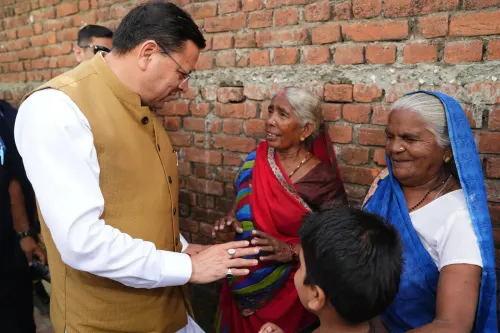
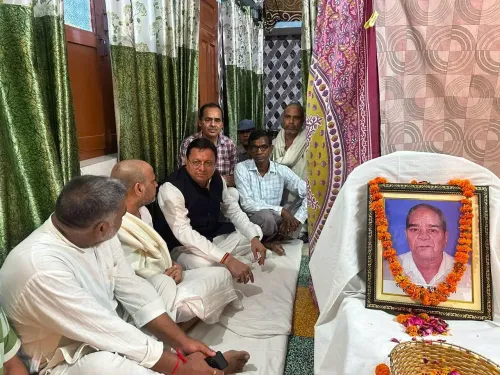
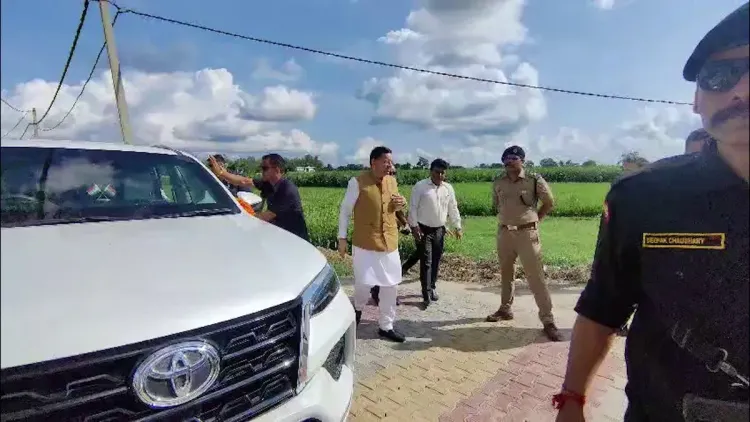
Uttarakhand CM Pushkar Singh Dhami visited gram pradhan Premrakash Pasi's home in Barianjania, Khatima on September 24, shared a meal with the family, and held discussions on village development and local public needs.
Key Takeaways
CM Pushkar Singh Dhami visited Barianjania village in Khatima on September 24, 2026 .
He met gram pradhan Premrakash Pasi at his residence and shared a meal with the family.
Discussions focused on village development and local public interest issues .
Khatima is Dhami's own assembly constituency in Udham Singh Nagar district .
The visit is part of a pattern of direct outreach to gram pradhan-level elected representatives in Uttarakhand.
No specific project announcements were made; follow-up development decisions are a typical outcome of such engagements.
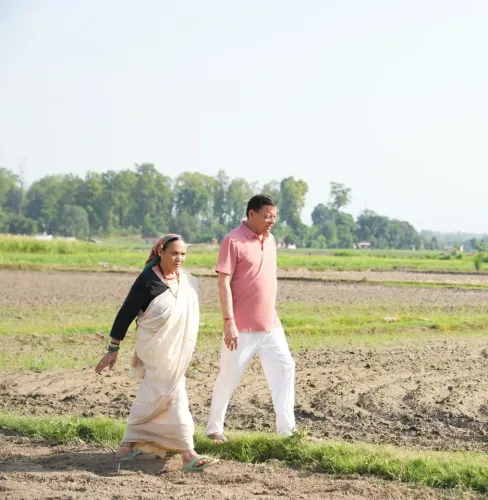
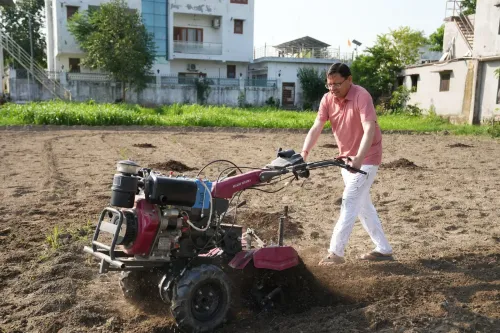
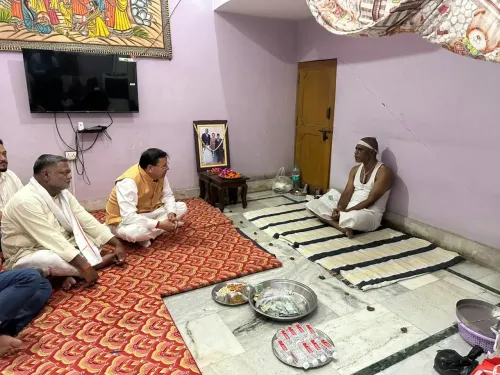
In a gesture that cuts through the distance between the chief minister's office and a village home, Uttarakhand Chief Minister Pushkar Singh Dhami travelled to Barianjania village in Khatima on Thursday, September 24, visiting the residence of gram pradhan Shri Premprakash Pasi and sharing a meal with his family.
A meal, a conversation, a message
Dhami described the visit as a warm, personal exchange — 'aatmiya bhent' (heartfelt meeting) — during which discussions covered local development needs and issues of public interest in the village. The Chief Minister sat down for a meal with the family, a detail he foregrounded as emblematic of accessible governance rather than ceremonial contact.
In his post, Dhami wrote: 'Continuous dialogue with public representatives and easy reach to every section and every level of society is what truly strengthens the spirit of public service.' The line reads as a statement of governing philosophy, not just a caption.
Khatima's place in Dhami's political story
Khatima, a town in Udham Singh Nagar district in the Terai region of Uttarakhand, is Dhami's own assembly constituency — the seat from which he has twice been elected and which he contested again in the 2022 Uttarakhand Assembly elections. A visit here is therefore both a governance act and a homecoming, carrying a different weight than an outreach trip to a distant district.
Gram pradhans — elected heads of village panchayats — are the frontline layer of India's local self-governance architecture. They are the first point of contact for rural residents on everything from road repairs and drinking water to welfare scheme enrolments. A direct conversation between a chief minister and a gram pradhan is designed to short-circuit the bureaucratic chain and surface ground-level grievances quickly.
The grassroots outreach pattern in Uttarakhand
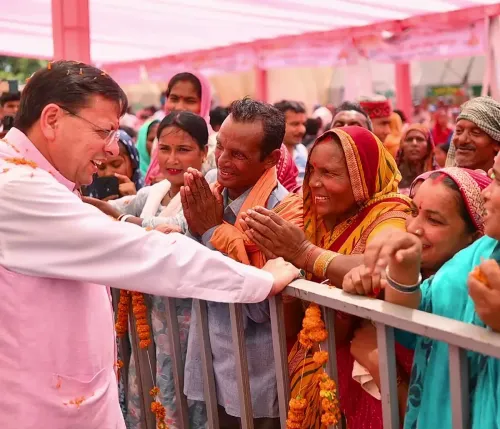
Dhami has made a visible point of these village-level visits throughout his tenure. The practice aligns with a broader BJP emphasis on 'jan sampark' (people contact) as a governance and political tool — periodic, publicised meetings with panchayat representatives that simultaneously gather local intelligence and project accessibility. Uttarakhand's mountainous and Terai terrain means local needs can vary sharply even within a single block, making direct pradhan-level dialogue practically useful for a state administration.
The Chief Minister noted that such interactions help in 'understanding local needs and public sentiment' as part of 'continuous efforts for the holistic development of the region.' No specific project announcements accompanied the post, though follow-up village-level initiatives are a routine outcome of such engagements.
When a chief minister eats at a gram pradhan's table, the photograph travels further than any press release — the real question is what gets built in Barianjania next.
Point of View
Gram pradhan outreach doubles as both practical intelligence-gathering and political reinforcement in a constituency he personally contests. The BJP's broader 'jan sampark' template gives these visits a party-level logic beyond their administrative value. Whether they translate into tangible rural development outcomes in Khatima's Terai villages will be the harder test.
NationPress
24 Sept 2026
Frequently Asked Questions
Why did CM Dhami visit Barianjania village in Khatima?
CM Pushkar Singh Dhami visited Barianjania village to meet gram pradhan Premrakash Pasi's family, discuss local development needs, and share a meal — part of his stated approach of maintaining direct contact with village-level elected representatives.
Where is Khatima and why is it significant for Dhami?
Khatima is a town in Udham Singh Nagar district in the Terai region of Uttarakhand. It is Pushkar Singh Dhami's own assembly constituency, making his visits there both governance outreach and engagement with his own electorate.
What is a gram pradhan in India?
A gram pradhan is the elected head of a village panchayat — the most local tier of India's self-governance system. They handle village-level development, welfare scheme implementation, and are the first point of contact for rural residents' concerns.
What did Dhami discuss with the gram pradhan's family?
According to his post, Dhami held discussions on village development and public interest matters. He described it as a 'meaningful dialogue' and said understanding local needs through such interactions drives the state's development efforts.
Is CM Dhami's village outreach a regular practice?
Yes, Dhami has made village-level visits and gram pradhan meetings a visible part of his governance approach, consistent with the BJP's emphasis on 'jan sampark' — direct people contact as both an administrative tool and political engagement strategy.