CM Dhami congratulates BJP's newly elected Rajya Sabha members
Synopsis
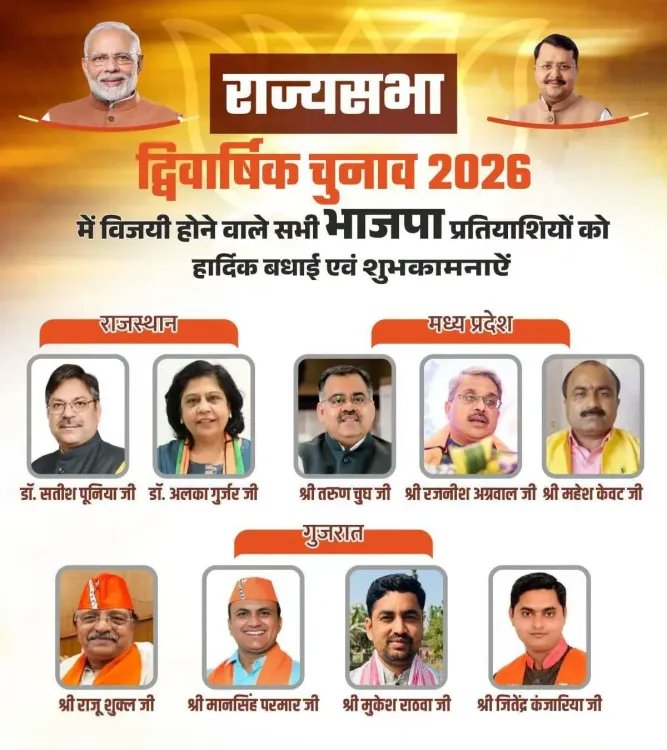
Uttarakhand Chief Minister Pushkar Singh Dhami congratulated all BJP members elected in the Rajya Sabha Biennial Elections 2026 on June 11, expressing confidence they will champion public welfare and the Viksit Bharat vision in Parliament's upper house.
Key Takeaways
CM Pushkar Singh Dhami posted congratulations on June 11, 2026 to all newly elected BJP Rajya Sabha members from the biennial elections.
The post was addressed to PM Narendra Modi , Home Minister Amit Shah , and BJP units in Madhya Pradesh , Rajasthan , and Gujarat .
Rajya Sabha biennial elections are held every two years, with members elected indirectly by state legislative assemblies for six-year terms under Article 83 of the Constitution.
Dhami linked the new members' expected contributions to the Viksit Bharat goal of achieving developed-country status by 2047 .
The BJP has progressively strengthened its Rajya Sabha presence since 2014 through sustained state-level electoral performance.
The newly elected members are expected to participate in the next Parliament session and engage on key pending legislation.
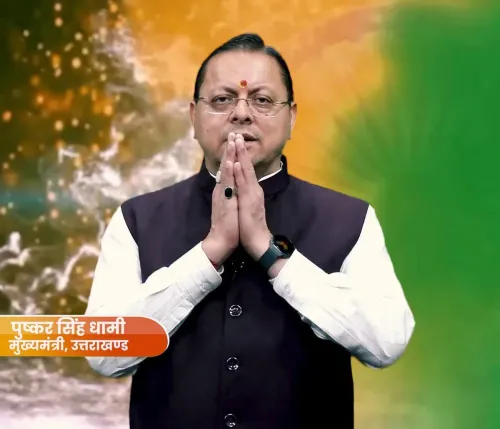
Uttarakhand Chief Minister Pushkar Singh Dhami on Thursday, June 11, 2026, extended congratulations to all Bharatiya Janata Party (BJP) members elected in the Rajya Sabha Biennial Elections 2026, expressing confidence that the new members would effectively advance public-interest issues in the upper house of Parliament.
Posting on X, CM Dhami wrote — 'राज्यसभा के द्विवार्षिक चुनाव-2026 में निर्वाचित होने वाले BJP के सभी सम्मानित सदस्यों को हार्दिक बधाई एवं शुभकामनाएं' — translated as: 'Heartfelt congratulations and best wishes to all respected members of the BJP elected in the Rajya Sabha Biennial Elections 2026.' He further expressed full confidence that the newly elected members would, through their 'experience, knowledge and dedication,' raise public-interest issues effectively in the upper house and contribute meaningfully to realising the Viksit Bharat vision.
Context
The Rajya Sabha, India's upper house of Parliament, elects roughly one-third of its members every two years under Article 83 of the Constitution, with members serving six-year terms. These elections are conducted indirectly — members of state legislative assemblies cast votes — making the political composition of state governments a decisive factor in outcomes. The 2026 biennial round follows a period in which the BJP has steadily expanded its Rajya Sabha footprint on the back of state-level electoral gains.
Policy Backdrop
Since returning to power for a third consecutive term following the 2024 Lok Sabha elections, the BJP-led National Democratic Alliance (NDA) has maintained legislative continuity. Key states including Madhya Pradesh, Rajasthan, and Gujarat — all under BJP governments — directly influence Rajya Sabha seat outcomes from those regions, as state legislators elect upper-house members. CM Dhami tagged Prime Minister Narendra Modi, Union Home Minister Amit Shah, and BJP units from Madhya Pradesh, Rajasthan, and Gujarat in his post, signalling the multi-state dimension of this electoral outcome.
The Viksit Bharat framework — PM Modi's flagship national vision to achieve developed-country status by 2047 — has become a recurring reference point for BJP leaders when contextualising parliamentary activity. Dhami's post explicitly links the new members' expected contributions to this overarching goal, reflecting a party-wide messaging alignment.
Stakeholders and Impact
The newly elected BJP members will join a Rajya Sabha where the ruling alliance has been working to consolidate numbers sufficient to advance key legislation. A stronger upper-house presence reduces the risk of government bills being stalled or diluted, with implications for pending legislative priorities across sectors including infrastructure, economic reform, and internal security. State BJP units — the electoral vehicles that secured these seats — stand to gain in organisational standing as their nominees enter the national legislature.
For Uttarakhand, CM Dhami's public congratulations also reinforce his positioning as an active voice within the national BJP ecosystem, aligning state-level governance with the party's central legislative agenda.
What's Next
The newly elected members are expected to take their seats ahead of the next Parliament session, where their participation in debates and committee work will be closely watched. Their interventions on pending legislation — particularly bills tied to the Viksit Bharat agenda — will test how quickly they translate the mandate into legislative impact. The broader pattern of biennial gains suggests that as long as the BJP retains state governments, its Rajya Sabha arithmetic will continue to improve in successive election cycles.
Point of View
It functions as a public alignment signal within the party's national legislative strategy. The BJP's incremental Rajya Sabha gains through biennial cycles represent a structural advantage that compounds over time, reducing upper-house friction for government legislation. For Dhami himself, visible engagement with national party milestones reinforces his standing as a loyalist voice bridging state governance and central political priorities. The pattern reflects a deliberate BJP approach of treating state assembly victories not merely as regional wins but as inputs into the national parliamentary calculus.
NationPress
26 Oct 2026
Frequently Asked Questions
What are the Rajya Sabha biennial elections 2026?
The Rajya Sabha biennial elections 2026 are indirect elections held to fill roughly one-third of Rajya Sabha seats whose six-year terms expire, with members of state legislative assemblies casting votes. These elections are conducted every two years under Article 83 of the Indian Constitution.
Why did CM Dhami congratulate BJP's Rajya Sabha members?
Uttarakhand Chief Minister Pushkar Singh Dhami congratulated the newly elected BJP Rajya Sabha members on June 11, 2026, as part of the party's internal acknowledgement of electoral success, expressing hope they would advance public welfare and the Viksit Bharat vision in Parliament.
How does the BJP benefit from winning Rajya Sabha seats?
A stronger BJP presence in the Rajya Sabha makes it easier for the ruling NDA government to pass legislation in the upper house, where bills can otherwise be stalled if the ruling alliance lacks sufficient numbers.
What is the Viksit Bharat vision mentioned by CM Dhami?
Viksit Bharat is Prime Minister Narendra Modi's national vision to make India a developed country by 2047, the centenary of independence, through economic growth, infrastructure development, and governance reforms.
Which states influence BJP's Rajya Sabha seat count?
States where the BJP holds government — including Madhya Pradesh, Rajasthan, and Gujarat — directly influence how many Rajya Sabha seats the party wins, since state legislators elect upper-house members through indirect voting.