CM Dhami Hails Modi as India's Longest Elected PM at Dehradun Event
Synopsis
Chief Minister Pushkar Singh Dhami praised PM Narendra Modi as independent India's longest elected prime minister at a Dehradun dialogue event on 13 June 2026, citing 28 visits to Uttarakhand, over 2.65 lakh Lakhpati Didis, border village development, and the state's growing tourism economy.
Key Takeaways
CM Pushkar Singh Dhami called PM Narendra Modi independent India's first prime minister to serve the longest term on successive electoral mandates.
Modi has reportedly visited Uttarakhand 28 times since becoming prime minister, according to CM Dhami .
More than 2 lakh 65 thousand women in Uttarakhand have been enrolled as Lakhpati Didis under the central self-help group scheme.
The central government's Vibrant Villages Programme (2023) targets border hamlets like Mana for development, following PM Modi 's declaration that frontier villages are India's 'first villages.' Uttarakhand hosted the 38th National Games and select G-20 meetings, boosting the state's national and global profile.
CM Dhami highlighted the state's disaster resilience efforts and said its response mechanisms have received global recognition.
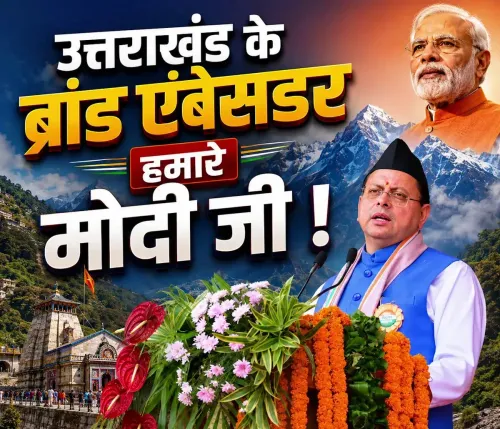
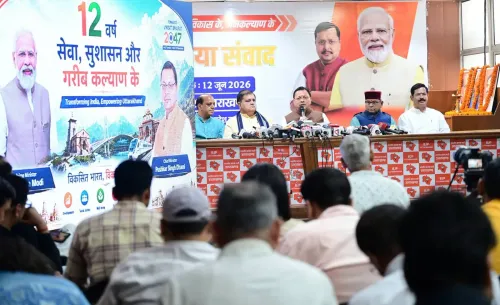
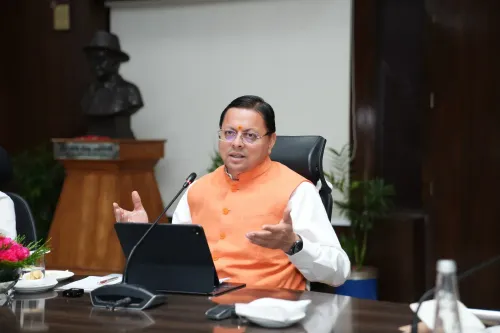
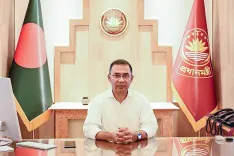
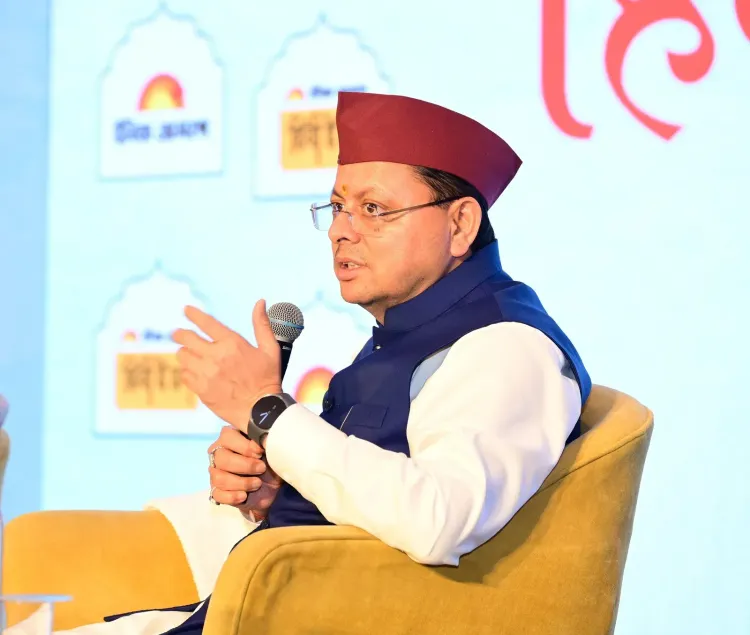
Chief Minister Pushkar Singh Dhami of Uttarakhand on Saturday, 13 June 2026, praised Prime Minister Narendra Modi as independent India's first prime minister to serve the longest term on the strength of successive electoral mandates, speaking at a dialogue programme organised by Dainik Jagran at a hotel on Mussoorie Road, Dehradun.
Context
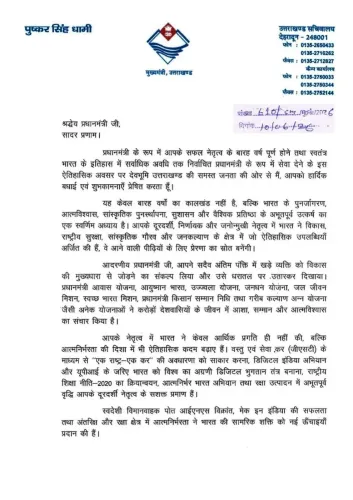
Addressing the gathering, CM Dhami said that PM Modi has served as prime minister for the longest continuous period among elected leaders in free India — a claim rooted in the fact that Modi has held office since May 2014, winning re-election in 2019 and again in 2024. He noted that the prime ministerial tenure has been marked by what he described as 'numerous historic decisions' spanning knowledge, science, education, health, and sports.
The chief minister's remarks came at a public dialogue event, a format that allows state leaders to engage with regional audiences and press while reinforcing alignment with central government priorities.
Policy Backdrop
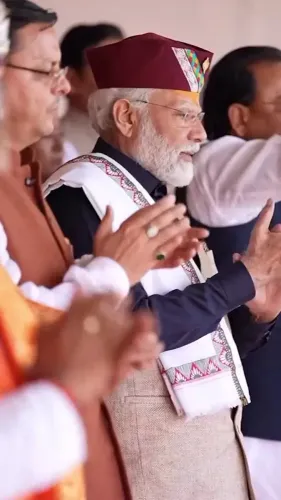
CM Dhami highlighted that PM Modi has visited Uttarakhand — referred to as Devbhoomi (land of the gods) — 28 times since assuming office, a figure the chief minister cited as evidence of the prime minister's deep affinity for the Himalayan state. He recalled Modi's visit to the border village of Mana, near Badrinath, where the prime minister declared that all border villages of India would be treated as the country's 'first villages, not last villages.'
This vision has found policy expression in the Vibrant Villages Programme, launched by the central government in 2023, which targets frontier settlements in states including Uttarakhand for infrastructure, connectivity, and livelihood development. Dhami said the central and state governments together have become synonymous with development, good governance, and public welfare.
Stakeholders and Impact
On women's economic empowerment, CM Dhami stated that more than 2 lakh 65 thousand women in Uttarakhand have become Lakhpati Didis — beneficiaries of a central initiative under the self-help group framework that enables rural women to earn annual incomes exceeding Rs 1 lakh. He added that all women in Mana village have achieved Lakhpati Didi status, presenting it as a model of saturation-level implementation.
The chief minister also pointed to the hosting of the 38th National Games and select G-20 ministerial meetings in the state as milestones that raised Uttarakhand's national and global profile. He said the introduction of winter pilgrimage tourism under central guidance has boosted the local economy, while infrastructure projects continue to expand across the state.
Acknowledging Uttarakhand's vulnerability to natural disasters — given its Himalayan geography — Dhami said the government has consistently worked to restore normal life as quickly as possible after calamities, and that these disaster-response efforts have received recognition at the global level.
What's Next
The political and administrative spotlight will remain on the pace of implementation of the Lakhpati Didi targets and new winter tourism infrastructure projects in Uttarakhand, particularly as the state moves closer to its next assembly election cycle. The central government's Vibrant Villages Programme will also be watched for on-ground outcomes in border hamlets like Mana. CM Dhami's public alignment with PM Modi's record signals continued emphasis on central-state coordination as a core political and governance message from Dehradun.
Point of View
The chief minister reinforces the narrative of seamless central-state coordination that the party has made a signature governance message. The repeated emphasis on Modi's 28 visits to Uttarakhand also serves to underscore the political premium placed on Himalayan border states within the national development framework. With assembly elections on the horizon, such public positioning is as much about consolidating voter sentiment as it is about policy communication.
NationPress
13 Sept 2026
Frequently Asked Questions
Why did CM Dhami call Modi India's longest-serving elected PM?
CM Pushkar Singh Dhami stated that PM Narendra Modi , having won electoral mandates in 2014 , 2019 , and 2024 , is the first prime minister in independent India to serve the longest continuous period on the basis of successive popular mandates.
What is the Lakhpati Didi scheme and how many women in Uttarakhand have benefited?
The Lakhpati Didi initiative, under the central self-help group framework, helps rural women earn annual incomes exceeding Rs 1 lakh . CM Dhami stated that more than 2 lakh 65 thousand women in Uttarakhand have achieved this status.
What is the significance of Mana village in Uttarakhand's development story?
Mana , a border village near Badrinath , was visited by PM Modi , who declared that India's frontier villages would be treated as the country's 'first villages, not last villages.' It is a focus area under the Vibrant Villages Programme launched in 2023 .
How many times has PM Modi visited Uttarakhand since becoming prime minister?
According to CM Dhami 's statement at the Dehradun event on 13 June 2026 , PM Modi has visited Uttarakhand 28 times since assuming office in 2014 .
What major national events has Uttarakhand hosted recently?
Uttarakhand hosted the 38th National Games in 2025 and select G-20 ministerial meetings, both cited by CM Dhami as milestones that raised the state's national and international profile.