CM Dhami Holds Jan Seva Camp in Sahaspur, Orders Sewing Machine for Woman
Synopsis
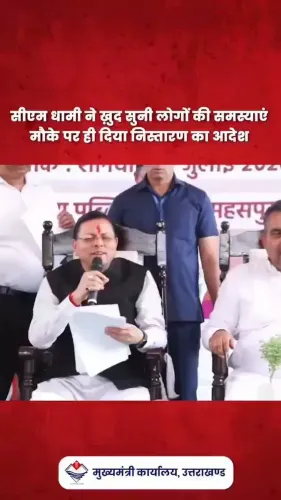
Chief Minister Pushkar Singh Dhami chaired a multi-purpose public grievance camp in Sahaspur, Dehradun on 11 July 2026. Resident Babli Gupta sought a sewing machine to make jute bags for her livelihood. Dhami directed officials to act immediately; the machine was delivered the same evening by Additional Secretary Banshidhar Tiwari.
Key Takeaways
CM Pushkar Singh Dhami held a Seva, Sushasan evam Samarpan multi-purpose camp in Sahaspur, Dehradun on 11 July 2026 .
Babli Gupta submitted a memorandum requesting a sewing machine to start a jute bag-making livelihood.
CM Dhami directed officials to provide the machine immediately; it was delivered the same evening .
Additional Secretary Banshidhar Tiwari coordinated the on-the-spot delivery under the Chief Minister's orders.
The camp is part of Uttarakhand's Jan-Jan ki Sarkar, Jan-Jan ke Dwar initiative to bring government services to citizens' doorsteps.
The case connects to state promotion of women's self-employment and micro-enterprises including jute-based products.
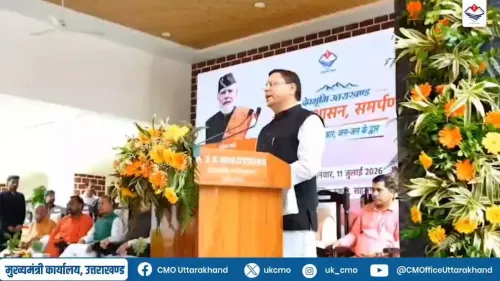
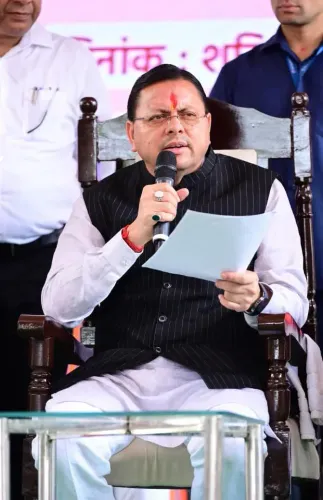
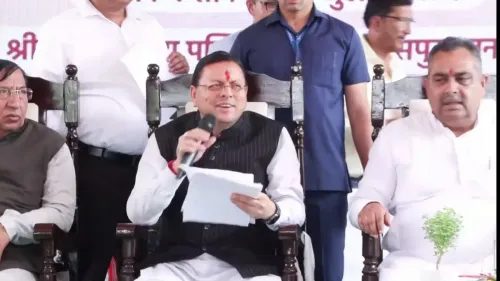
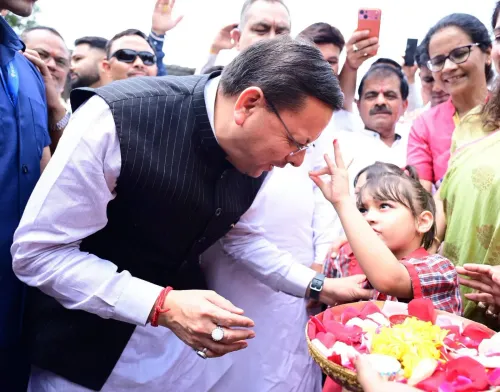
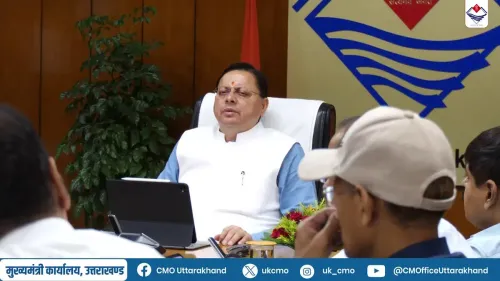
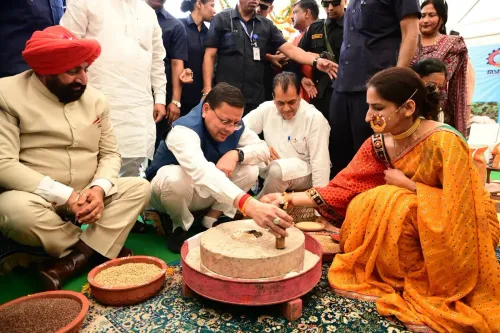
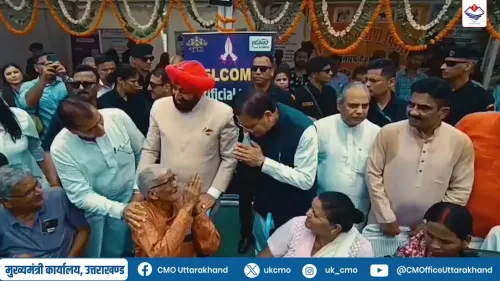
Chief Minister Pushkar Singh Dhami chaired a multi-purpose public grievance camp titled Seva, Sushasan evam Samarpan — 'Jan-Jan ki Sarkar, Jan-Jan ke Dwar' (Service, Good Governance and Dedication — Government for All, at Everyone's Doorstep) in Sahaspur, Dehradun district, on Saturday, 11 July 2026, listening to residents' problems and directing officials to resolve them swiftly and within set timelines.
What Happened at the Camp
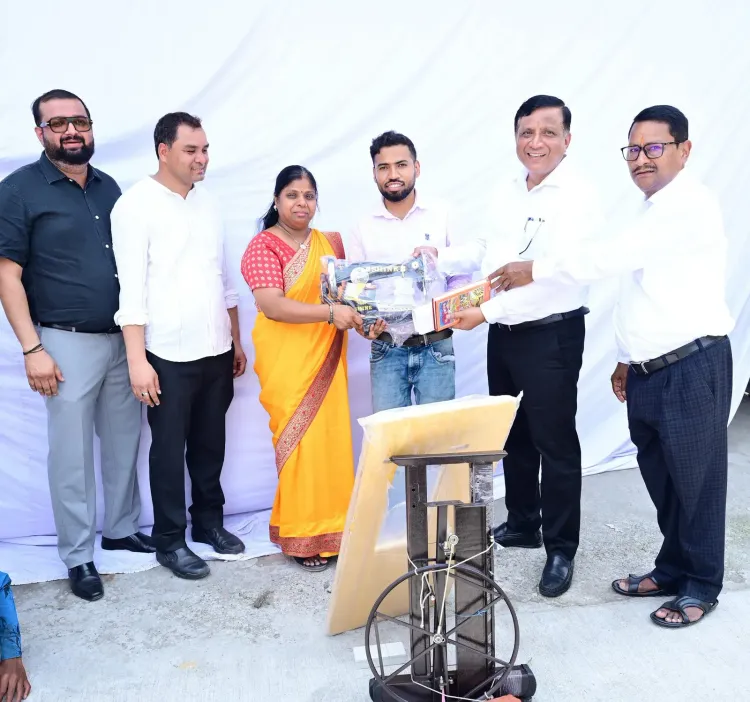
Among those who approached the Chief Minister was Smt. Babli Gupta, a local resident who submitted a memorandum stating she wished to earn her livelihood by making jute bags and required a sewing machine to do so. CM Dhami took immediate cognisance of her request and directed the concerned officials to provide her with the machine without delay.
Acting on those instructions, Additional Secretary to the Chief Minister, Shri Banshidhar Tiwari, coordinated the delivery, and Smt. Babli Gupta received the sewing machine the same evening. On receiving it, she thanked the Chief Minister, saying the government's swift action had 'made the path to self-employment easier' for her.
Context: The Jan Seva Camp Initiative
The Jan-Jan ki Sarkar, Jan-Jan ke Dwar multi-purpose camps are part of Uttarakhand's broader push under CM Dhami to bring government services directly to citizens at the grassroots level. Since Dhami assumed office in 2021, the state has organised similar Sushasan (good governance) camps across districts to reduce the distance between residents and administrative machinery.
The camps are designed to hear individual grievances on the spot and issue real-time directions to officials, cutting through bureaucratic delays that typically afflict rural and semi-urban populations.
Policy Backdrop: Women's Self-Employment and Micro-Enterprises
Uttarakhand has been actively promoting micro-enterprise and self-employment among women through schemes such as the Mukhyamantri Swarozgar Yojana, which provides financial and material support to aspiring entrepreneurs. Jute-based products, including eco-friendly bags, have gained policy attention as sustainable livelihood options aligned with central and state environmental goals.
The immediate delivery of a sewing machine to Smt. Babli Gupta illustrates how district-level camp mechanisms are being used to channel welfare and livelihood support to individual beneficiaries in a single administrative cycle — from request to fulfilment within hours.
Stakeholders and Impact
The primary beneficiary, Smt. Babli Gupta of Sahaspur, now has the equipment to begin jute bag production and formalise her entry into self-employment. More broadly, the camp model targets rural and semi-urban women who lack awareness of or access to formal welfare channels.
Officials present at the camp were put on notice that grievance resolution must be 'swift and time-bound' — a directive that signals administrative accountability as a measurable outcome of the camp format, not merely a symbolic gesture.
What's Next
The Uttarakhand government is expected to roll out additional multi-purpose camps across other districts, with a focus on on-site disbursal under self-employment and women empowerment schemes. The pace and reach of such camps — and whether grievances flagged at them translate into sustained programme enrolment — will be the key metrics to watch as the state deepens its doorstep-governance model ahead of future electoral cycles.
Point of View
The Dhami administration signals administrative responsiveness while reinforcing the Chief Minister's accessible, ground-level image. The broader pattern — of multi-purpose camps acting as both grievance forums and political optics — reflects a nationwide trend where state governments use doorstep delivery to build citizen trust ahead of electoral cycles. The real test will be whether the camp model scales into sustained programme enrolment rather than remaining a series of high-visibility individual interventions.
NationPress
11 Jul 2026
Frequently Asked Questions
What is the 'Jan-Jan ki Sarkar, Jan-Jan ke Dwar' camp in Uttarakhand?
'Jan-Jan ki Sarkar, Jan-Jan ke Dwar' is a multi-purpose public grievance and service-delivery camp organised by the Uttarakhand government under CM Pushkar Singh Dhami to bring government services directly to citizens at the local level, where officials hear problems and resolve them on the spot.
What happened at the Sahaspur camp on 11 July 2026?
CM Pushkar Singh Dhami held a Jan Seva camp in Sahaspur, Dehradun on 11 July 2026, where resident Babli Gupta requested a sewing machine to make jute bags for her livelihood. Dhami ordered officials to provide it immediately, and she received the machine the same evening.
Who is Banshidhar Tiwari and what role did he play?
Banshidhar Tiwari is the Additional Secretary to the Chief Minister of Uttarakhand. He coordinated the delivery of the sewing machine to Babli Gupta on the evening of 11 July 2026, in compliance with CM Dhami's on-the-spot directive at the Sahaspur camp.
What self-employment schemes does Uttarakhand offer for women?
Uttarakhand promotes women's self-employment through schemes such as the Mukhyamantri Swarozgar Yojana, which provides material and financial support to aspiring micro-entrepreneurs. Jute bag manufacturing is among the livelihood activities encouraged under such state programmes.
Where is Sahaspur located?
Sahaspur is a town in Dehradun district, Uttarakhand, and was the venue for the multi-purpose public grievance camp chaired by CM Pushkar Singh Dhami on 11 July 2026.