CM Dhami Hosts Beatles Film Delegation for Uttarakhand Shoot
Synopsis
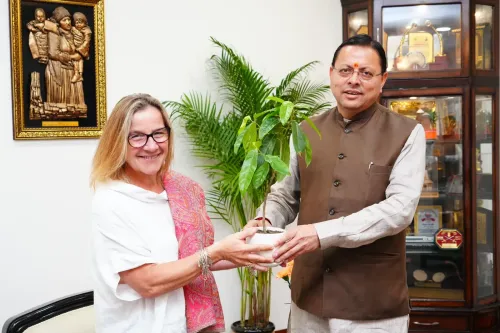
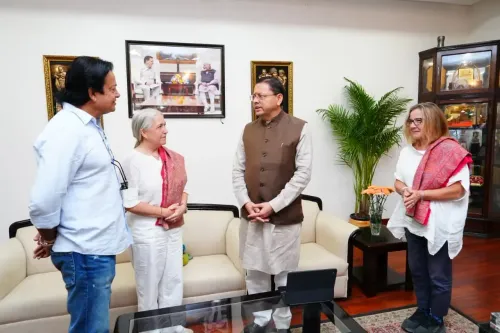
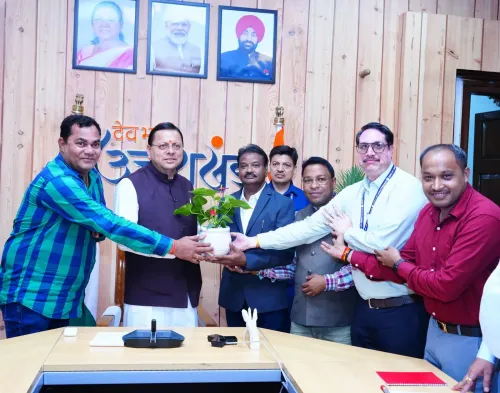
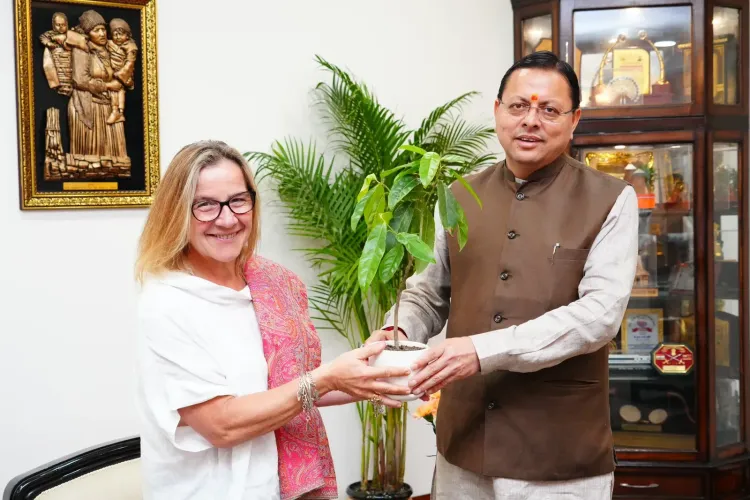
Uttarakhand CM Pushkar Singh Dhami hosted BAFTA-nominated British producer Alexandra Derbyshire and Indian producer Dilip Singh Rathore on 18 October 2026 to explore shooting an international Beatles-based film in the state, leveraging the band's iconic 1968 Rishikesh connection.
Key Takeaways
CM Pushkar Singh Dhami met an international film delegation on 18 October 2026 at his official residence to discuss a Beatles-based film shoot in Uttarakhand.
BAFTA-nominated British producer Alexandra Derbyshire led the delegation, joined by Indian producer Dilip Singh Rathore and location manager Emma Pill .
The project draws on The Beatles' historic 1968 visit to Maharishi Mahesh Yogi's ashram in Rishikesh , a globally recognised cultural moment.
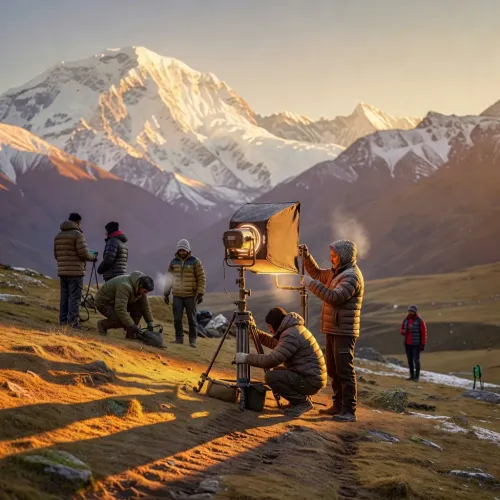
Dhami cited Uttarakhand's natural beauty, spiritual heritage and diverse terrain as reasons the state has become a leading Indian film destination.
The CM's stated goal is to attract more domestic and international productions to create employment for local artists, technicians and youth .
No formal shooting permissions or new incentive policies have been confirmed yet; the meeting was a pre-production discussion.
A globally resonant cultural connection — The Beatles' legendary 1968 sojourn in Rishikesh — is now the centrepiece of a serious international film pitch. On Sunday, 18 October 2026, Uttarakhand Chief Minister Pushkar Singh Dhami received a delegation of international filmmakers at his official residence, where discussions centred on shooting a major international film project based on the world-famous British music group in the Himalayan state.
The delegation was led by BAFTA-nominated British film producer Alexandra Derbyshire, accompanied by Indian film producer Dilip Singh Rathore and supervising location manager Emma Pill. The three-member team met the Chief Minister to explore the possibility of filming the Beatles-centred project across Uttarakhand's varied terrain.
Why Uttarakhand and Why The Beatles
The link is not manufactured. When John Lennon, Paul McCartney, George Harrison and Ringo Starr arrived at the Maharishi Mahesh Yogi's ashram in Rishikesh in early 1968, they sparked an enduring association between the band and this Himalayan state. That stay produced some of the most celebrated songs of their career and introduced Rishikesh — and India — to a global audience on an unprecedented scale. Nearly six decades later, that cultural footprint remains one of Uttarakhand's most potent international calling cards.
CM Dhami, in his post, underlined that the state has already established itself as one of India's leading film destinations — on the strength of its naisargik sundarta (natural beauty), spiritual heritage and diverse shooting locations. His stated goal: attract as many domestic and international film projects as possible to generate employment for local artists, technicians and youth.
Uttarakhand in India's Film-Destination Race
Several Indian states have built dedicated film facilitation infrastructure — fast-track permissions, single-window clearances, location scouts — to compete for the growing volume of domestic and international productions seeking alternatives to Mumbai and Goa. Uttarakhand's pitch is distinct: its Himalayan topography, river valleys, ancient temples and the spiritual gravity of towns like Rishikesh and Haridwar offer a visual palette few other states can match.
The state's strategy of leveraging cultural heritage — not just scenic landscapes — to attract productions aligns with a broader national pattern. A Beatles film would be an unusually high-profile international production, with built-in global audience recognition that could amplify Uttarakhand's visibility far beyond standard film tourism.
Alexandra Derbyshire and the Delegation's Weight
Alexandra Derbyshire's BAFTA nomination signals this is not a speculative inquiry. She brings credibility and international production networks to the table. Alongside Dilip Singh Rathore bridging the India side and Emma Pill leading on location logistics, the delegation represents the kind of serious pre-production scouting that precedes a formal green-light.
Whether formal shooting permissions follow — and whether the state announces expanded film incentives or a dedicated facilitation cell in response — will determine how this initial meeting translates into actual production activity on the ground.
For Uttarakhand, a global Beatles film shot in Rishikesh wouldn't just be a production credit. It would be a cultural full-circle moment, decades in the making.
Point of View
Internationally legible connection to Rishikesh to position Uttarakhand as more than a domestic hill-station, but as a globally viable production destination. It fits a wider BJP-governed state pattern of packaging heritage and spirituality as economic drivers, not just soft-power assets. The real test will be whether this photogenic meeting produces expedited permissions and structured incentives, or remains in the pipeline of promising announcements. If the Beatles project actually films in Uttarakhand, the downstream tourism and brand-value dividend could far outweigh any direct production revenue.
NationPress
18 Oct 2026
Frequently Asked Questions
Why are filmmakers considering Uttarakhand for a Beatles film?
The Beatles visited Maharishi Mahesh Yogi's ashram in Rishikesh, Uttarakhand in 1968, creating a lasting cultural connection. CM Dhami's government is leveraging this heritage, along with the state's Himalayan landscapes and spiritual sites, to attract international productions.
Who is Alexandra Derbyshire and what is her role in the project?
Alexandra Derbyshire is a BAFTA-nominated British film producer who led the international delegation that met CM Dhami on 18 October 2026 to discuss shooting a Beatles-based international film project in Uttarakhand.
When did The Beatles visit Uttarakhand?
The Beatles — John Lennon, Paul McCartney, George Harrison and Ringo Starr — visited the Maharishi Mahesh Yogi's ashram in Rishikesh in early 1968, a trip that became one of the most celebrated moments in the band's history.
Has the Beatles film project been officially approved for shooting in Uttarakhand?
No formal shooting permissions have been announced. The 18 October 2026 meeting was a pre-production discussion between the filmmakers and CM Dhami to explore the possibility of filming in the state.
What is Uttarakhand's strategy to attract international film productions?
Uttarakhand is marketing its Himalayan terrain, river valleys, ancient temples, and sites like Rishikesh and Haridwar as diverse shooting locations. CM Dhami has stated the goal is to generate employment for local artists, technicians and youth through increased film activity.