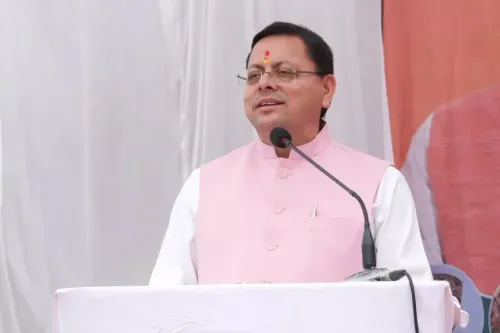
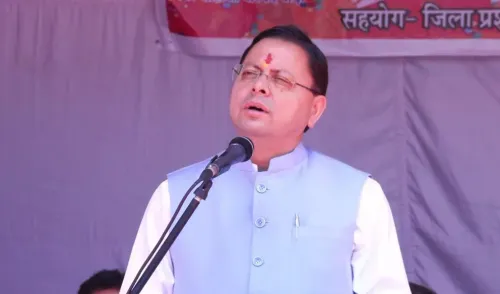
CM Dhami leads Uttarakhand's push to become world's spiritual capital
Synopsis
The Chief Minister's Office of Uttarakhand reaffirmed on 28 May 2026 that CM Pushkar Singh Dhami's government is actively pursuing its goal of making Uttarakhand the spiritual capital of the world, building on the state's Char Dham circuit, Rishikesh yoga heritage, and years of pilgrimage infrastructure investment.
Key Takeaways
The Chief Minister's Office of Uttarakhand posted on 28 May 2026 reaffirming the state's goal of becoming the world's spiritual capital.
CM Pushkar Singh Dhami has led a BJP -led government in Uttarakhand since 2021 , with spiritual tourism as a core policy focus.
Uttarakhand hosts the Char Dham circuit — Kedarnath, Badrinath, Gangotri, and Yamunotri — drawing millions of pilgrims annually.
The Char Dham National Highway project , approved in 2016 , has been upgrading road access to pilgrimage shrines.
Rishikesh has been promoted as an international yoga destination since 2015 , aligned with International Yoga Day .
State budget allocations and the ongoing Char Dham Yatra season will be key indicators of policy momentum.
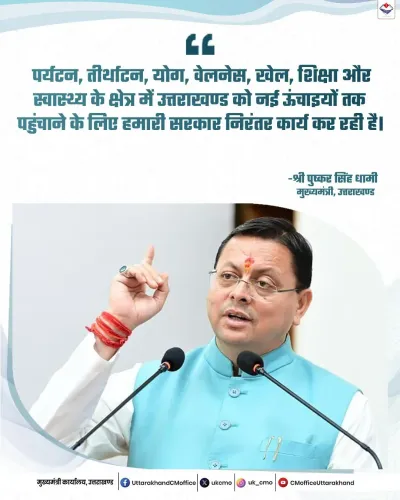
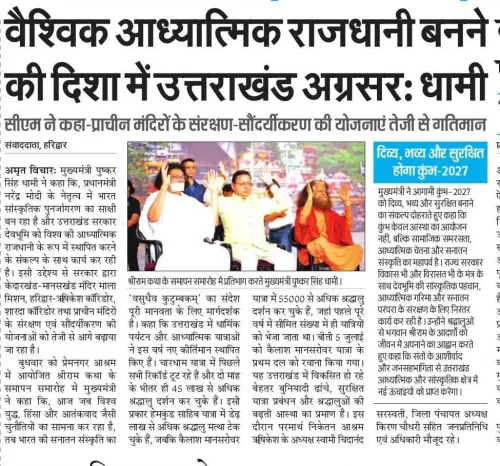
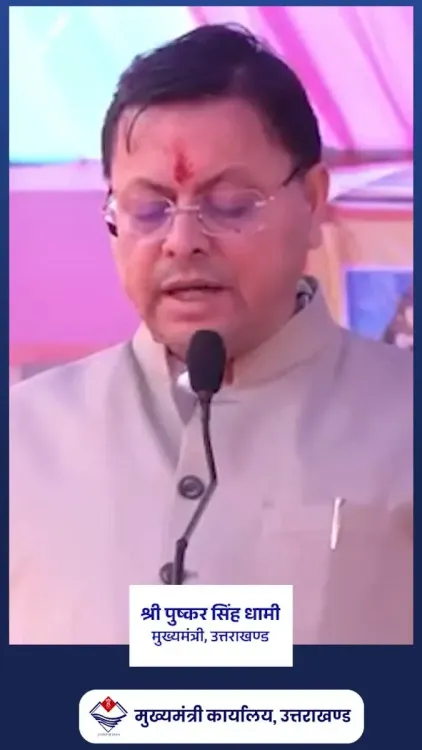
The Chief Minister's Office of Uttarakhand reaffirmed on 28 May 2026 that the state government, under Chief Minister Pushkar Singh Dhami, is continuously working toward its stated goal of making Uttarakhand the spiritual capital of the world.
The post, shared in Hindi, states: 'Uttarakhand ko vishwa ki adhyatmik rajdhani banane ke prayas ke sankalp ko lekar' — 'With the resolve and effort to make Uttarakhand the spiritual capital of the world' — the state government under CM Dhami's leadership is working without pause.
Context
Uttarakhand, carved out as a separate state in 2000, is home to some of Hinduism's most sacred geography. The Char Dham circuit — comprising Kedarnath, Badrinath, Gangotri, and Yamunotri — draws millions of pilgrims each summer season, making religious tourism one of the state's primary economic pillars. Haridwar and Rishikesh further anchor the state's identity as a hub of Hindu ritual and yogic tradition. CM Pushkar Singh Dhami, who has led the state since 2021 under a BJP-led government, has consistently framed spiritual and religious tourism as central to Uttarakhand's development vision. The 'spiritual capital of the world' formulation has been a recurring rhetorical and policy anchor for his administration.Policy Backdrop
The infrastructure groundwork for this vision stretches back nearly a decade. The Char Dham National Highway project, approved in 2016, aimed to widen and upgrade road connectivity to all four pilgrimage shrines, reducing travel time and improving safety for the millions who undertake the yatra annually. Separately, Rishikesh has been positioned as an international yoga destination, with state-supported events aligned to International Yoga Day since 2015 drawing global attention to the region. This approach mirrors broader national-level schemes designed to expand and upgrade pilgrimage circuits for both domestic and international visitors. Successive governments in Dehradun have paired shrine infrastructure investment with active marketing of the state's Himalayan sacred geography to foreign tourists, spiritual seekers, and the diaspora.Stakeholders and Impact
The ambition to position Uttarakhand as a world spiritual capital has direct implications for several groups. Pilgrims and religious tourists form the most immediate constituency — improved infrastructure and promotion translate into higher footfall and safer journeys. The hospitality and transport sectors in towns like Haridwar, Rishikesh, Uttarkashi, and Chamoli are direct economic beneficiaries. Hill communities along pilgrimage routes, however, also bear the costs of high seasonal traffic, including pressure on local resources and infrastructure. For the international audience, the framing of Rishikesh and the broader Garhwal Himalaya as a global wellness and spirituality destination has grown steadily, with yoga retreats, meditation centres, and ashrams drawing visitors from Europe, the Americas, and Southeast Asia.What's Next
The pace and substance of this vision will be tested in the coming months. State budget allocations for tourism, pilgrimage infrastructure, and cultural promotion will offer concrete signals of how the government intends to operationalise the 'world spiritual capital' goal. The performance of the ongoing Char Dham Yatra season — in terms of pilgrim numbers, infrastructure readiness, and incident management — will also serve as a practical measure of progress. Observers will watch for specific policy announcements, international partnerships, or cultural events that give institutional form to what remains, for now, a statement of intent.Point of View
The formulation has been repeated with greater frequency, suggesting it functions as both an electoral signal to the state's devout voter base and a tourism marketing pitch to international audiences. The challenge for the administration lies in converting the aspiration into measurable outcomes: pilgrim safety records, infrastructure completion timelines, and economic uplift for hill communities are the real ledger. Until those metrics are consistently publicised alongside the messaging, the goal risks remaining an aspirational slogan rather than a trackable policy commitment.
NationPress
22 Sept 2026
Frequently Asked Questions
What is Uttarakhand's goal of becoming the world's spiritual capital?
Uttarakhand's government, under CM Pushkar Singh Dhami, has declared a policy vision to position the state as the global centre of spirituality, leveraging its Char Dham pilgrimage circuit, Haridwar, and Rishikesh's yoga heritage to attract pilgrims and spiritual tourists from across the world.
What is the Char Dham Yatra and why is it important for Uttarakhand?
The Char Dham Yatra is an annual Hindu pilgrimage to four sacred temples — Kedarnath, Badrinath, Gangotri, and Yamunotri — located in Uttarakhand. It draws several million visitors each summer and is one of the state's most significant sources of tourism revenue.
Who is Pushkar Singh Dhami?
Pushkar Singh Dhami is the Chief Minister of Uttarakhand, serving since 2021 under a BJP-led government. His administration has focused on tourism, infrastructure development, and promoting the state's religious and cultural identity.
What infrastructure has been built for pilgrimage sites in Uttarakhand?
The Char Dham National Highway project, approved in 2016, has been the flagship infrastructure initiative, aiming to widen and upgrade roads connecting all four Char Dham shrines to reduce travel time and improve safety for pilgrims.
Why is Rishikesh considered an international yoga destination?
Rishikesh has been promoted as a global yoga hub through state-supported events tied to International Yoga Day since 2015. The town hosts numerous ashrams, yoga retreats, and meditation centres that attract visitors from across the world.