CM Dhami: World Looks to India's Spiritual Consciousness
Synopsis
Chief Minister Pushkar Singh Dhami declared on 23 June 2026 that the world is looking toward India's spiritual consciousness, reinforcing Uttarakhand's positioning as a global hub for pilgrimage and spiritual tourism.
Key Takeaways
CM Pushkar Singh Dhami stated on 23 June 2026 that the world is turning toward India's spiritual consciousness.
Uttarakhand hosts the Char Dham circuit — Badrinath, Kedarnath, Gangotri, and Yamunotri — among India's most visited pilgrimage sites.
The state government has pursued Char Dham Yatra infrastructure upgrades since 2018 , covering roads, accommodation, and crowd management.
The statement aligns with the national narrative anchored by the International Day of Yoga , established in 2015 .
Spiritual tourism is increasingly framed as both an economic driver and a soft-power asset for pilgrimage-rich Indian states.
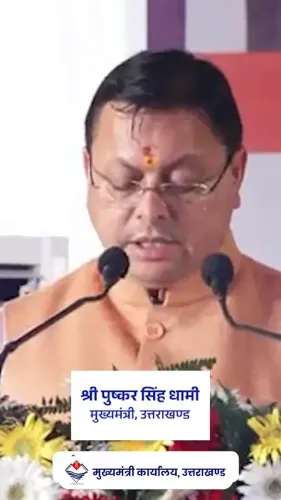
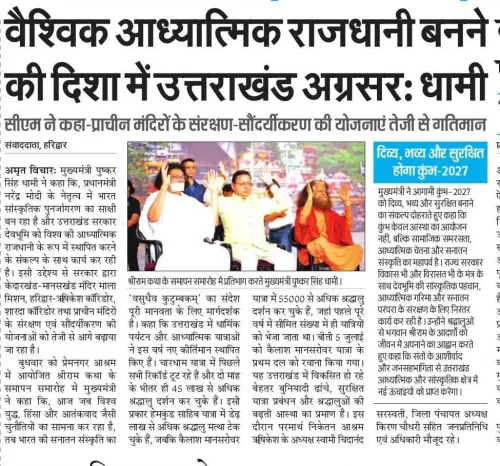
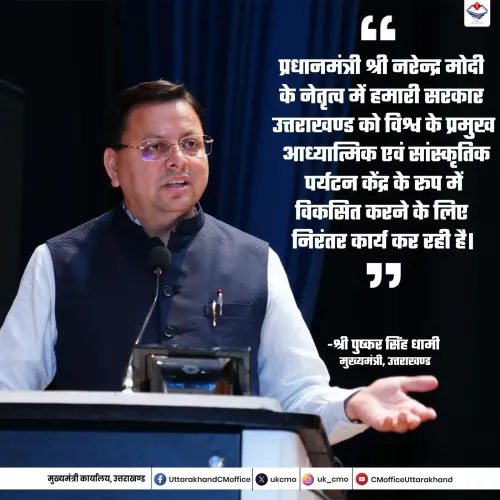
The Chief Minister's Office of Uttarakhand, on behalf of Chief Minister Pushkar Singh Dhami, declared on Tuesday, 23 June 2026 that the world is turning its gaze toward India's spiritual consciousness — a statement that underscores Uttarakhand's continuing effort to position itself as the spiritual heartland of the nation.
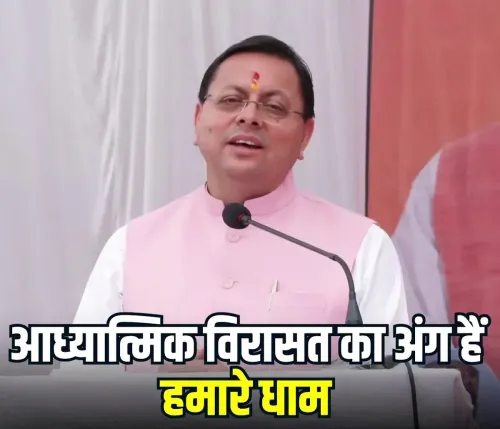
The post, shared in Hindi, quotes CM Dhami directly: 'भारत की आध्यात्मिक चेतना की ओर देख रहा विश्व' — 'The world is looking toward India's spiritual consciousness.' The remark reflects a broader theme that the Uttarakhand government has consistently championed: that the state's ancient temples, pilgrimage routes, and yogic traditions carry relevance far beyond India's borders.
Context
Uttarakhand is home to some of Hinduism's most revered pilgrimage destinations, including the Char Dham circuit — Badrinath, Kedarnath, Gangotri, and Yamunotri. The state also hosts Rishikesh and Haridwar, globally recognised centres of yoga and spiritual learning. CM Dhami, who has served as Chief Minister since 2021, has repeatedly invoked the theme of India's spiritual heritage in public addresses, framing it as both a cultural asset and a driver of pilgrimage tourism.
Policy Backdrop
The Uttarakhand government has invested substantially in the Char Dham Yatra circuit since 2018, with infrastructure upgrades spanning road connectivity, accommodation facilities, and crowd management systems along the pilgrimage routes. These efforts align with the national push to promote India as a global spiritual destination, a narrative reinforced by the establishment of the International Day of Yoga in 2015 and India's sustained promotion of its civilisational heritage on multilateral platforms. State-level messaging from Dehradun has consistently echoed this national framework, linking tangible infrastructure investment to an intangible soft-power argument.
India's pilgrimage-rich states have increasingly positioned spiritual tourism not merely as a religious matter but as an economic and diplomatic asset. Uttarakhand's statements fit squarely within this pattern, presenting the state's sacred geography as a magnet for international seekers and a source of cultural diplomacy.
Stakeholders and Impact
The primary stakeholders are the millions of domestic pilgrims and international spiritual tourists who visit Uttarakhand each year. Statements of this nature from the Chief Minister's Office carry signalling value for tour operators, hospitality businesses, and infrastructure planners who calibrate investment based on government intent. For the broader yoga and wellness industry — much of which is concentrated in Rishikesh — official endorsement of India's global spiritual standing reinforces the destination's brand internationally.
The remark also speaks to a growing segment of global travellers seeking wellness and spiritual experiences, a market that has expanded significantly in the post-pandemic period. Uttarakhand stands to benefit if the state's infrastructure and governance keep pace with the ambition expressed in such declarations.
What's Next
Observers will watch for concrete follow-through: the next phases of Char Dham infrastructure projects, state-level participation in national or international yoga and spirituality forums, and any policy announcements that translate CM Dhami's rhetorical positioning into measurable tourism or cultural-diplomacy outcomes. As global interest in India's spiritual traditions grows, Uttarakhand's ability to manage pilgrim footfall sustainably while expanding its international profile will be the real test of the vision articulated in statements like this one.
Point of View
Consistent with a pattern of messaging that ties Uttarakhand's political identity to its sacred geography. The statement arrives as pilgrimage tourism rebounds robustly and as India actively leverages its civilisational heritage in multilateral diplomacy. For Dhami, who has governed since 2021, the spiritual-heartland narrative also serves a domestic political purpose — reinforcing his administration's custodianship of sites that carry deep emotional resonance for Hindu voters. The broader arc points toward an intensifying competition among pilgrimage states to attract both domestic footfall and international spiritual tourists, with infrastructure investment and governance quality ultimately determining who captures the most value from this growing market.
NationPress
21 Sept 2026
Frequently Asked Questions
What did CM Pushkar Singh Dhami say about India's spiritual consciousness?
CM Dhami stated that the world is looking toward India's spiritual consciousness, reaffirming Uttarakhand's identity as the nation's spiritual heartland.
Why is Uttarakhand considered India's spiritual capital?
Uttarakhand is home to the Char Dham circuit — Badrinath, Kedarnath, Gangotri, and Yamunotri — as well as Rishikesh and Haridwar, globally recognised centres of yoga and Hindu pilgrimage.
What infrastructure has Uttarakhand built for the Char Dham Yatra?
Since 2018, the Uttarakhand government has upgraded roads, accommodation facilities, and crowd management systems along the Char Dham pilgrimage routes.
How does India promote its spiritual heritage internationally?
India promotes its spiritual heritage through platforms such as the International Day of Yoga, established in 2015, and through state-level initiatives that position pilgrimage sites as global cultural destinations.
Who is Pushkar Singh Dhami?
Pushkar Singh Dhami is the Chief Minister of Uttarakhand, serving since 2021, and has been a prominent advocate for developing the state's pilgrimage infrastructure and spiritual tourism sector.