CM Sukhu Hits Back at BJP Over 'Save Democracy' Marches
Synopsis
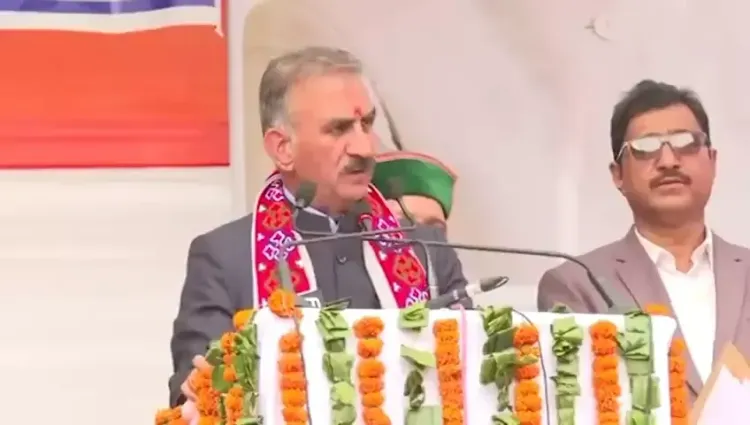
Himachal Pradesh CM Sukhvinder Singh Sukhu challenged BJP leaders Jairam Thakur and Anurag Thakur on November 5, 2026, questioning the party's 'Save Democracy' marches by citing the alleged transfer of Congress MLAs to Panchkula, Haryana, and accusing BJP of systematic legislator poaching.
Key Takeaways
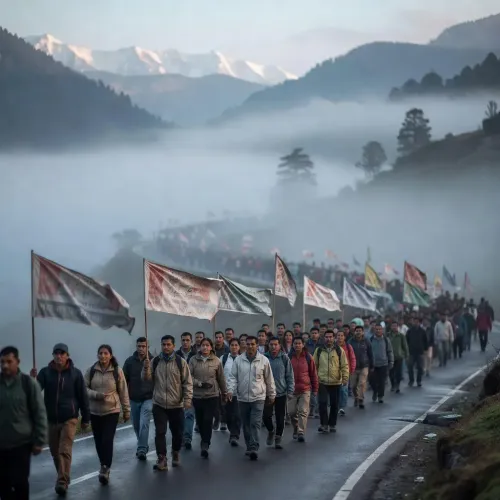
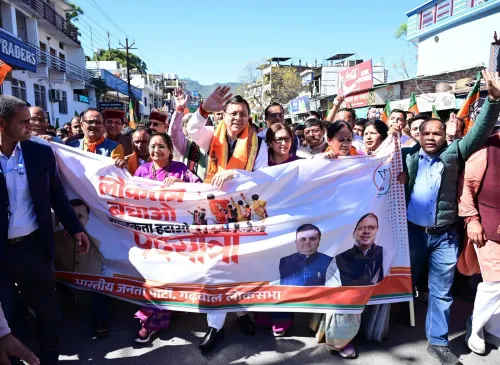
CM Sukhvinder Singh Sukhu publicly challenged the BJP's ongoing 'Save Democracy' padayatra in Himachal Pradesh on November 5, 2026 .
Sukhu specifically named Jairam Thakur and Anurag Thakur , demanding they explain why Congress MLAs were allegedly taken to Panchkula, Haryana .
The Chief Minister accused the BJP of 'stealing votes' to capture power and 'stealing elected legislators' when that fails.
The Congress government in Himachal Pradesh was formed after a narrow majority in the December 2022 assembly elections, making it historically vulnerable to poaching attempts.
India's anti-defection law under the Tenth Schedule , introduced in 1985 , was designed to curb such horse-trading but enforcement gaps persist across states.
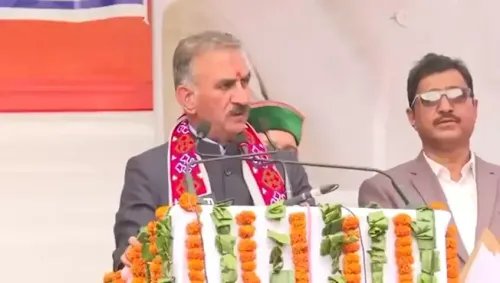
Himachal Pradesh Chief Minister Sukhvinder Singh Sukhu threw a pointed counter-challenge at the Bharatiya Janata Party on Thursday, November 5, 2026, questioning the credibility of the opposition's 'Save Democracy' marches by invoking what he called the party's own record of legislator poaching — most pointedly, the alleged transportation of Congress-elected MLAs to Panchkula, Haryana.
Sukhu posted on X in Hindi: 'कमाल की बात है कि भाजपा आज लोकतंत्र की दुहाई दे रही है' — 'What an irony that the BJP is today invoking the name of democracy and conducting padayatras to save democracy in the state.' The Chief Minister directed his questions squarely at Jairam Thakur, the BJP's former Chief Minister of Himachal Pradesh, and Anurag Thakur, the party's sitting MP from Hamirpur, along with their party's other parliamentarians.The Panchkula Accusation at the Heart of the Attack
The sharpest line in Sukhu's post names Panchkula explicitly. He asked why legislators who had won on Indian National Congress tickets were taken to the Haryana city 'on the strength of money.' The question is loaded: Panchkula, sitting just across the Himachal Pradesh border, has repeatedly surfaced in the political vocabulary of the state's factional crises as a destination where MLAs are said to have been held or courted during periods of government instability.
Sukhu's framing was blunt: 'BJP steals votes to capture power, and when that fails, it steals elected legislators themselves.' The charge maps directly onto the persistent national debate over horse-trading — the informal term for buying or coercing sitting legislators to switch loyalty, a practice the Tenth Schedule of the Constitution, introduced through the 52nd Constitutional Amendment Act of 1985, was specifically designed to deter. Decades on, enforcement gaps remain a live controversy across multiple states.
Sukhu's Congress Won a Narrow Mandate — and Has Had to Defend It
The Congress government in Himachal Pradesh was formed after the December 2022 assembly elections, which produced a narrow majority. Thin majorities in Indian state assemblies have historically made governments vulnerable to exactly the kind of pressure Sukhu is describing — and have made both national parties accusers and defendants at different points. That context gives his rhetorical question its edge: 'BJP should tell us — what kind of Save Democracy padayatra is this?'
Jairam Thakur led the BJP government in Himachal Pradesh from 2017 to 2022 and remains the party's most prominent face in the state. Anurag Thakur, one of the BJP's most nationally visible voices from the state, adds federal weight to the opposition campaign Sukhu is targeting.
A Familiar Script, With the Roles Reversed
What makes this exchange politically notable is the inversion. The BJP's padayatra frames itself as a defender of democratic norms; Sukhu's response turns that frame back on the party, using its own conduct as the rebuttal. Mutual accusations of undermining democratic mandates are a recurring feature of Indian state politics, but the rhetorical structure — 'you are marching for democracy while having done this' — is particularly potent when the specific allegation involves physically moving legislators across state lines.
Whether the BJP responds with its own counter-narrative, or whether the dispute escalates into assembly proceedings or legal action, will determine whether this remains a sharp social-media exchange or the opening move in a broader political confrontation.
Point of View
He reframes the opposition's moral campaign as hypocrisy before it gains traction. The specific naming of both Jairam Thakur and Anurag Thakur — one the state's former CM, the other a national-profile MP — signals this is not routine sparring but an attempt to discredit the BJP's most credible Himachal faces simultaneously. Thin-majority governments in India have always been battlegrounds for legislator loyalty, and Sukhu is betting that putting that history on the record keeps his coalition intact by reminding wavering MLAs who, in his telling, the aggressor is. The exchange also underscores the continuing failure of the anti-defection framework to deter cross-state political maneuvering.
NationPress
5 Nov 2026
Frequently Asked Questions
Why did CM Sukhu criticise the BJP's padayatra in Himachal Pradesh?
CM Sukhu argued that the BJP's 'Save Democracy' padayatra is hypocritical because the party itself allegedly arranged for Congress-elected MLAs to be taken to Panchkula, Haryana, with financial inducements — an act he described as stealing elected representatives.
What happened to Congress MLAs in Panchkula?
CM Sukhu alleged that legislators who had won on Congress tickets were transported to Panchkula in Haryana 'on the strength of money,' implying an attempt to destabilise the Congress government in Himachal Pradesh. The specific details of the incident are disputed and have not been independently verified.
Who are Jairam Thakur and Anurag Thakur?
Jairam Thakur is the BJP's most prominent leader in Himachal Pradesh and served as Chief Minister from 2017 to 2022. Anurag Thakur is a BJP Member of Parliament from the Hamirpur constituency and a former Union Minister.
What is India's anti-defection law?
India's anti-defection law is contained in the Tenth Schedule of the Constitution, introduced by the 52nd Constitutional Amendment Act of 1985. It disqualifies legislators who defect from the party on whose ticket they were elected, though enforcement gaps have allowed horse-trading to persist in several states.
How did Congress come to power in Himachal Pradesh?
The Indian National Congress won the Himachal Pradesh Legislative Assembly elections in December 2022 with a narrow majority, after which Sukhvinder Singh Sukhu was sworn in as Chief Minister.