CM Dhami: Spiritual Heritage Being Modernised Rapidly Across India
Synopsis
Uttarakhand Chief Minister Pushkar Singh Dhami declared on 22 July 2026 that India is rapidly integrating its spiritual heritage with modern amenities, reaffirming the state's focus on pilgrimage infrastructure through schemes such as PRASAD and the Char Dham all-weather road project.
Key Takeaways
CM Pushkar Singh Dhami stated on 22 July 2026 that modernisation of spiritual heritage sites is progressing rapidly across India.
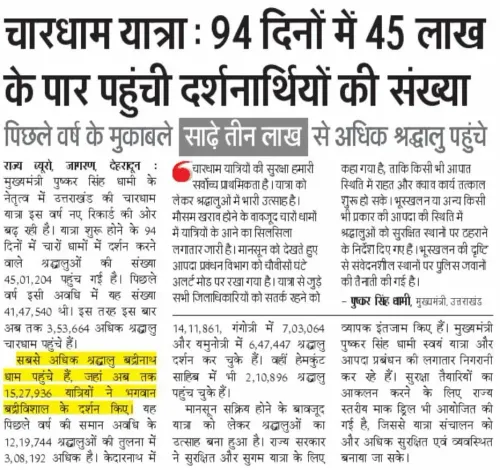
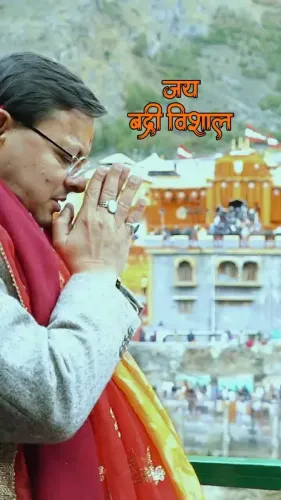
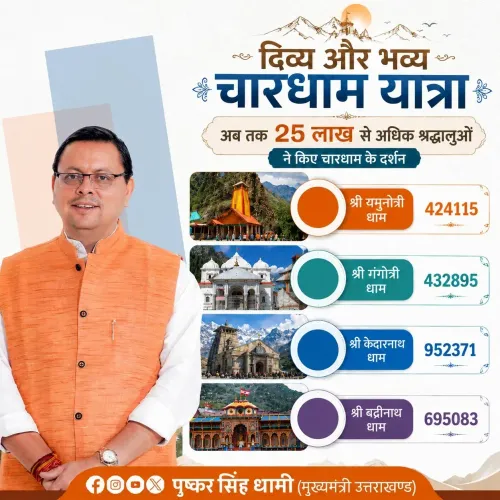
Uttarakhand is home to the four Char Dham shrines — Badrinath, Kedarnath, Gangotri and Yamunotri — which draw millions of pilgrims annually.
The central government's PRASAD scheme , launched in 2014-15 , funds modern civic amenities at major pilgrimage destinations nationwide.
The Char Dham all-weather road project , approved by the Cabinet in 2016 , aims to ensure year-round access to Uttarakhand's Himalayan shrines.
Key stakeholders include pilgrims, hill-region residents , and tourism operators whose livelihoods depend on religious tourism.
The statement signals that pilgrimage infrastructure will remain a central theme of the Dhami administration's governance agenda.
The Chief Minister's Office of Uttarakhand, on behalf of Chief Minister Pushkar Singh Dhami, shared a statement on Wednesday, 22 July 2026, affirming that work to integrate India's spiritual heritage with modern amenities is progressing at a rapid pace across the country.
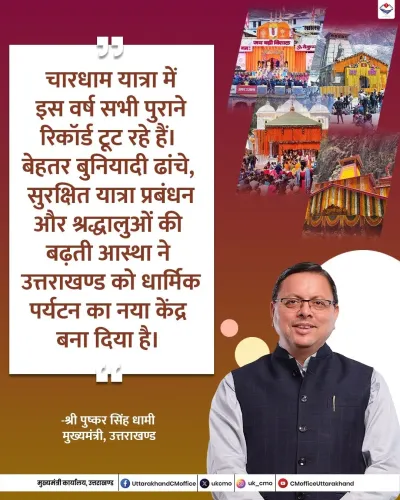
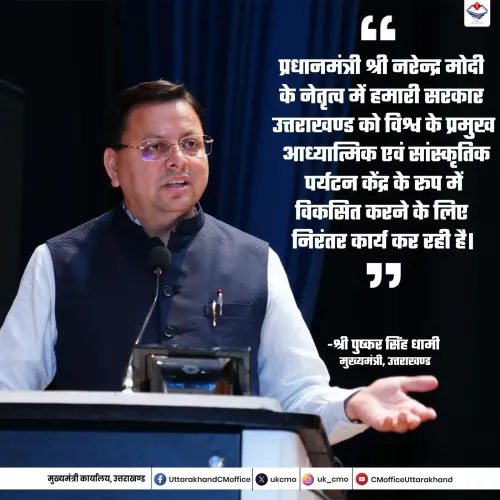
Addressing the theme of pilgrimage infrastructure, CM Dhami stated: 'Aaj poore desh mein hamari aadhyatmik virasat ko aadhunik suvidhaon ke saath jodne ka kaarya bahut tezi se ho raha hai' — 'Today, across the entire country, the work of connecting our spiritual heritage with modern facilities is happening very rapidly.'
Context
Uttarakhand is home to some of India's most revered Hindu pilgrimage sites, including the Char Dham shrines of Badrinath, Kedarnath, Gangotri and Yamunotri. The state has long grappled with seasonal inaccessibility, inadequate civic infrastructure, and the challenge of managing large pilgrim footfalls. CM Dhami, who has helmed the state since 2021, has consistently prioritised pilgrimage site development and tourism infrastructure as central planks of his administration.
Policy Backdrop
The statement aligns with two major central government initiatives that have shaped pilgrimage infrastructure in Uttarakhand and beyond. The PRASAD scheme — Pilgrimage Rejuvenation and Spiritual, Heritage Augmentation Drive — was launched by the Ministry of Tourism in 2014-15 to upgrade amenities, connectivity, and civic facilities at identified religious destinations across India.
Separately, the Char Dham all-weather road project received Cabinet approval in 2016 to ensure year-round motorable access to the four Himalayan shrines. Both schemes represent a broader national policy of treating pilgrimage circuits as economic and cultural assets deserving modern infrastructure investment. Uttarakhand has actively aligned its state programmes with these central initiatives to address longstanding gaps in visitor facilities and road connectivity.
Stakeholders and Impact
The primary beneficiaries of this push are pilgrims, who number in the millions annually at Uttarakhand's shrines, as well as hill-region residents whose livelihoods depend on religious tourism. Tourism operators — including hoteliers, transport providers, and local guides — stand to gain from improved infrastructure that extends the viable pilgrim season and raises visitor comfort.
Successive central and state governments have pursued parallel tracks of heritage conservation and infrastructure augmentation at religious sites, viewing this as a means to expand domestic tourism and stimulate regional economies. Uttarakhand's approach mirrors similar efforts in other states with prominent pilgrimage circuits.
What's Next
Observers will watch for progress reports on PRASAD-funded works and the remaining phases of the Char Dham all-weather road project in Uttarakhand. Any new state or central budget allocations directed at spiritual tourism infrastructure in the coming months will signal how aggressively this agenda is being pursued. CM Dhami's public emphasis on the pace of this work suggests the administration intends to keep pilgrimage development at the centre of its governance narrative ahead of future electoral cycles.
Point of View
The Uttarakhand government positions itself as both a moderniser and a custodian of Hindu heritage, a dual identity that carries significant electoral resonance in a state defined by its pilgrimage economy. The remark also fits a broader national pattern in which state governments compete to showcase progress on centrally-backed religious tourism schemes, using such statements to claim credit for visible on-ground work. Continued momentum on the Char Dham road project and PRASAD-funded upgrades will be the real test of whether this rhetorical emphasis translates into measurable improvement for pilgrims and local communities.
NationPress
21 Oct 2026
Frequently Asked Questions
What did Uttarakhand CM Pushkar Singh Dhami say about spiritual heritage?
CM Dhami stated on 22 July 2026 that work to connect India's spiritual heritage with modern amenities is progressing very rapidly across the country.
What is the PRASAD scheme and how does it relate to Uttarakhand?
The PRASAD scheme, launched by the central government's Ministry of Tourism in 2014-15, funds modern infrastructure and civic amenities at major pilgrimage sites. Uttarakhand's Char Dham shrines are among the key beneficiaries of this programme.
What is the Char Dham all-weather road project?
The Char Dham all-weather road project is a central government initiative approved in 2016 to provide year-round motorable connectivity to the four Uttarakhand shrines — Badrinath, Kedarnath, Gangotri and Yamunotri.
Why is pilgrimage infrastructure important for Uttarakhand?
Uttarakhand's economy is heavily dependent on religious tourism. Millions of pilgrims visit the Char Dham shrines annually, making improved road access, modern amenities, and extended pilgrim seasons critical for both local livelihoods and the state's revenue.
Who benefits from the modernisation of pilgrimage sites in India?
The primary beneficiaries are pilgrims who gain safer and more comfortable access, hill-region residents whose incomes are tied to religious tourism, and tourism operators including hoteliers and transport providers.