CM Dhami: Better Infrastructure Makes Uttarakhand Religious Tourism Hub
Synopsis
Chief Minister Pushkar Singh Dhami has credited better infrastructure, safer travel management and growing devotee faith for making Uttarakhand a new centre of religious tourism, as the Char Dham Yatra 2026 season peaks.
Key Takeaways
CM Pushkar Singh Dhami declared on 14 July 2026 that Uttarakhand has become a new hub of religious tourism.
He cited three drivers: better infrastructure, safer yatra management, and increasing pilgrim faith.
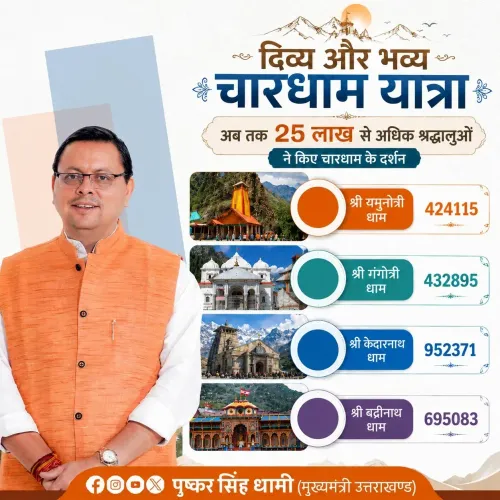
The statement was made in the context of the ongoing Char Dham Yatra 2026 , covering Badrinath, Kedarnath, Gangotri and Yamunotri.
The Union government's Char Dham Pariyojana , approved in December 2016 , covers 889 km of all-weather highways to the four shrines.
Infrastructure investment accelerated after the 2013 Kedarnath floods and the 2021 Chamoli disaster exposed critical gaps in pilgrim safety.
Pilgrims, local tourism operators and hill communities are the primary beneficiaries of the improved pilgrimage corridor.
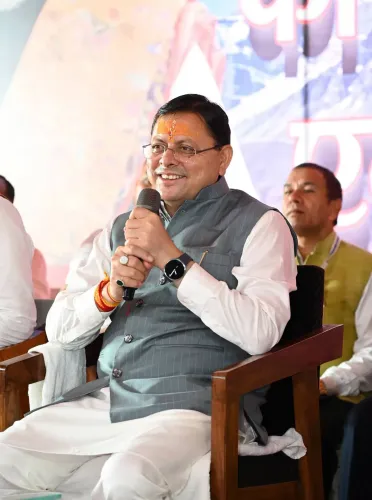
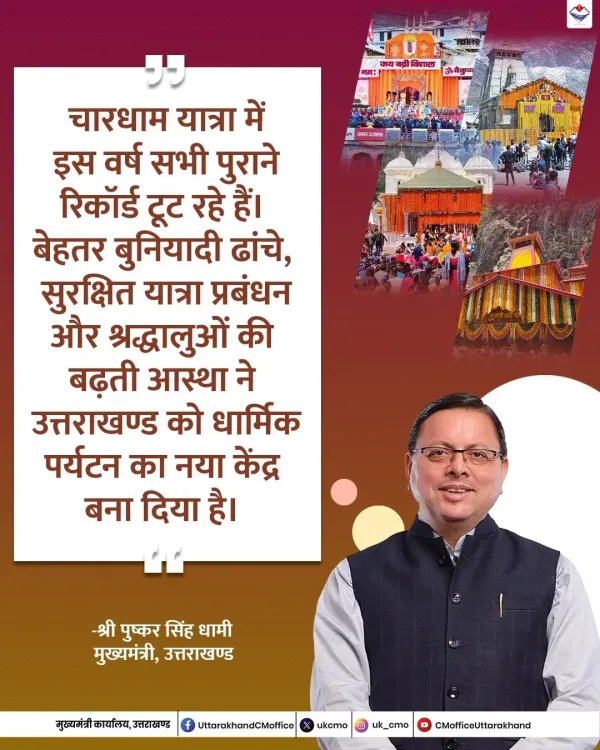
The Chief Minister's Office of Uttarakhand, on Tuesday, 14 July 2026, shared a statement by Chief Minister Pushkar Singh Dhami crediting improved infrastructure, safer pilgrimage management, and deepening devotee faith for transforming Uttarakhand into a new centre of religious tourism.
Context
Speaking in the context of the ongoing Char Dham Yatra 2026, CM Dhami said: 'Behtar buniyadi dhanche, surakshit yatra prabandhan aur shraddhaaluon ki badhti aastha ne Uttarakhand ko dharmik paryatan ka naya kendra bana diya hai' — 'Better infrastructure, safe travel management and the growing faith of devotees have made Uttarakhand a new centre of religious tourism.' The statement underscores the state government's sustained push to position Uttarakhand as the country's foremost pilgrimage destination.
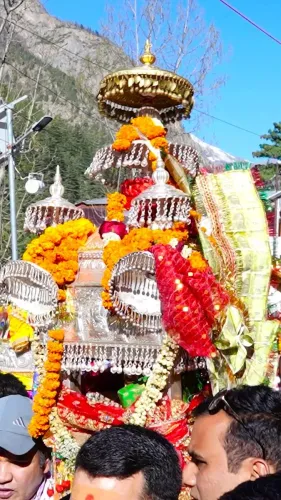
The Char Dham Yatra is the annual Hindu pilgrimage circuit covering four high-altitude shrines: Badrinath, Kedarnath, Gangotri and Yamunotri. The yatra season typically runs from late April through November, drawing lakhs of pilgrims from across India and abroad each year.
Policy Backdrop
The infrastructure push Dhami referenced has deep policy roots. The Union Cabinet approved the Char Dham Pariyojana in December 2016, sanctioning the construction of 889 kilometres of two-lane, all-weather highways connecting the four shrines. The project was designed to reduce travel time, improve road safety on treacherous mountain stretches, and extend the effective pilgrimage season.
Successive state governments have also accelerated investment in ropeways, medical facilities, and crowd-management systems along pilgrimage corridors — a response shaped in large part by the 2013 Kedarnath floods and the 2021 Chamoli disaster, both of which exposed the vulnerability of pilgrims and hill communities to inadequate infrastructure and emergency-response gaps.
Stakeholders and Impact
The beneficiaries of improved pilgrimage infrastructure span multiple groups. Pilgrims gain safer roads, better rest facilities, and more reliable emergency services along high-altitude routes. Local tourism operators — including hoteliers, transporters, and pony-service providers — stand to benefit from longer seasons and higher footfall. Hill communities along the yatra routes see broader economic activity when pilgrimage traffic increases.
Uttarakhand's economy is heavily dependent on religious tourism, and state policy has consistently framed connectivity improvements as a lever to raise both visitor numbers and average spending per pilgrim. CM Dhami's statement signals that this framing remains central to the government's communication strategy heading into the peak of the 2026 yatra season.
What's Next
Attention will now turn to specific announcements from the state government on additional ropeway projects, real-time traffic management systems, and expanded medical infrastructure ahead of the peak pilgrimage months. The government is also expected to release data on pilgrim arrivals during the 2026 season to substantiate claims of growing devotee numbers.
How well the upgraded infrastructure performs under peak-season pressure — and whether safety protocols hold across all four shrines simultaneously — will be the practical test of the vision CM Dhami articulated on 14 July 2026.
Point of View
Framing the state government as the architect of a safer, more accessible Char Dham circuit ahead of what could be a record 2026 yatra season. The reference to 'infrastructure' and 'safe travel management' is a direct callback to the post-2013 policy consensus that made Char Dham Pariyojana politically viable at the Union level. By tying devotee faith to state-delivered infrastructure, Dhami is also making a subtle electoral argument — that governance, not just geography, drives pilgrimage growth. The statement fits a broader pattern of BJP-governed hill states using pilgrimage tourism as both an economic strategy and a soft-power narrative.
NationPress
13 Oct 2026
Frequently Asked Questions
What did CM Pushkar Singh Dhami say about Char Dham Yatra 2026?
CM Dhami said that better infrastructure, safe travel management and the growing faith of devotees have made Uttarakhand a new centre of religious tourism, in a statement shared by the Chief Minister's Office on 14 July 2026.
What is the Char Dham Pariyojana?
The Char Dham Pariyojana is a Union government scheme approved in December 2016 to build 889 km of two-lane, all-weather highways connecting the four Char Dham shrines — Badrinath, Kedarnath, Gangotri and Yamunotri — in Uttarakhand.
Which four shrines are covered under Char Dham Yatra?
The Char Dham Yatra covers four high-altitude shrines in Uttarakhand: Badrinath, Kedarnath, Gangotri and Yamunotri.
Why did Uttarakhand invest heavily in pilgrimage infrastructure?
Investment accelerated significantly after the 2013 Kedarnath floods and the 2021 Chamoli disaster, both of which revealed critical gaps in road safety, emergency response and pilgrim welfare along mountain routes.
How does religious tourism affect Uttarakhand's economy?
Uttarakhand's economy is heavily dependent on religious tourism. Improved connectivity and safety infrastructure are designed to lengthen the pilgrimage season and increase visitor numbers, benefiting pilgrims, local tourism operators and hill communities.