CM Dhami: Viksit Bharat needs every village, block, city to develop
Synopsis
Chief Minister Pushkar Singh Dhami of Uttarakhand has stated that a developed India can only emerge when every state is developed, and every state can only develop when each of its cities, blocks, and villages progresses — directly linking grassroots governance to the Viksit Bharat 2047 national vision.
Key Takeaways
CM Pushkar Singh Dhami stated on 25 May 2026 that Viksit Bharat requires every city, block, and village to develop, not just aggregate state-level growth.
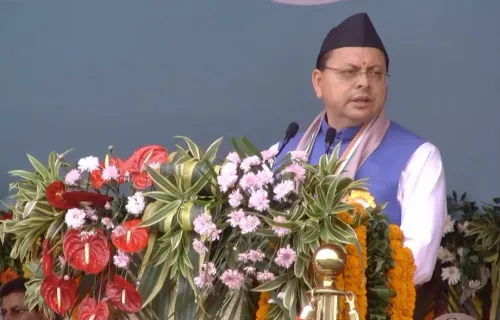
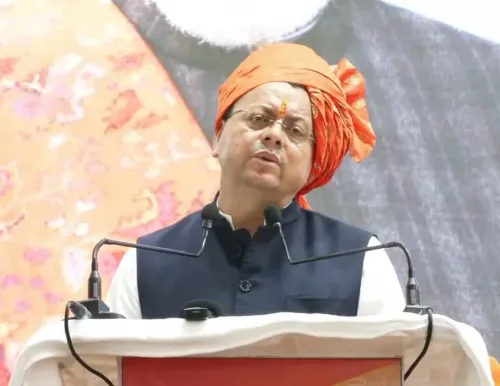
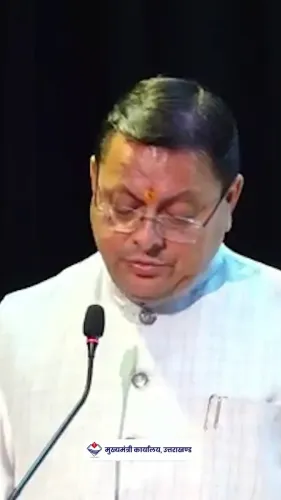
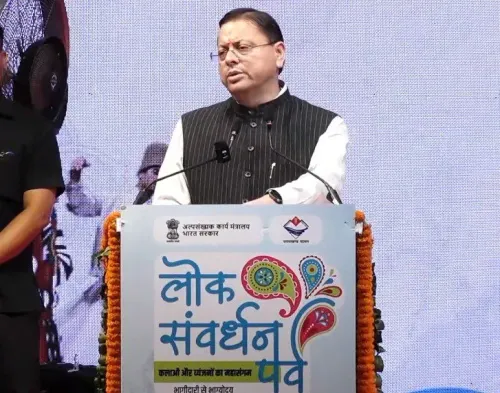
The statement was shared by the official Chief Minister's Office of Uttarakhand alongside a video, indicating a formal address context.
Viksit Bharat is PM Narendra Modi's vision for India to become a developed economy by 2047 , the centenary of independence.
The 73rd and 74th Constitutional Amendments (1992-93) and the NITI Aayog Aspirational Districts Programme (2018) form the policy foundation for this bottom-up development logic.
Uttarakhand's terrain and sparse population make block- and village-level investment especially critical for state-wide development outcomes.
Village panchayats, urban local bodies, and block administrations are the key institutional actors in translating this vision into delivery.
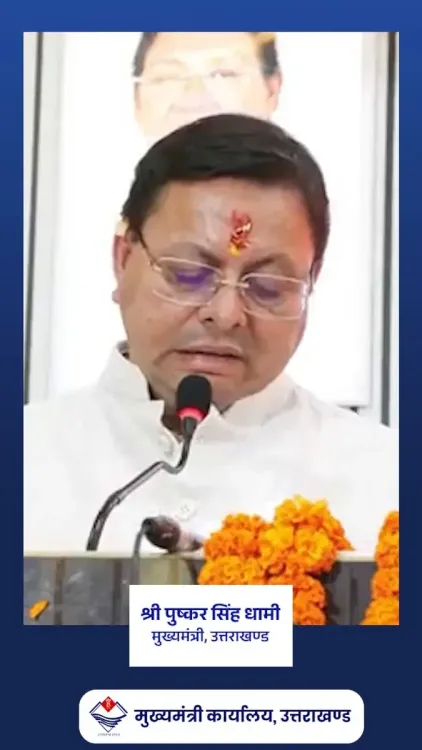
The Chief Minister's Office of Uttarakhand, on Monday, 25 May 2026, shared a statement by Chief Minister Pushkar Singh Dhami underscoring that the national vision of a developed India can only be realised when every state, and within each state every city, block, and village, achieves development.
Context
Speaking in Hindi, CM Dhami stated: 'Viksit Bharat tab banega jab har rajya viksit banega, har rajya viksit tab banega jab uska pratyek shehar, block aur gaon viksit hoga' — 'A developed India will be built only when every state is developed; every state will be developed only when each of its cities, blocks, and villages is developed.' The remark frames national progress as an explicitly bottom-up exercise, with the sub-district block and the village as the foundational units.
The statement was shared with a video by the official Chief Minister's Office account of the Government of Uttarakhand, indicating it formed part of a formal address or public engagement by the Chief Minister.
Policy Backdrop
Viksit Bharat — 'Developed India' — is the overarching national vision articulated by Prime Minister Narendra Modi for India to attain developed-economy status by 2047, the centenary of independence. The framework explicitly calls on states to serve as engines of national growth, making cooperative federalism central to the target.
The philosophical underpinning of Dhami's statement draws on a long constitutional lineage: the 73rd and 74th Constitutional Amendments of 1992-93 devolved significant planning and implementation powers to Panchayati Raj institutions and urban local bodies, establishing the principle that national goals must be grounded in local governance. The NITI Aayog's Aspirational Districts Programme, launched in 2018, further operationalised this logic by channelling accelerated investment into lagging sub-state geographies.
Uttarakhand, the Himalayan state formed in 2000, presents a distinctive development canvas: sparse population, difficult terrain, a pilgrimage-driven economy, and critical border infrastructure requirements all make block- and village-level investment especially consequential for state-wide outcomes.
Stakeholders and Impact
Village panchayats, urban local bodies, and block-level administrations across Uttarakhand are the immediate institutional actors in this framework. For residents of remote hill districts, the statement signals a policy orientation that prioritises granular, ground-level delivery over aggregate state-level metrics alone.
The framing also speaks to a wider national audience: state governments competing for centrally sponsored scheme funds and investment rankings have a direct incentive to demonstrate village- and block-level improvements, since these feed into composite development indices used by the Centre to assess state performance.
What's Next
Attention will now turn to whether Uttarakhand translates this articulation into measurable commitments — including updates to state-level development reports, allocations under centrally sponsored rural and urban infrastructure schemes, and block-level progress dashboards. The alignment of state budget priorities with the Viksit Bharat 2047 roadmap will be a key indicator of how the Chief Minister intends to operationalise this vision on the ground.
Point of View
Signalling cooperative federalism in action ahead of what are likely to be competitive state performance reviews. By foregrounding the block and village — the most granular units of Indian governance — he is also implicitly making a case for continued and enhanced central transfers to hill states where geography inflates the cost of last-mile delivery. The framing is politically astute: it positions the state government as both a partner in a popular national vision and an advocate for sub-state administrative units that are the actual sites of citizen experience. Whether this rhetorical alignment translates into specific budgetary or programmatic shifts in Uttarakhand will determine its policy significance beyond the speech cycle.
NationPress
20 Sept 2026
Frequently Asked Questions
What is Viksit Bharat and why is CM Dhami talking about it?
Viksit Bharat is PM Narendra Modi's national vision for India to become a developed economy by 2047. CM Dhami invoked it to argue that national development must be built from the village and block level upward, not just measured at the state or national aggregate.
What did Pushkar Singh Dhami say about village development?
CM Dhami said a developed India will only come when every state is developed, and every state will only develop when each of its cities, blocks, and villages achieves development — placing grassroots progress at the centre of the national goal.
What is the role of Panchayati Raj in India's development vision?
The 73rd and 74th Constitutional Amendments of 1992-93 gave Panchayati Raj institutions and urban local bodies formal roles in planning and delivery, making them the constitutional foundation for the kind of bottom-up development CM Dhami's statement describes.
How does Uttarakhand fit into India's Viksit Bharat plan?
Uttarakhand is a Himalayan state with challenging terrain, a pilgrimage economy, and border infrastructure needs. Block- and village-level investment is especially critical here because geography makes last-mile delivery more difficult and expensive than in plains states.
What is the NITI Aayog Aspirational Districts Programme?
Launched in 2018, the Aspirational Districts Programme targets India's most backward districts for accelerated development investment, directly operationalising the principle that national progress requires lifting the lowest-performing sub-state geographies first.