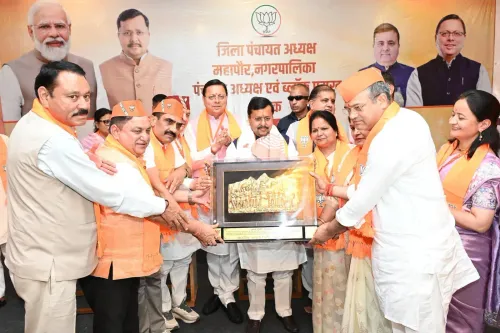
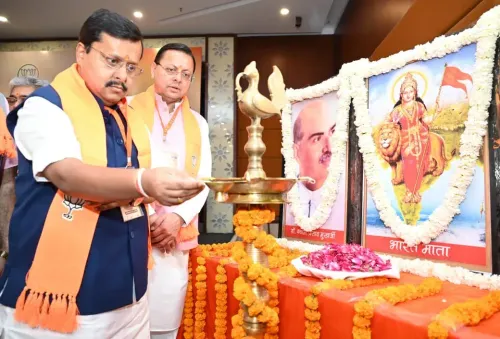
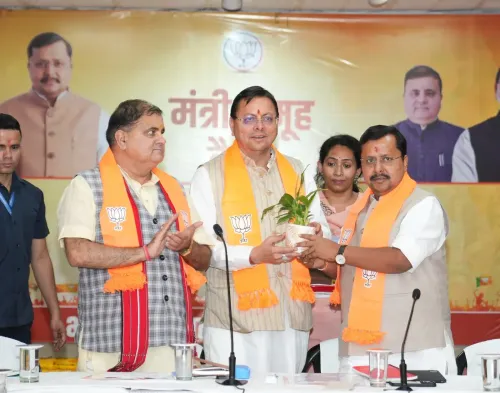
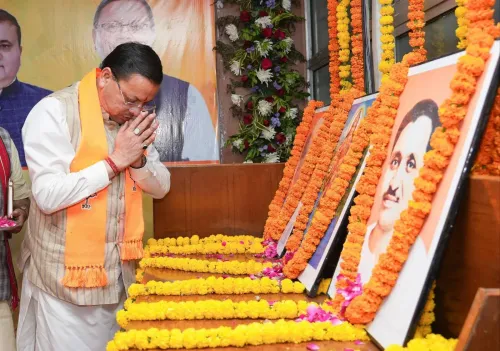
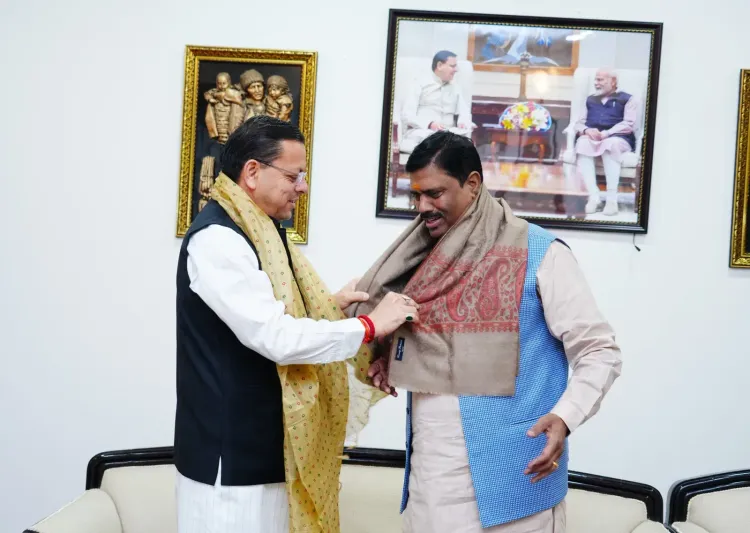
CM Dhami meets BJP co-incharge Arvind Menon at official residence
Synopsis
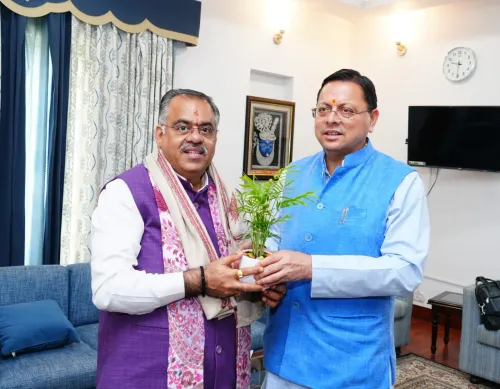
Uttarakhand CM Pushkar Singh Dhami met BJP co-incharge Arvind Menon at his official Dehradun residence on October 17, holding detailed discussions on strengthening the state party organisation and other contemporary issues.
Key Takeaways
Uttarakhand Chief Minister Pushkar Singh Dhami met Arvind Menon , BJP co-incharge for Uttarakhand, on Saturday, October 17, 2026 .
The meeting was held at Dhami's official residence in Dehradun.
Discussions centred on strengthening the BJP's Uttarakhand unit and other contemporary issues.
Arvind Menon serves as co-incharge of BJP4UK , functioning as the central party's link to the state unit.
The meeting follows a well-established BJP pattern of aligning state government and party organisation priorities between electoral cycles.
Uttarakhand Chief Minister Pushkar Singh Dhami sat down with the BJP's state co-incharge on Saturday, October 17, for a wide-ranging conversation on party organisation — a quiet but pointed signal that the BJP's internal machinery in the hill state is being actively tuned.
Dhami hosted Arvind Menon, co-incharge of BJP4UK (the Bharatiya Janata Party's Uttarakhand unit), at his official residence in Dehradun. Sharing the meeting on X, Dhami wrote that the two held detailed discussions on 'strengthening the organisation further and other contemporary issues' — sangathan ko aur adhik sashakt banane evam anya samsamayik vishyon par vistrit charcha hui.
Why a CM-coIncharge sit-down matters
In BJP-governed states, meetings between a chief minister and the party's central co-incharge are a standard but consequential ritual. The co-incharge functions as the high command's eyes and ears — carrying assessments of ground-level sentiment back to the central leadership and carrying directives the other way. When a sitting CM hosts that person at his official residence, it signals a deliberate alignment exercise between the state government and the party apparatus.
For Uttarakhand, where the BJP holds government and is focused on maintaining organisational cohesion ahead of future electoral cycles, such coordination meetings carry added weight. The party's Uttarakhand unit has been working to sharpen grassroots outreach, and a direct dialogue between Dhami and Menon fits squarely into that pattern.
Menon's role in the Uttarakhand BJP structure
Arvind Menon serves as co-incharge for the Uttarakhand BJP, a role that places him at the intersection of state administration and central party strategy. His visit to the CM's residence — rather than a routine party office meeting — underscores the seriousness with which both sides are approaching the organisational agenda. The specific contemporary issues discussed were not detailed publicly, though the meeting's framing points to a broad internal review rather than any single policy trigger.
The conversation marks another step in the BJP's ongoing effort to keep its state units tightly synchronised with central priorities — a discipline the party treats as non-negotiable between election cycles.
Point of View
Ensuring policy and political messaging stay in lockstep. For Uttarakhand, a state where the BJP holds a clear mandate, maintaining organisational health between elections is as important as governance delivery. The fact that the meeting took place at the CM's official residence, rather than a party office, suggests the conversation blended administrative and political threads. Analysts watching the Uttarakhand BJP will look for any follow-up unit-level meetings or reshuffle signals that typically flow from such high-level consultations.
NationPress
17 Oct 2026
Frequently Asked Questions
Who is Arvind Menon in the BJP?
Arvind Menon is the BJP's co-incharge for the Uttarakhand state unit, responsible for coordinating between the central party leadership and the state organisation.
Why did CM Dhami meet the BJP co-incharge?
The meeting focused on strengthening the BJP's Uttarakhand organisational structure and discussing other contemporary issues, according to Dhami's post on X.
Where did the Dhami-Menon meeting take place?
The meeting was held at Pushkar Singh Dhami's official residence in Dehradun on October 17, 2026.
What does a BJP co-incharge do?
A BJP co-incharge acts as the central party's representative in a state, monitoring ground-level political developments, relaying high-command directives, and coordinating with the state government and party unit.