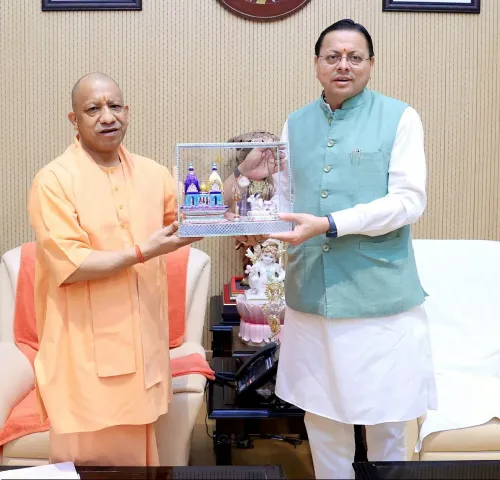
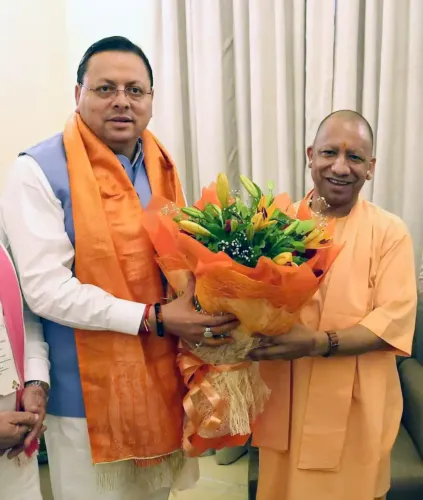
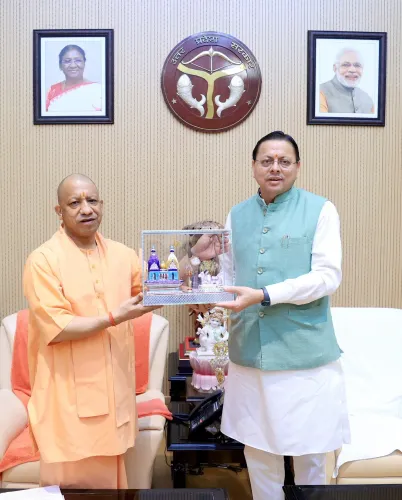
CM Dhami meets CM Yogi to resolve Uttarakhand-UP asset disputes
Synopsis
Uttarakhand CM Pushkar Singh Dhami met UP CM Yogi Adityanath on 19 November 2026 to resolve decades-old inter-state asset disputes stemming from the 2000 bifurcation, with both states signalling an imminent settlement.
Key Takeaways
CM Pushkar Singh Dhami met CM Yogi Adityanath on 19 November 2026 to address pending inter-state asset disputes.
The disputes originate from Uttarakhand's bifurcation from Uttar Pradesh on 9 November 2000 under the Uttar Pradesh Reorganisation Act, 2000 .
Both Chief Ministers signalled that old property and institutional claims will be resolved 'soon,' according to the Uttarakhand CMO.
Outstanding issues involve buildings, government funds, organisations and financial liabilities between the two successor states.
India has seen similar post-bifurcation asset disputes between Andhra-Telangana, Punjab-Haryana, and Bihar-Jharkhand — a resolution here could serve as a broader template.
A meeting twenty-six years in the making moved a step closer to resolution on Thursday, 19 November 2026, when Uttarakhand Chief Minister Pushkar Singh Dhami sat down with Uttar Pradesh Chief Minister Yogi Adityanath to tackle the long-pending division of assets that has lingered since the two states were separated. The Chief Minister's Office of Uttarakhand confirmed the bilateral meeting and said both sides have agreed that old inter-state property disputes will be settled soon.
A rift born in 2000 — and what still remains unsettled
When Uttarakhand was carved out of Uttar Pradesh on 9 November 2000, the Uttar Pradesh Reorganisation Act, 2000 set the legal framework for dividing assets, liabilities and institutions between the two successor states. But frameworks and reality rarely align perfectly — buildings, funds, government organisations and financial liabilities have remained in a grey zone for over two decades, requiring periodic bilateral negotiation to untangle.
These are not abstract bureaucratic squabbles. The unresolved claims affect public institutions, government infrastructure and financial entitlements that belong — by right of bifurcation — to citizens of both states. Every year the disputes sit unresolved, administrative clarity is deferred and legitimate resources go undeployed.
What the Dhami-Yogi handshake signals
Both Dhami and Adityanath are senior BJP leaders governing neighbouring, deeply connected states. The political alignment between Lucknow and Dehradun has historically made inter-state coordination smoother than it might otherwise be — and this meeting underscores a fresh political will to close open files. The Chief Minister's Office stated that 'दोनों राज्यों के बीच परिसंपत्तियों के पुराने विवादों का जल्द होगा निस्तारण' (old asset disputes between the two states will be resolved soon).
India's federal architecture has seen similar bifurcation headaches play out in Andhra Pradesh and Telangana, Punjab and Haryana, and Bihar and Jharkhand — making every resolved case a template for the others. A formal agreement, a joint committee mandate, or specific asset transfer orders emerging from this meeting would mark a concrete step forward.
What to watch now: whether the two governments formalise a joint mechanism with a defined timeline, or whether this remains a statement of intent waiting to be tested by bureaucratic follow-through.
Point of View
Possibly tied to electoral calendars or development project funding that requires clean asset titles. The broader lesson is that state reorganisations in India routinely produce multi-decade inheritance disputes; any binding mechanism Uttarakhand and UP formalise here will be watched closely by other bifurcated state pairs still negotiating their own unresolved legacies.
NationPress
19 Nov 2026
Frequently Asked Questions
Why did CM Dhami meet CM Yogi Adityanath?
CM Pushkar Singh Dhami met CM Yogi Adityanath on 19 November 2026 to discuss and expedite the resolution of long-pending asset and property disputes between Uttarakhand and Uttar Pradesh that have remained unresolved since the two states were separated in 2000.
What are the asset disputes between Uttarakhand and Uttar Pradesh?
When Uttarakhand was carved out of UP in 2000 under the Uttar Pradesh Reorganisation Act, several assets including buildings, government institutions, funds and financial liabilities were not fully divided. These pending claims have been a subject of bilateral negotiation between the two states for over two decades.
When was Uttarakhand separated from Uttar Pradesh?
Uttarakhand was formed on 9 November 2000 by bifurcation from Uttar Pradesh under the Uttar Pradesh Reorganisation Act, 2000.
What is the Uttar Pradesh Reorganisation Act 2000?
The Uttar Pradesh Reorganisation Act, 2000 is the central legislation that legally created Uttarakhand as a separate state from UP. It provided the framework for dividing assets, liabilities and institutions between the two states, though many specific matters remained unresolved after the split.
What could come out of the Dhami-Yogi meeting on inter-state assets?
Potential outcomes include a formal joint committee, specific asset transfer orders, or a defined timeline for settling pending claims. Both Chief Ministers have indicated that old disputes will be resolved soon, though a binding agreement is yet to be announced.