CM Dhami Celebrates Igas Festival at Official Residence
Synopsis
Uttarakhand Chief Minister Pushkar Singh Dhami marked Igas, the post-Diwali Kumaoni festival, by playing Bhailo at his official residence on 19 November 2026, calling on the younger generation to carry forward the state's folk culture and traditional heritage.
Key Takeaways
Pushkar Singh Dhami observed Igas festival with traditional customs at the Chief Minister's official residence in Dehradun on 19 November 2026 .
Bhailo , a traditional outdoor game central to Igas celebrations, was played as part of the customary observance.
The Chief Minister framed the event as a message to the new generation to preserve Uttarakhand's folk culture and traditional heritage .
Igas is a post-Diwali festival observed primarily in Kumaon division, with its own distinct ritual calendar separate from mainstream Diwali.
The gesture reflects a broader pattern of Uttarakhand state leadership using official venues to visibly endorse intangible cultural preservation amid ongoing out-migration.
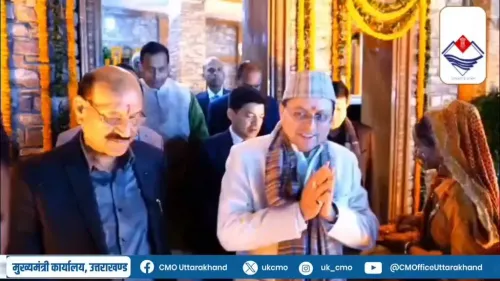
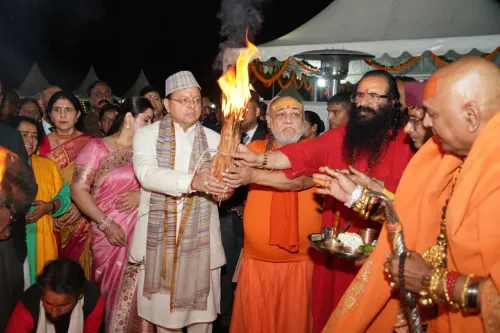
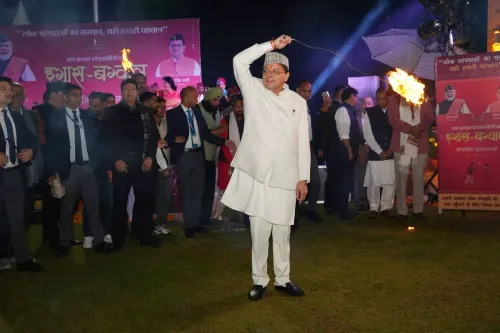
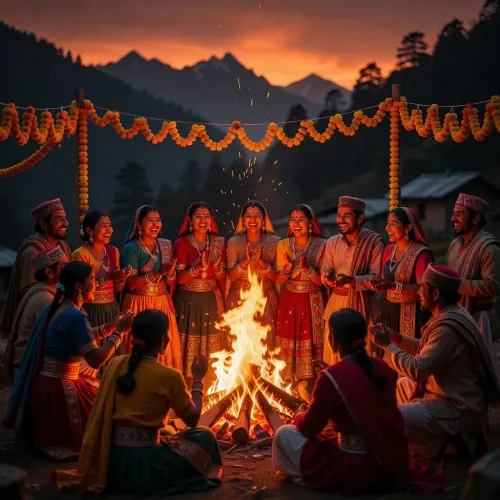
In the courtyard of the Chief Minister's official residence in Dehradun, the scent of festival season lingered past Diwali on Thursday, 19 November 2026 — as Uttarakhand Chief Minister Pushkar Singh Dhami marked Igas, the Kumaoni hill festival, by playing the traditional outdoor game of Bhailo with full customary observance. The Chief Minister's Office of Uttarakhand posted images of the celebration on X, framing the event as a deliberate message to the younger generation to embrace the state's living folk heritage.
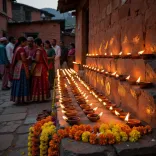
Igas — also called Igas Bagwal — is a post-Diwali festival observed primarily across Kumaon, the eastern division of Uttarakhand. While the rest of the country winds down from Diwali, Kumaoni communities light lamps, sing folk songs, and gather for communal games roughly eleven days later, in a celebration that has its own distinct ritual calendar. At the heart of Igas is Bhailo, a traditional outdoor contest played with community participation, whose rules and customs can vary village by village across the Himalayan foothills.
A Deliberate Stage at Mukhyamantri Avas
Dhami's decision to hold the celebration at Mukhyamantri Avas — the official Chief Ministerial residence — was itself a statement. State leaders in Uttarakhand have made it a practice to stage regional festivals at official premises, lending the weight of the government's most visible address to events that might otherwise remain confined to village courtyards and community grounds. The post explicitly framed the occasion around 'transmitting the folk culture and traditional heritage of Uttarakhand to the new generation.'
The gesture lands in a specific context. Uttarakhand faces chronic out-migration, as hill communities — particularly youth — relocate to the plains for work and education. Folk practices, seasonal games, and oral traditions move with them only partially, often fading within a generation or two. Dhami, who has been Chief Minister since 2021, has consistently used state-endorsed cultural events to signal that the government views this erosion as a live concern, not an abstract one.
Bhailo and the Stakes of Intangible Heritage
Bhailo is more than a game — it is a vessel for community memory. Played during Igas with customary rules passed down through practice rather than text, it encapsulates the kind of intangible cultural heritage that cannot simply be archived in a museum. Its survival depends on participation: children watching, joining, and eventually leading. By playing Bhailo in front of cameras at the official residence, Dhami placed the game in front of an audience far beyond any single village.
Kumaoni communities across the state, and in diaspora pockets in cities like Delhi and Dehradun, observe Igas with varying intensity. The festival's visibility has grown in recent years alongside broader state efforts to document Garhwali and Kumaoni folk traditions — a process that educators and cultural bodies argue must be matched by school-level programming if it is to outlast the generation that still carries it instinctively.
Whether Thursday's celebration at the Chief Minister's residence translates into formal cultural-preservation programmes — curriculum integration, community grants, documentation drives — will be the real measure of its intent. The lamps have been lit. The question now is what they illuminate beyond the ceremony.
Point of View
The administration conflates state authority with cultural custodianship — a move that earns goodwill in Kumaoni communities while costing little. The harder test, as researchers of intangible heritage note, is whether such symbolism is ever followed by structural interventions: school curricula, community documentation grants, or festival infrastructure funding. For now, the celebration serves as a visible endorsement, but the gap between spectacle and policy remains wide.
NationPress
19 Nov 2026
Frequently Asked Questions
What is Igas festival in Uttarakhand?
Igas, also called Igas Bagwal, is a post-Diwali festival celebrated mainly in the Kumaon region of Uttarakhand. It is observed approximately eleven days after Diwali and involves lighting lamps, singing folk songs, and playing traditional games such as Bhailo with community participation.
What is Bhailo in the context of Igas?
Bhailo is a traditional outdoor game or contest played during Igas celebrations in Kumaon. Its specific rules can vary by locality and are typically passed down through community practice rather than written texts.
Why did CM Dhami celebrate Igas at the Chief Minister's residence?
Dhami's office stated that the celebration was intended to send a message about transmitting Uttarakhand's folk culture and traditional heritage to the new generation. Hosting it at the official residence gives the event higher visibility and signals state-level endorsement of cultural preservation.
Is Igas celebrated across all of Uttarakhand?
Igas is observed primarily in the Kumaon division of Uttarakhand. It is distinct from the Garhwali traditions of the western part of the state, though both are part of Uttarakhand's broader folk heritage.
What is Pushkar Singh Dhami doing for Uttarakhand culture?
Chief Minister Pushkar Singh Dhami, who has led Uttarakhand since 2021, has regularly participated in state cultural events to highlight and promote local folk traditions. His participation in Igas 2026 is consistent with this broader pattern of using official platforms to endorse intangible cultural heritage.