CM Dhami: 'Not Appeasement, Now Satisfaction and Nation First'
Synopsis
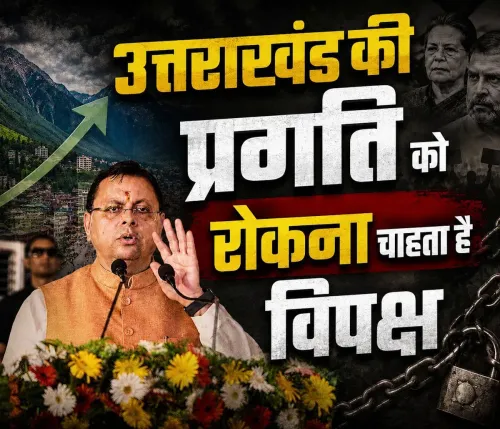
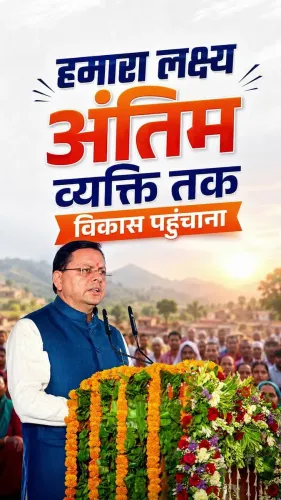
Uttarakhand Chief Minister Pushkar Singh Dhami has declared that his government stands for 'satisfaction of all' and a Nation First culture, explicitly rejecting appeasement politics. The statement reinforces the BJP-led state's ideological direction ahead of the 2027 assembly elections.
Key Takeaways
CM Pushkar Singh Dhami declared on 25 May 2026 that governance will follow 'satisfaction for all' and 'Nation First,' rejecting appeasement.
Uttarakhand was the first Indian state to pass a Uniform Civil Code bill in February 2024 under Dhami's leadership.
The statement aligns with BJP's long-standing national narrative of 'development for all' versus perceived minority appeasement.
The Uttarakhand electorate is the primary audience, with state assembly elections due in 2027 .
Pending implementation rules for the Uniform Civil Code remain a key policy watch-point for the coming assembly session.
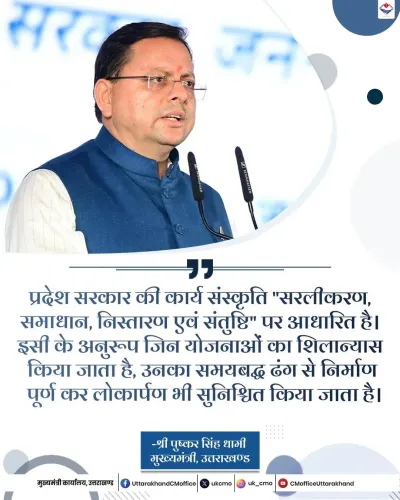
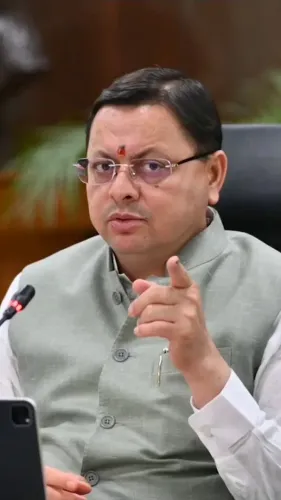
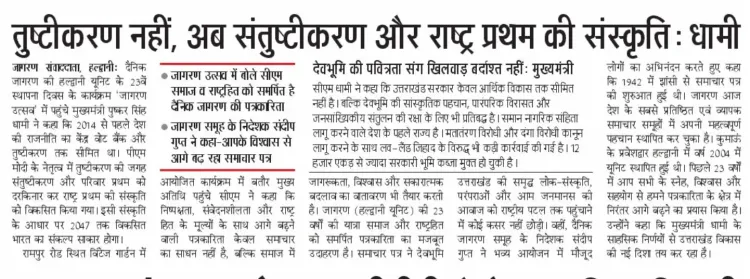
The Chief Minister's Office of Uttarakhand on Monday, 25 May 2026, shared a statement attributed to Chief Minister Pushkar Singh Dhami declaring a shift in governance philosophy — away from tushtikaran (appeasement) and toward santushṭikaran (satisfaction of all) and a culture of 'Nation First.'
Context
The post, shared from the official CMO handle, quotes CM Dhami as saying: 'Not appeasement, now satisfaction and the culture of Nation First.' The original Hindi reads: 'tushtikaran nahi, ab santushṭikaran aur Rashtra Pratham ki sanskriti.' The statement frames the BJP-led Uttarakhand government's approach to governance as one that prioritises equitable development over community-specific concessions.
The remark comes as Uttarakhand continues to position itself as a front-runner in implementing BJP's ideological agenda at the state level. The framing directly contrasts the current dispensation's policies with what the party describes as the appeasement politics of earlier governments.
Policy Backdrop
The statement draws on a well-established ideological thread within the Bharatiya Janata Party. In February 2024, Uttarakhand became the first Indian state to pass a Uniform Civil Code (UCC) bill under Dhami's government — a landmark legislative move that the administration presented as applying one law equally to all citizens regardless of religion.
The UCC has been a central plank of BJP's national platform for decades, and Uttarakhand's passage of the bill was widely seen as a signal of the state's role as a testing ground for such reforms. The government has also enacted measures related to anti-conversion statutes, which it frames under the same 'equal treatment' doctrine.
The 'Nation First' rhetoric aligns with the broader national narrative the party has cultivated — distinguishing development-for-all from what it characterises as minority appeasement by Congress-led governments in the past.
Stakeholders and Impact
The primary audience for this messaging is the Uttarakhand electorate, which returns to the polls in 2027 for state assembly elections. The framing of governance as 'satisfaction for all' rather than targeted benefits for specific communities is designed to appeal to a broad voter base, particularly in a state where Hindus constitute over 83 per cent of the population.
Opposition parties, including the Indian National Congress, have historically contested such framing, arguing that welfare schemes for marginalised communities are constitutional obligations, not appeasement. Civil society groups monitoring the implementation of the UCC rules — still pending full notification — are also key stakeholders watching how this stated philosophy translates into administrative action.
What's Next
Attention will now turn to the next Uttarakhand assembly session, where pending rules and implementation guidelines for the Uniform Civil Code are expected to be taken up. Any follow-up policy announcements or legislative moves ahead of the 2027 state elections will be read through the lens of this 'Nation First, satisfaction for all' positioning.
With the election cycle approaching, CM Dhami's public messaging is likely to intensify around themes of uniform governance and cultural nationalism — themes that have defined his administration since he first took charge in 2021.
Point of View
Satisfaction for all' declaration is less a policy announcement than a pre-election ideological marker — a deliberate contrast with Congress-era governance framing that has served BJP well in Hindi-belt states. Uttarakhand's role as the first state to pass the Uniform Civil Code gives Dhami concrete legislative credibility to back the rhetoric. With the 2027 assembly elections on the horizon, expect this messaging to anchor the party's campaign narrative. The real test, however, will be whether pending UCC implementation rules are notified — translating slogan into statute.
NationPress
9 Oct 2026
Frequently Asked Questions
What did CM Pushkar Singh Dhami say about appeasement politics?
CM Dhami declared that his government stands for 'satisfaction of all' and a 'Nation First' culture, explicitly rejecting appeasement as a governance principle, according to a post by the official Uttarakhand Chief Minister's Office on 25 May 2026.
What is the Uniform Civil Code in Uttarakhand?
Uttarakhand became the first Indian state to pass a Uniform Civil Code bill in February 2024 under CM Dhami, applying a single set of civil laws to all citizens regardless of religion. Full implementation rules are still pending notification.
When are the next Uttarakhand assembly elections?
The next Uttarakhand state assembly elections are due in 2027. CM Dhami's current messaging around 'Nation First' governance is widely seen as early positioning ahead of that electoral cycle.
What does 'tushtikaran vs santushṭikaran' mean in Indian politics?
'Tushtikaran' means appeasement — typically referring to targeted concessions for minority communities — while 'santushṭikaran' means satisfaction of all citizens equally. BJP leaders use this contrast to distinguish their governance model from that of Congress-led governments.
What is CM Dhami's political background?
Pushkar Singh Dhami is a BJP politician who has served as Chief Minister of Uttarakhand since 2021. His tenure has been marked by the passage of the Uniform Civil Code bill and measures framed around cultural nationalism and uniform governance.