CM Majhi hails India-Australia nuclear energy deal
Synopsis
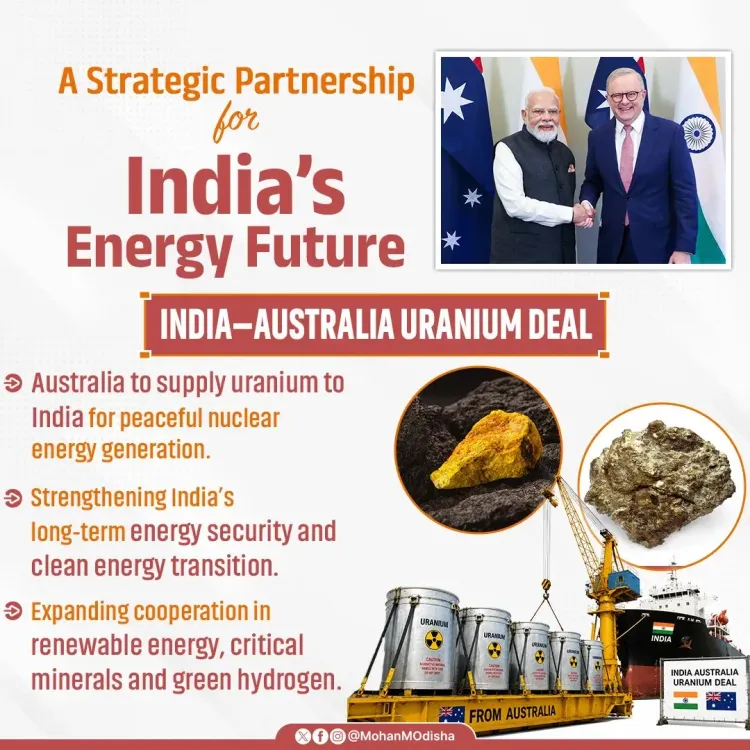
Odisha Chief Minister Mohan Charan Majhi has celebrated a new India-Australia nuclear energy partnership, highlighting the dramatic reversal from Australia's 2010 refusal to sell uranium to India, and attributing the shift to PM Modi's global leadership.
Key Takeaways
Odisha CM Mohan Charan Majhi praised the new India-Australia nuclear energy cooperation on 10 July 2026 .
Australia had refused uranium sales to India in 2010 due to India's non-NPT status; the policy was reversed starting 2011 .
A bilateral civil nuclear agreement between India and Australia was first signed in 2014 .
Australia holds roughly 28 percent of the world's known uranium reserves, making it a critical energy partner for India .
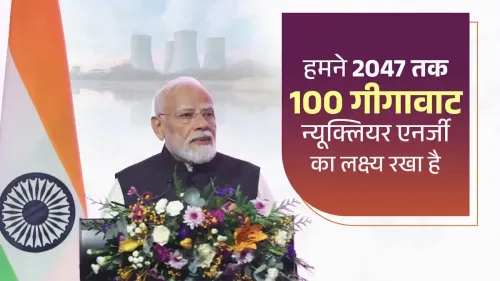
India targets 100 GW of nuclear capacity by 2047 as part of its clean energy transition.
The development deepens the India-Australia Comprehensive Strategic Partnership and reinforces Quad ties.
Odisha Chief Minister Mohan Charan Majhi on Friday, 10 July 2026 lauded the landmark shift in India-Australia nuclear energy relations, noting that Australia — which had categorically ruled out uranium sales to India in 2010 — has now entered a new chapter of nuclear energy cooperation with New Delhi, crediting the transformation to Prime Minister Narendra Modi's global leadership.
Context
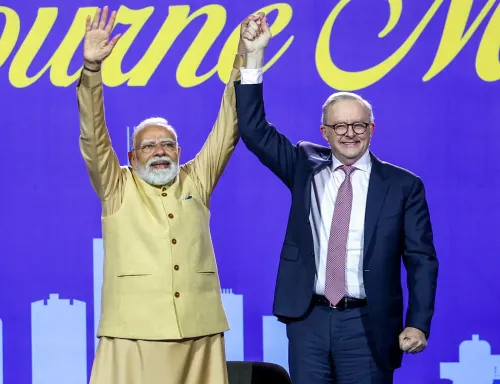
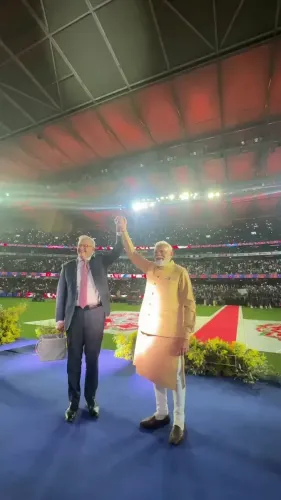
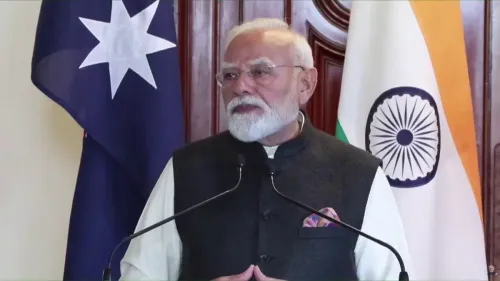
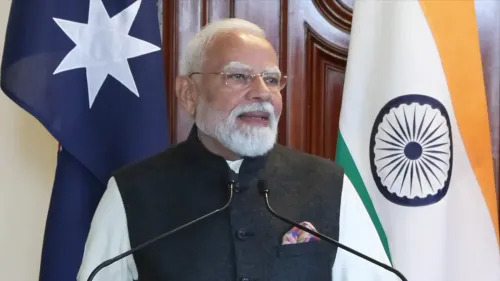
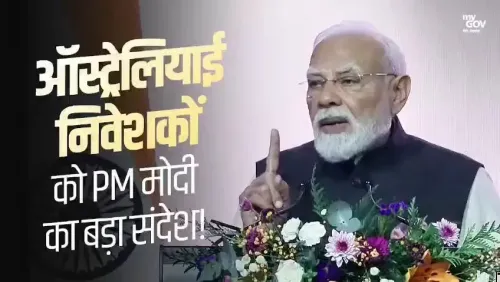
In his post on X, CM Majhi drew a sharp contrast between Australia's position in 2010 — when it firmly refused to sell uranium to India — and the current moment, describing the shift as moving 'from a firm no to a landmark partnership.' He invoked the popular BJP slogan Modi Hai Toh Mumkin Hai (If Modi is there, it is possible), framing the development as a testament to India's rising global stature under PM Modi's stewardship, as the Prime Minister is currently visiting Australia.
The reference to 2010 points to the period when the Australian Labor government, under then-Prime Minister Kevin Rudd, maintained a policy barring uranium exports to countries outside the Nuclear Non-Proliferation Treaty (NPT) — a category that includes India. That policy was reversed in 2011 when the Australian Labor Party voted to lift the ban, and a bilateral civil nuclear agreement between India and Australia was signed in 2014, paving the way for uranium trade.
Policy Backdrop
India's civil nuclear journey gained decisive momentum after the landmark India-US Civil Nuclear Agreement of 2008, which unlocked international nuclear commerce for New Delhi despite its non-NPT status. Following that breakthrough, India pursued bilateral nuclear cooperation agreements with multiple countries, including Australia, France, Russia, Japan, and Canada.
Australia holds approximately 28 percent of the world's known uranium reserves, making it a strategically significant partner for India's ambitious nuclear energy expansion plans. India aims to scale up nuclear power capacity significantly as part of its clean energy transition, targeting 100 GW of nuclear capacity by 2047 under its long-term energy roadmap. A deeper nuclear energy partnership with Canberra would strengthen India's fuel supply security for this expansion.
Stakeholders and Impact
For India's energy sector, closer nuclear cooperation with Australia could mean more stable and diversified access to uranium, reducing dependence on any single supplier nation. Nuclear Power Corporation of India Limited (NPCIL) and upcoming projects under the Atomic Energy Commission stand to benefit from assured fuel supply lines.
Geopolitically, the development reinforces the India-Australia Comprehensive Strategic Partnership announced in 2020, which elevated bilateral ties across defence, trade, and clean energy. It also strengthens the Quad framework's practical dimension, as both nations are Quad members alongside the United States and Japan. For Odisha, which hosts key nuclear and industrial infrastructure, deeper national-level energy partnerships carry downstream significance for the state's industrial growth.
What's Next
With PM Modi currently in Australia, further details of the nuclear energy cooperation framework are expected to be formalised. Observers will watch for specific agreements on uranium supply volumes, joint research in advanced nuclear technologies such as Small Modular Reactors (SMRs), and timelines for operationalising the partnership. The political messaging from senior BJP leaders like CM Majhi signals that the party intends to highlight this diplomatic win as a signature achievement of PM Modi's foreign policy ahead of future electoral cycles.
Point of View
Using the 2010-versus-2026 contrast to dramatise what the BJP presents as a foreign policy transformation under PM Modi. The invocation of Modi Hai Toh Mumkin Hai signals a coordinated party-wide messaging effort to amplify the Australia visit as a landmark moment. Anchoring the narrative in nuclear energy — a domain tied to both national security and clean energy ambitions — gives the messaging a substantive policy dimension beyond routine diplomatic optics. The broader arc here is India's post-2008 nuclear rehabilitation on the world stage, a process that has accelerated under successive governments but which the BJP is now assertively branding as its own.
NationPress
10 Jul 2026
Frequently Asked Questions
Why did Australia refuse to sell uranium to India in 2010?
In 2010, Australia maintained a policy of not exporting uranium to countries outside the Nuclear Non-Proliferation Treaty (NPT). Since India is not an NPT signatory, it was excluded from uranium trade with Australia under that policy.
When did India and Australia sign a civil nuclear agreement?
India and Australia signed a bilateral civil nuclear cooperation agreement in 2014, after the Australian Labor Party voted in 2011 to lift its ban on uranium sales to India.
What is India's nuclear energy target by 2047?
India aims to achieve 100 GW of nuclear power capacity by 2047 as part of its long-term clean energy transition strategy.
What does the India-Australia nuclear partnership mean for India's energy security?
Australia holds about 28 percent of the world's known uranium reserves. Deeper nuclear cooperation with Australia gives India a strategically significant and diversified source of uranium fuel for its expanding nuclear power programme.
What did Odisha CM Mohan Charan Majhi say about PM Modi's Australia visit?
CM Majhi said India's growing global stature and PM Modi's leadership turned the impossible possible, contrasting Australia's 2010 refusal to sell uranium with the current landmark nuclear energy partnership.