CM Dhami Orders Niti Valley Road Restoration After Heavy Rain
Synopsis
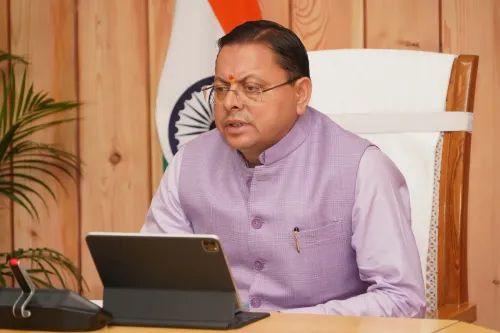
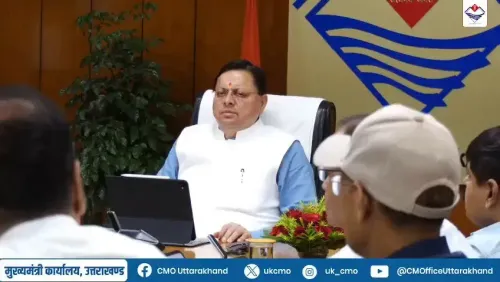
Uttarakhand CM Pushkar Singh Dhami ordered the Chamoli District Magistrate to restore blocked roads in Niti Valley after heavy rainfall damage and directed the administration to ensure timely, zero-negligence relief for affected residents.
Key Takeaways
CM Dhami issued directives on 10 August 2026 following heavy rainfall damage in Niti Valley, Chamoli district .
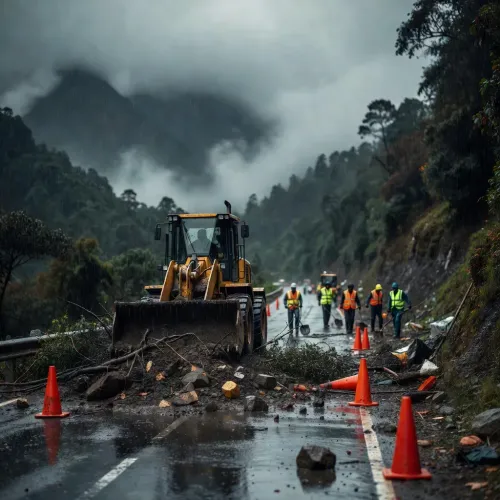
The District Magistrate was ordered to arrange alternative routes to restore movement on blocked roads immediately.
The administration was instructed to ensure no negligence in relief and rescue operations.
Niti Valley is a remote, border-adjacent area near the Indo-Tibet boundary, making connectivity restoration strategically significant.
Uttarakhand built its disaster-response framework after the 2013 Kedarnath floods , with district-level emergency coordination mechanisms.
When cloudbursts strike the high Himalayas, the clock starts ticking — for stranded residents, for cut-off communities, and for the officials who must answer for every hour of delay. Uttarakhand Chief Minister Pushkar Singh Dhami moved swiftly on Monday, 10 August 2026, issuing direct orders to the Chamoli district administration to restore blocked routes in the Niti Valley and ensure zero-lapse relief operations following damage caused by heavy rainfall.
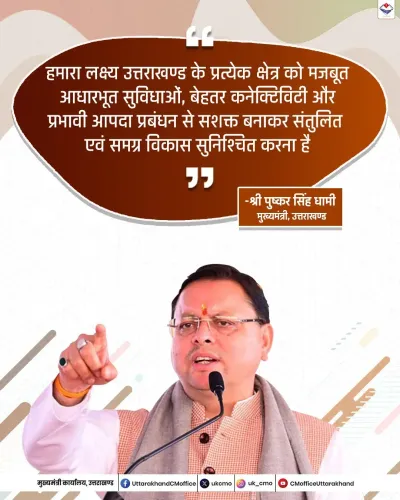
In his post, CM Dhami said he had 'taken cognisance of the damage caused by heavy rainfall in Niti Valley in Chamoli district' and directed the District Magistrate to 'ensure alternative arrangements to quickly restore movement on blocked roads.' He added that the administration had been instructed to 'work with full alertness so that there is no negligence of any kind in relief and rescue operations in the affected areas, and all possible assistance reaches the common people on time.'
Niti Valley: Remote, Strategic, and Perpetually Vulnerable
Niti Valley sits in the far reaches of Chamoli district, pushing up against the Indo-Tibet border. Its high-altitude passes and narrow mountain roads make it one of Uttarakhand's most connectivity-fragile zones — a single landslide or cloudburst can sever the only motorable link for days. The valley's residents depend entirely on these routes for supplies, medical access, and evacuation when the monsoon turns hostile.
The strategic dimension adds urgency. Border-adjacent terrain in Chamoli has long received focused administrative attention, and any prolonged road closure carries implications beyond the immediate civilian hardship. District-level emergency coordination here is not routine paperwork — it is a high-stakes operational call.
A State Forged by Disaster Response
Uttarakhand's administrative muscle for exactly these moments was built, painfully, after the 2013 Kedarnath floods — one of the deadliest natural disasters in independent India's history. In the years since, the state established reinforced State Disaster Response Force protocols and district-level emergency mechanisms designed to compress the gap between a disaster event and a government response.
CM Dhami's directive pattern — direct instruction to the District Magistrate, explicit demand for alternative route planning, and a named zero-tolerance standard for negligence — tracks closely with how Uttarakhand has handled successive monsoon emergencies across its Himalayan districts. The rainy season brings this cycle back every year; the difference is how fast the machinery turns.
The immediate test now falls on the Chamoli district administration: how quickly alternative connectivity can be established, and whether relief material reaches Niti Valley's affected residents before the next weather event compounds the damage.
Point of View
Top-down accountability signalling during Uttarakhand's annual monsoon crises. For a border district like Chamoli, where civilian hardship and strategic sensitivity overlap, the speed of the CM's public response matters as a political and administrative signal. The directive also reflects how post-2013 disaster governance in Uttarakhand has institutionalised direct executive intervention in district-level operations. The real measure of this moment, however, will be operational: how fast connectivity is restored and whether relief reaches Niti Valley before the next weather window closes.
NationPress
11 Aug 2026
Frequently Asked Questions
What happened in Niti Valley Chamoli in August 2026?
Heavy rainfall caused damage in Niti Valley in Chamoli district, blocking roads and disrupting connectivity for residents. Uttarakhand CM Pushkar Singh Dhami took cognisance of the situation and directed the District Magistrate to restore movement and ensure timely relief.
What orders did CM Dhami give for Chamoli flood relief?
CM Dhami directed the Chamoli District Magistrate to arrange alternative routes to restore movement on blocked roads quickly, and ordered the administration to ensure no negligence in relief and rescue operations so that affected people receive all possible assistance on time.
Where is Niti Valley and why is it important?
Niti Valley is a remote, high-altitude valley in Chamoli district, Uttarakhand, located near the Indo-Tibet border. Its strategic location and narrow mountain roads make it particularly vulnerable to monsoon-induced road blockages and connectivity disruptions.
How does Uttarakhand handle monsoon disaster response?
After the devastating 2013 Kedarnath floods, Uttarakhand established enhanced State Disaster Response Force protocols and district-level emergency coordination mechanisms. The CM typically issues direct directives to District Magistrates during major weather events.
Is Chamoli district prone to landslides and floods?
Yes. Chamoli is a mountainous district in Uttarakhand bordering China and is repeatedly affected by landslides and heavy rainfall, particularly during the monsoon season, which frequently disrupts road connectivity and requires rapid administrative response.