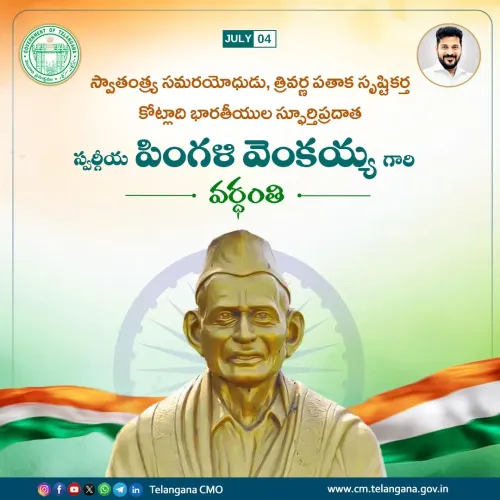
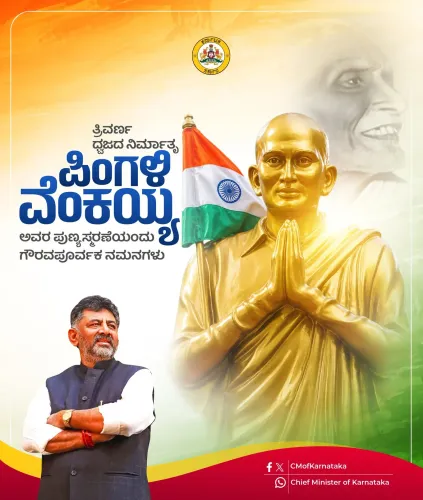
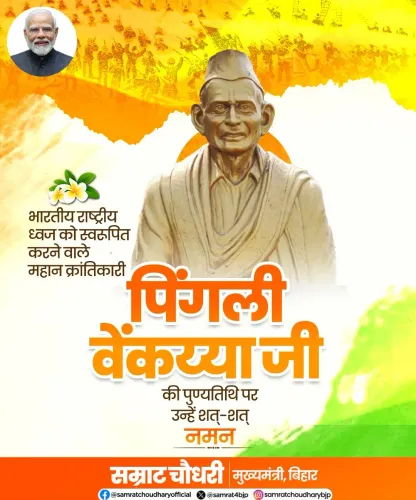
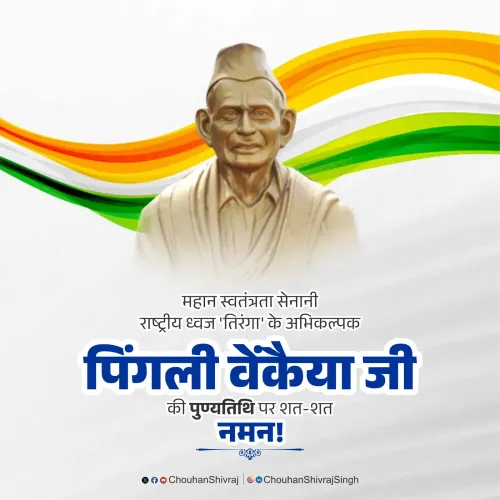
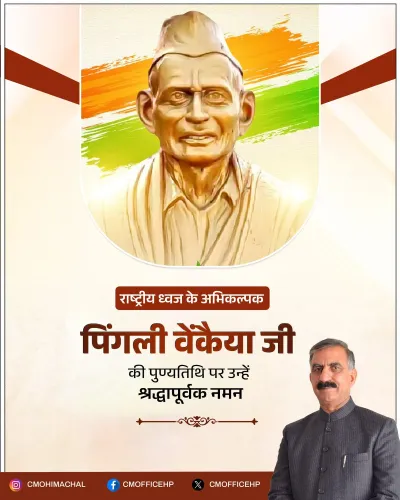
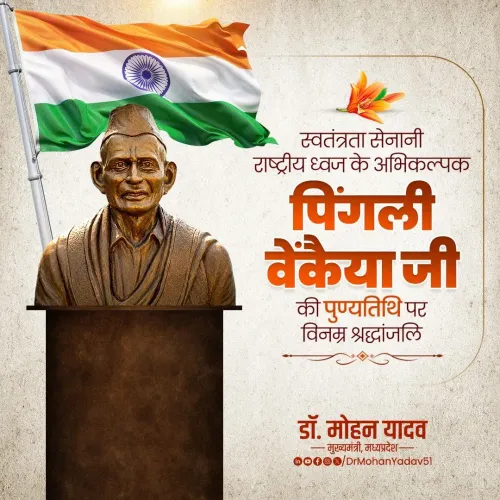
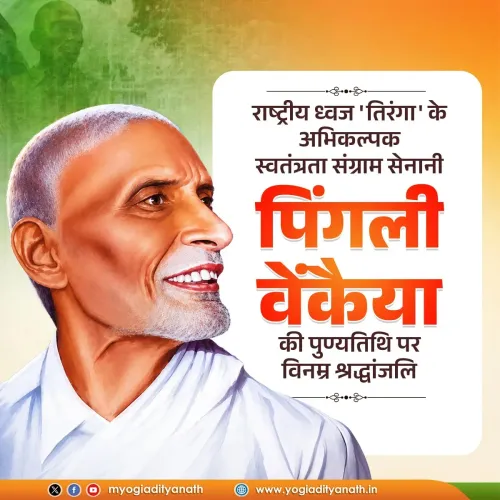
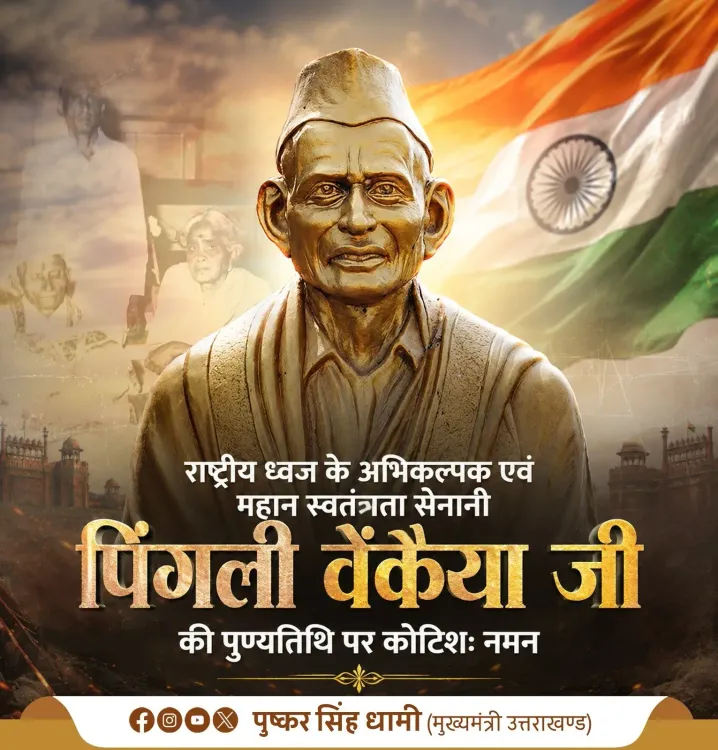
CM Dhami pays tribute to Indian flag designer Pingali Venkayya
Synopsis
Uttarakhand Chief Minister Pushkar Singh Dhami on 4 July 2026 honoured Pingali Venkayya, designer of the Indian tricolour, on his death anniversary, calling his contribution an immortal identity for the nation rooted in unity, dignity, and self-respect.
Key Takeaways
Uttarakhand CM Pushkar Singh Dhami paid tribute to Pingali Venkayya on his death anniversary on 4 July 2026 .
Pingali Venkayya first proposed a tricolour flag design at the Bezawada Congress session in 1921 .
The Constituent Assembly adopted the tricolour as India's national flag on 22 July 1947 .
CM Dhami described Venkayya's contribution as giving the nation an immortal identity of unity, dignity, and self-respect.
The tribute comes weeks ahead of Independence Day on 15 August , when flag-hoisting ceremonies are held nationwide.
Uttarakhand Chief Minister Pushkar Singh Dhami on Saturday, 4 July 2026, paid homage to Pingali Venkayya, the designer of the Indian national flag, on his death anniversary, honouring him as a great freedom fighter and ardent patriot.
Context
In his post, CM Dhami offered kotishah naman (countless salutations) to Venkayya, writing that through the form of the Indian tricolour, Venkayya gave the nation an immortal identity rooted in dignity, unity, and self-respect. He added that Venkayya's sacrifice, devotion to the nation, and inspiring life would continue to motivate every Indian to serve the motherland and place national interest above all else.
The tribute is part of a consistent pattern among BJP-led state governments of formally marking the death anniversaries of independence-era figures through official statements and social media.
Policy Backdrop
Pingali Venkayya first proposed a tricolour flag design at the All India Congress Committee session in Bezawada in 1921. His concept laid the groundwork for what would become the national flag. The Constituent Assembly formally adopted the tricolour as India's national flag on 22 July 1947, just weeks before independence.
Despite his foundational contribution, Venkayya spent much of his later life in relative obscurity. Recognition of his role has grown significantly in recent decades, with governments across the political spectrum acknowledging him as a central figure in the story of India's national identity.
Stakeholders and Impact
For Indian citizens, the tricolour is among the most powerful symbols of national sovereignty and unity. Tributes to its designer carry particular resonance in the weeks leading up to Independence Day on 15 August, when flag-hoisting ceremonies take place across the country.
Public commemorations of figures like Venkayya also serve to reinforce the broader political messaging around nationalism and the freedom struggle — themes that hold significant electoral and cultural weight in contemporary Indian politics.
What's Next
With Independence Day approaching on 15 August, flag-hoisting ceremonies and related commemorations are expected to be held across all states, including Uttarakhand. These events typically provide state governments with a prominent platform to reaffirm their commitment to national symbols and the legacy of the freedom movement.
The death anniversary tribute by CM Dhami signals the beginning of a period of heightened national symbolism that will culminate in the Independence Day celebrations next month.
Point of View
Particularly those associated with national symbols. By invoking the tricolour's origins weeks before Independence Day, Dhami reinforces a narrative that ties his government's identity to patriotism and national pride. The tribute also reflects a broader effort to elevate figures who have historically received less mainstream recognition, lending them renewed cultural currency. In the current political climate, such gestures are rarely purely ceremonial — they function as soft-power signals to a nationalist voter base.
NationPress
4 Jul 2026
Frequently Asked Questions
Who was Pingali Venkayya?
Pingali Venkayya was a freedom fighter and the designer of the Indian national flag. He first proposed a tricolour flag design at the All India Congress Committee session in Bezawada in 1921 , and his concept formed the basis of the flag adopted by the Constituent Assembly on 22 July 1947 .
Why is Pingali Venkayya's death anniversary observed?
Pingali Venkayya's death anniversary is observed to honour his foundational contribution to India's national identity through the design of the tricolour. Politicians, governments, and citizens pay tribute to recognise his role as a freedom fighter whose work continues to symbolise national unity and pride.
What did CM Dhami say about Pingali Venkayya?
CM Pushkar Singh Dhami said that through the tricolour, Venkayya gave the nation an immortal identity of dignity, unity, and self-respect, and that his sacrifice and devotion would continue to inspire every Indian to serve the motherland and keep national interest above all else.
When was the Indian national flag adopted?
The Indian national tricolour was formally adopted by the Constituent Assembly on 22 July 1947 , just weeks before India gained independence on 15 August 1947 .
Who designed the Indian national flag?
Pingali Venkayya , a freedom fighter from Andhra Pradesh , is credited with designing the Indian national flag. He presented his tricolour concept at the 1921 Bezawada Congress session , which later evolved into the flag adopted at independence.