CM Dhami Performs Navratri Havan and Kanya Pujan at Official Residence
Synopsis
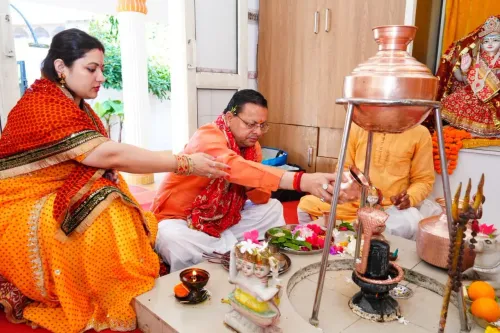
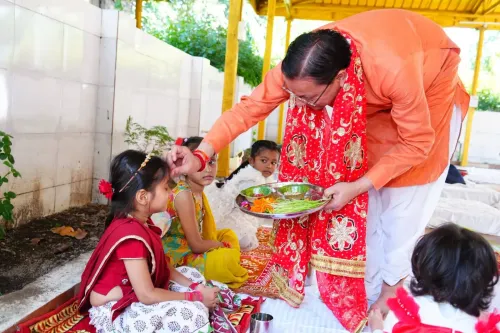
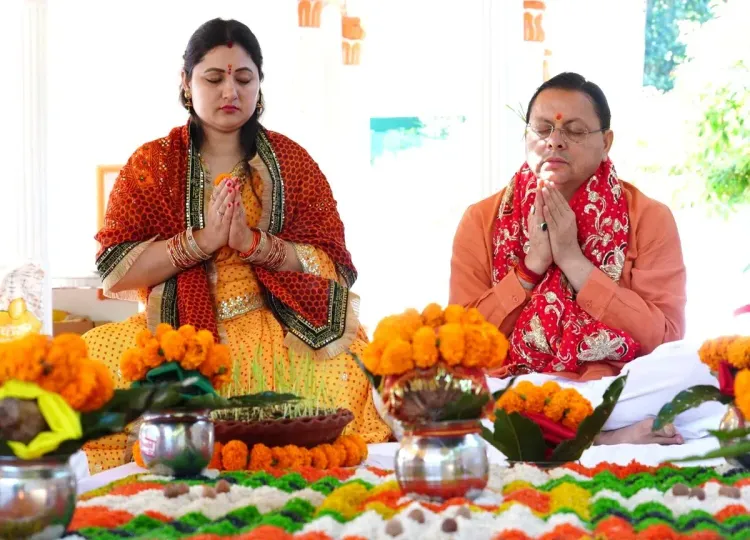
Uttarakhand CM Pushkar Singh Dhami performed a havan and kanya pujan at his official residence during Sharadiya Navratri on 20 October 2026, invoking Maa Bhagwati's blessings for the prosperity and happiness of all residents of the state.
Key Takeaways
CM Pushkar Singh Dhami performed a havan and kanya pujan at his official residence during Sharadiya Navratri on 20 October 2026 .
He invoked the Sanskrit Devi Stuti verse honouring the Goddess as the universal Shakti residing in all beings.
The rituals were offered with a prayer for the 'happiness, prosperity, and well-being' of all Uttarakhand residents.
Kanya pujan — the ceremonial honouring of young girls as embodiments of the Goddess — is among the most sacred Navratri observances.
The ceremony aligns with Uttarakhand's deep-rooted pilgrimage identity and the BJP's broader pattern of public festival participation by state leaders.
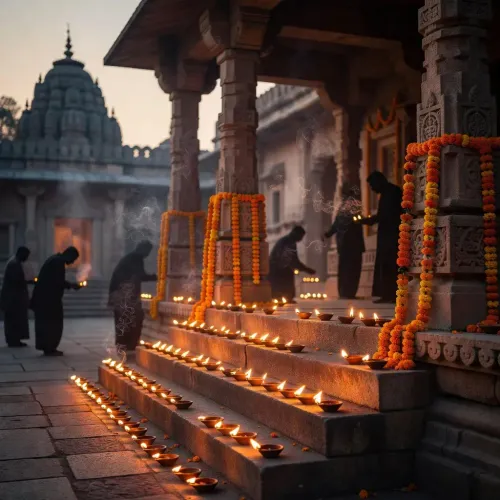
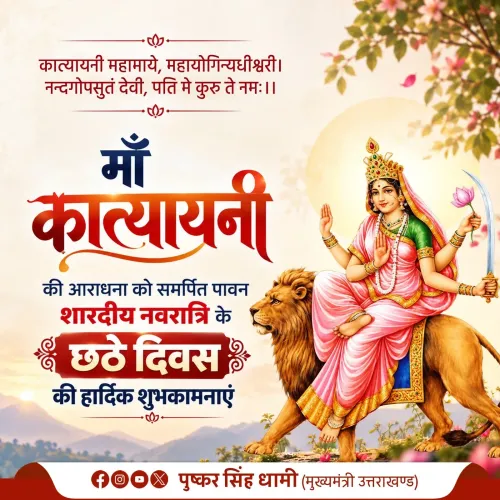
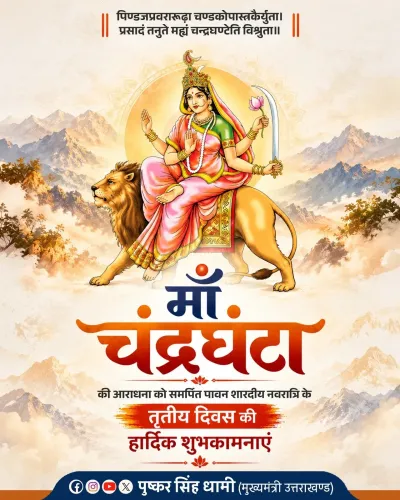
With a Sanskrit invocation on his lips and the fragrance of a sacred fire in the air, Uttarakhand Chief Minister Pushkar Singh Dhami observed Sharadiya Navratri at his official residence on Tuesday, 20 October 2026, performing a havan and kanya pujan to seek Maa Bhagwati's blessings for the welfare of every resident of the state.
Dhami opened with the timeless Devi Stuti verse — 'Ya Devi Sarvabhuteshu Shaktiroopena Sansthita, Namastasyai Namastasyai Namastasyai Namo Namah' ('To the Goddess who resides in all beings as Shakti, we bow to her, again and again, we bow') — invoking the universal feminine divine before sharing the moment publicly on X.
Havan, Kanya Pujan, and the Weight of the Ritual
The two ceremonies performed by Dhami carry deep liturgical meaning in the Navratri calendar. The havan — a fire-offering ritual — is regarded as a purifying act of collective prayer, while kanya pujan, the ceremonial honouring of young girls as living embodiments of the Goddess, marks one of the most emotionally resonant moments of the nine-night festival. Together, they represent both the devotional and the communal dimensions of Navratri observance.
Dhami stated that through the rituals he prayed for 'the happiness, prosperity, and well-being of all residents of the state' — a framing that consciously broadens a personal act of worship into a public, gubernatorial gesture of goodwill toward Uttarakhand's people.
Uttarakhand's Navratri: Faith at the Heart of a Pilgrimage State
Uttarakhand, home to the Char Dham pilgrimage circuit and dozens of Shakti shrines, holds Navratri as one of its most widely observed festivals. The state's identity as a seat of Hindu pilgrimage lends the festival a cultural gravity that extends beyond religion into community life, with celebrations visible from the high-altitude shrines of Kedarnath and Badrinath to villages in the foothills.
For BJP-led state governments, public participation in festivals such as Navratri has become a consistent feature of governance culture — a visible alignment of administrative leadership with the religious rhythms of the state's majority community. Dhami, who has regularly attended similar observances since taking office, continues that pattern with this official-residence ceremony.
As Navratri draws to a close with Navami, the Chief Minister's message is clear: in Uttarakhand, the prayer for collective prosperity and the duty of governance are offered in the same breath.
Point of View
A state whose economy and identity are closely tied to Hindu pilgrimage, a Chief Minister visibly invoking the Goddess's blessings for his constituents carries both symbolic and political resonance. The ritual reaffirms the state government's positioning as a custodian of the region's spiritual heritage. Whether this translates into concrete policy attention to religious tourism infrastructure in the festival season remains the practical question to watch.
NationPress
20 Oct 2026
Frequently Asked Questions
What did CM Pushkar Singh Dhami do on Navratri 2026?
CM Dhami performed a havan (sacred fire ritual) and kanya pujan (ceremonial honouring of young girls) at his official residence during Sharadiya Navratri on 20 October 2026, praying for the well-being of all Uttarakhand residents.
What is kanya pujan and why is it observed during Navratri?
Kanya pujan is a Navratri ritual in which young girls are worshipped as living embodiments of the Goddess Durga. It is considered one of the most spiritually significant practices of the festival, symbolising reverence for the divine feminine.
What does the Sanskrit shloka 'Ya Devi Sarvabhuteshu' mean?
The shloka means: 'To the Goddess who resides in all beings as Shakti (divine energy), we bow to her, again and again, we bow.' It is one of the most widely recited hymns during Navratri across India.
Why do BJP chief ministers often perform Navratri rituals publicly?
BJP-led state governments have made public participation in major Hindu festivals a consistent feature of governance culture, aligning administrative leadership with the religious and cultural life of the majority community. For Uttarakhand, a pilgrimage-centred state, such observances carry added cultural weight.
Where is Uttarakhand CM Pushkar Singh Dhami's official residence?
Pushkar Singh Dhami's official residence as Chief Minister is in Dehradun, the state capital of Uttarakhand.