CM Dhami Pledges Film Tourism as Uttarakhand Economy Driver
Synopsis
Chief Minister Pushkar Singh Dhami has pledged to connect film tourism directly to Uttarakhand's economy, with a focus on maximising local community participation in film productions shot across the Himalayan state.
Key Takeaways
CM Pushkar Singh Dhami declared on 18 October 2026 that the Uttarakhand government is committed to integrating film tourism with the state economy.
The pledge explicitly targets increased participation of local residents — not just revenue from location fees.
Uttarakhand joins a broader trend of Indian states using film-production incentives to diversify tourism income beyond pilgrimages and adventure travel.
Film tourism can function as destination marketing, with popular productions driving tourist arrivals after release.
Specific policy tools — subsidies, single-window clearance, local-hire mandates — have not yet been detailed in the announcement.
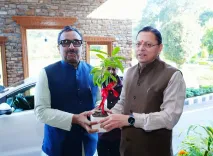
Uttarakhand's hills have long drawn pilgrims and trekkers — now Chief Minister Pushkar Singh Dhami wants them to draw film crews too. On Sunday, 18 October 2026, the Chief Minister's Office of Uttarakhand posted a declaration from CM Dhami that the state government is committed to linking 'film tourism' directly to the state economy and increasing the participation of local residents.
The CM's statement, in his words: 'Sarkar film paryatan ko rajya ki arthvyavastha se jodkar sthaniya logon ki bhagidari badhane ke liye hai pratibaddh' — 'The government is committed to connecting film tourism with the state economy and increasing the participation of local people.'Why Uttarakhand's Landscapes Are a Natural Studio
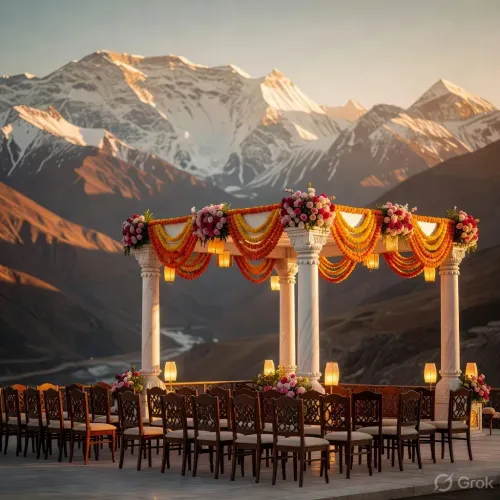
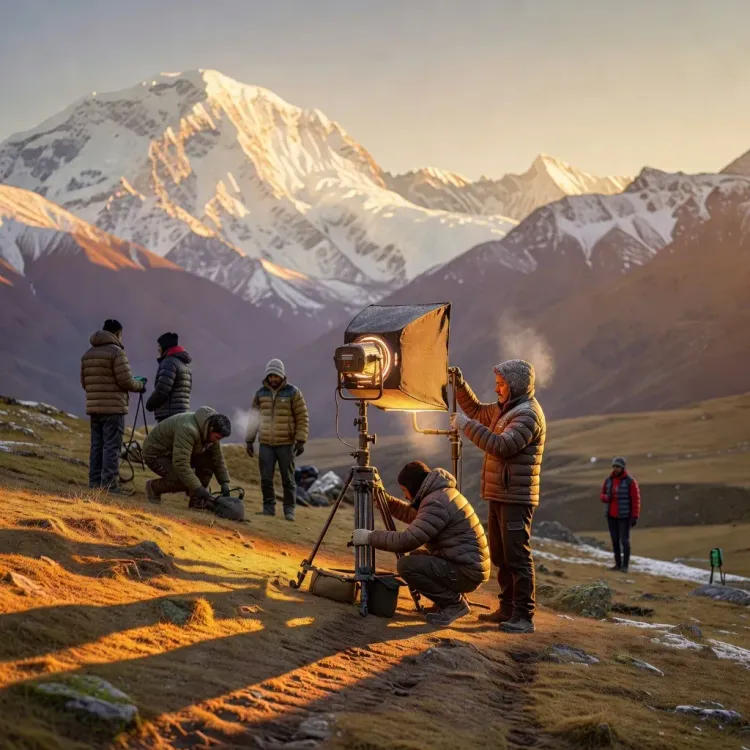
Uttarakhand — the northern Himalayan state bordered by Himachal Pradesh, Uttar Pradesh, Nepal, and Tibet — has been a backdrop for Bollywood and regional cinema for decades. Its snow-capped peaks, dense forests, ancient temples, and winding river valleys offer visual variety that few states can match. But historically, the economic gains from film production have flowed past local communities: crew teams arrive, shoot, and leave, with minimal local hiring or procurement. CM Dhami's pledge is a direct challenge to that pattern.The Broader Race Among States for Film Investment
Uttarakhand is not moving in isolation. Several Indian states — including Himachal Pradesh, Rajasthan, and Madhya Pradesh — have in recent years rolled out incentive packages for film productions: subsidies on location fees, fast-track shooting permissions, and commitments to deploy local talent and services. The logic is well-established: a high-profile film or web series set in a region functions as extended destination marketing, spiking tourist arrivals months after release. Dhami's statement signals that Uttarakhand intends to compete seriously in this space rather than rely passively on its natural assets.What Local Participation Actually Means
The phrase 'local people's participation' carries real policy weight. In practice, it points toward mechanisms that require or incentivise productions to hire local guides, drivers, caterers, junior crew, and accommodation providers — channelling production budgets into the immediate local economy rather than importing everything from Mumbai or Delhi. For a state where tourism and pilgrimage already underpin a large share of livelihoods, film tourism offers a complementary revenue stream that is less seasonal than religious yatras and less weather-dependent than adventure tourism. The specific policy tools — whether a single-window clearance system, a direct subsidy scheme, a percentage-local-hire mandate, or a dedicated film development body — have not yet been detailed in this declaration. That is the next question Uttarakhand's film and tourism industry will be watching closely.Point of View
Which remains heavily dependent on seasonal pilgrimage and adventure tourism — both vulnerable to weather disruptions and infrastructure bottlenecks. By explicitly linking film production to local economic participation, rather than simply offering location access, the state is attempting a more structurally embedded model than the standard subsidy-and-permit approach. Whether this translates into enforceable local-hire or local-procurement requirements will define whether the policy delivers lasting income for hill communities or remains an aspirational headline. The announcement also puts quiet competitive pressure on neighbouring Himachal Pradesh, which has long attracted Bollywood productions to its own landscapes.
NationPress
18 Oct 2026
Frequently Asked Questions
What is film tourism in Uttarakhand?
Film tourism refers to using Uttarakhand's scenic locations — Himalayan peaks, forests, temples, and river valleys — as shooting destinations for films, web series, and other productions, generating revenue and employment for the state and local communities.
What did CM Dhami say about film tourism on 18 October 2026?
CM Pushkar Singh Dhami declared that the Uttarakhand government is committed to connecting film tourism with the state economy and increasing the participation of local people in productions shot in the state.
How does film tourism help local residents in Uttarakhand?
When structured correctly, film tourism creates jobs for local guides, drivers, caterers, accommodation providers, and junior crew, channelling production budgets directly into hill communities rather than importing services from outside the state.
Which other Indian states offer incentives for film shooting?
States including Himachal Pradesh, Rajasthan, and Madhya Pradesh have introduced subsidy schemes, fast-track permissions, and other incentives to attract film productions, a model Uttarakhand is now moving to adopt more formally.
What specific policies has Uttarakhand announced for film tourism?
As of CM Dhami's 18 October 2026 statement, the commitment is directional — specific tools such as subsidy structures, single-window clearance, or local-hire mandates have not yet been detailed publicly.