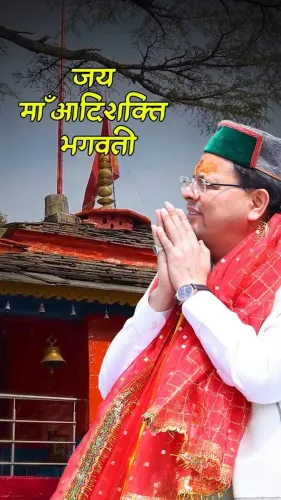
CM Dhami Promotes Nanda Devi Temple, Almora's Spiritual Heart
Synopsis
Uttarakhand CM Pushkar Singh Dhami on 28 May 2026 spotlighted the ancient Nanda Devi Temple in Almora, describing it as a divine centre of faith adorned with traditional mountain stone craftsmanship, and urged all visitors to the district to seek the goddess's blessings.
Key Takeaways
CM Pushkar Singh Dhami posted on 28 May 2026 urging people visiting Almora to seek darshan at the Nanda Devi Temple .
The temple is dedicated to Adi Shakti Bhagwati Maa Nanda Devi , a widely revered protective deity in Uttarakhand .
The shrine is distinguished by traditional Pahari (mountain) stone craftsmanship and is located in Almora , headquarters of the Kumaon division.
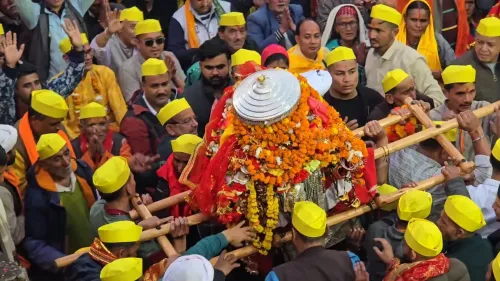
Nanda Devi is central to the Nanda Devi Raj Jat Yatra , a grand pilgrimage held once every twelve years.
The post continues CM Dhami's pattern of using social media to promote Uttarakhand's devotional and cultural heritage as a tourism draw.
Pilgrims, heritage tourists, and Almora residents stand to benefit from increased visibility for the shrine.
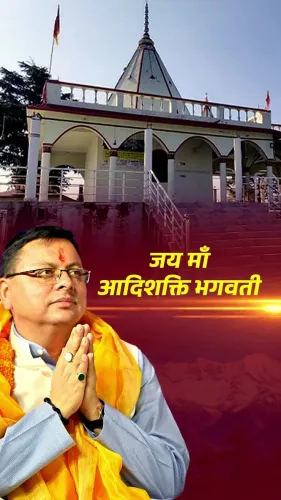
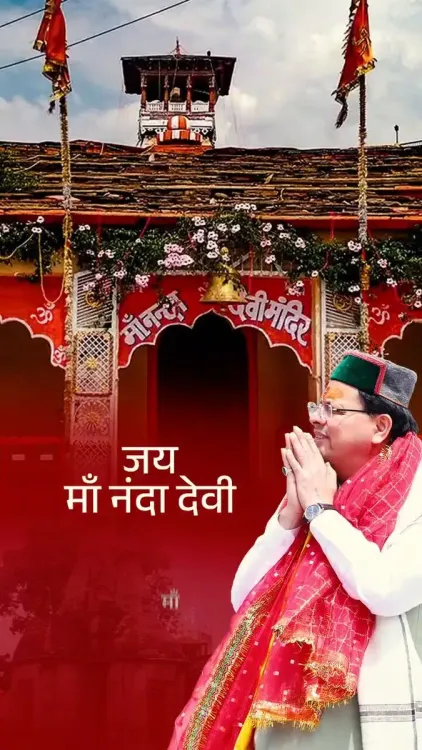
Uttarakhand Chief Minister Pushkar Singh Dhami on Thursday, 28 May 2026, took to X to highlight the Nanda Devi Temple in Almora as a sacred centre of faith and devotion, urging visitors to the district to seek the goddess's blessings. The post, shared in Hindi, described the ancient shrine as a symbol of Almora's cultural and spiritual identity, adorned with traditional mountain stone craftsmanship.
Context
In his post, CM Dhami wrote: 'अल्मोड़ा की सांस्कृतिक और आध्यात्मिक पहचान का प्रतीक माँ नंदा देवी का पावन मंदिर श्रद्धा, आस्था और विश्वास का दिव्य केंद्र है' ['The sacred Nanda Devi Temple, a symbol of Almora's cultural and spiritual identity, is a divine centre of reverence, faith, and devotion']. He also called upon all those visiting Almora district to make it a point to seek the darshan of Maa Nanda Devi. The appeal reinforces the state government's sustained effort to spotlight Uttarakhand's devotional heritage.
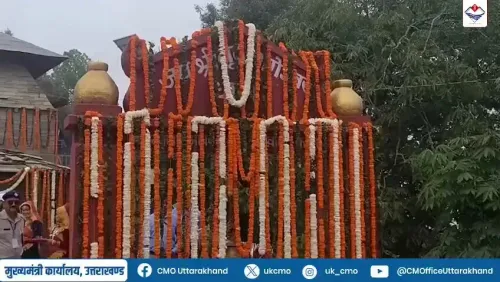
The temple is dedicated to Adi Shakti Bhagwati Maa Nanda Devi, a manifestation of the supreme feminine power revered as a protective deity across Uttarakhand. Situated in the heart of Almora, the district headquarters of the Kumaon division, the shrine is distinguished by its traditional Pahari stone architecture that reflects centuries of mountain craftsmanship.
Policy Backdrop
Uttarakhand administrations have long linked the preservation of Kumaon temples with broader tourism and cultural promotion strategies. The Nanda Devi Raj Jat Yatra — a periodic grand pilgrimage held once every twelve years — stands as one of the most significant religious events in the Himalayan state, drawing pilgrims from across the country. State policy has consistently supported the upkeep of shrines along pilgrimage corridors in both the Garhwal and Kumaon divisions as part of this heritage-tourism framework.
CM Dhami, who has been in office since 2021, has made cultural promotion and religious tourism recurring themes of his administration. His social media outreach frequently features Uttarakhand's temples, festivals, and Himalayan spiritual sites as markers of the state's distinct identity.
Stakeholders and Impact
The primary beneficiaries of such public outreach are Almora's pilgrims, heritage tourists, and local residents whose livelihoods are intertwined with the town's spiritual economy. Almora serves as a gateway to several Himalayan pilgrimage routes, and heightened visibility for the Nanda Devi Temple can translate into increased footfall at local businesses, guesthouses, and artisan markets. The Kumaon region's temple circuit has historically attracted both domestic devotees and culturally curious travellers from abroad.
For the broader Uttarakhand tourism ecosystem, a chief minister's direct endorsement of a specific shrine carries promotional weight, signalling to state tourism bodies and private operators that the Almora corridor merits attention in travel itineraries and infrastructure planning.
What's Next
Observers will watch for follow-up state announcements on temple conservation works or the development of tourism circuits in the Kumaon division. The next observance of a Nanda Devi-related festival or the next cycle of the Raj Jat Yatra will also be a moment when official support for the shrine is likely to intensify. As Uttarakhand continues to position itself as a premier spiritual-tourism destination, the Nanda Devi Temple in Almora is set to feature more prominently in the state's cultural outreach.
Point of View
Blending cultural pride with soft tourism promotion. By personally endorsing a specific shrine, the chief minister signals to state agencies and private tourism operators that the Almora-Kumaon corridor deserves investment and itinerary inclusion. The move fits a broader pattern of leveraging religious heritage to drive footfall and local economic activity without requiring a formal policy announcement. It also keeps the Nanda Devi narrative — and the anticipation around the next Raj Jat Yatra cycle — alive in public discourse.
NationPress
11 Oct 2026
Frequently Asked Questions
Where is the Nanda Devi Temple in Almora located?
The Nanda Devi Temple is situated in the heart of Almora town, the district headquarters of the Kumaon division in Uttarakhand, and is one of the most prominent shrines in the region.
Who is Nanda Devi and why is she significant in Uttarakhand?
Nanda Devi is a manifestation of Adi Shakti revered as a protective deity across Uttarakhand. She is central to local festivals and the Nanda Devi Raj Jat Yatra, a grand pilgrimage held once every twelve years.
What is the Nanda Devi Raj Jat Yatra?
The Nanda Devi Raj Jat Yatra is a major Hindu pilgrimage held in Uttarakhand once every twelve years. It is considered one of the largest and most sacred processions in the Himalayas, drawing devotees from across India.
Why did CM Dhami post about the Nanda Devi Temple?
CM Pushkar Singh Dhami shared the post on 28 May 2026 to highlight the temple's cultural and spiritual significance and to encourage visitors to Almora district to seek the goddess's blessings, continuing his administration's focus on promoting Uttarakhand's religious heritage.
What is special about the architecture of the Nanda Devi Temple in Almora?
The temple is noted for its traditional Pahari (mountain) stone craftsmanship, a style of architecture characteristic of the Kumaon Himalayan region, making it a heritage landmark in addition to a place of worship.