CM Dhami Credits Workers as Force Behind Uttarakhand's Growth
Synopsis
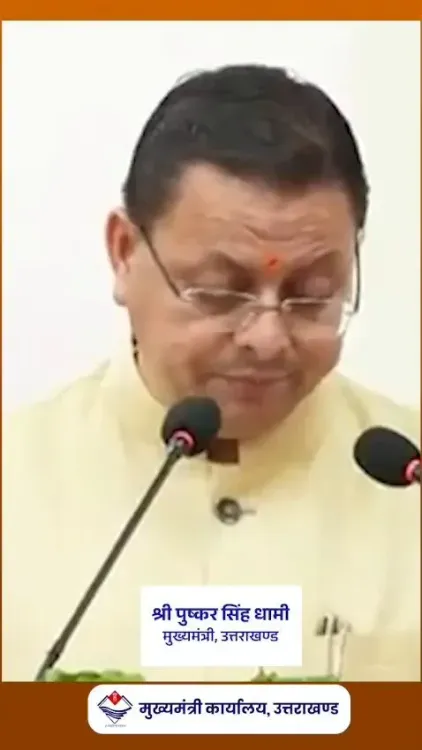
Chief Minister Pushkar Singh Dhami publicly credited Uttarakhand's workers as the backbone of the state's development, saying tireless labour drives every infrastructure project. The statement was shared by the CMO on 25 July 2026, tagged to Dehradun and accompanied by a video.
Key Takeaways
CM Pushkar Singh Dhami credited construction and infrastructure workers as the force behind all development in Uttarakhand .
The statement was posted by the Chief Minister's Office on 25 July 2026 , tagged to Dehradun .
Uttarakhand has relied on large-scale labour deployment for projects including the Char Dham road project since 2016 .
Both local and inter-state migrant workers form a core part of the state's infrastructure workforce.
The acknowledgement signals the state government's intent to keep labour welfare visible in its governance agenda.
Policy watchers will track whether the tribute is followed by concrete steps on worker safety and labour welfare budgets .
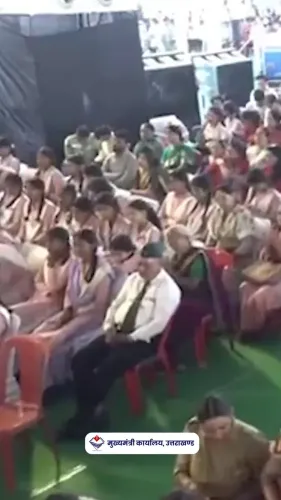
The Chief Minister's Office of Uttarakhand, on behalf of Chief Minister Pushkar Singh Dhami, posted a tribute to the state's labour force on Saturday, 25 July 2026, acknowledging workers as the driving force behind every development project undertaken in the hill state. The statement, shared from the official CMO account, was accompanied by a video and tagged to Dehradun and Uttarakhand.
Context
The post quotes CM Dhami directly: 'Chahe vikas ka koi bhi karya ho, in sabke peeche hamare shramik bhaion ka athak parishram hota hai' — 'Whatever the work of development may be, behind all of it lies the tireless toil of our worker brothers.' The statement is a formal public acknowledgement of the indispensable role that construction and infrastructure labourers play in the state's ongoing growth agenda.
Uttarakhand, a Himalayan state with challenging terrain, depends heavily on both local and inter-state migrant workers to execute its ambitious connectivity and infrastructure projects. Such acknowledgements from the Chief Minister's Office form a regular part of governance communication, particularly during phases of accelerated project execution.
Policy Backdrop
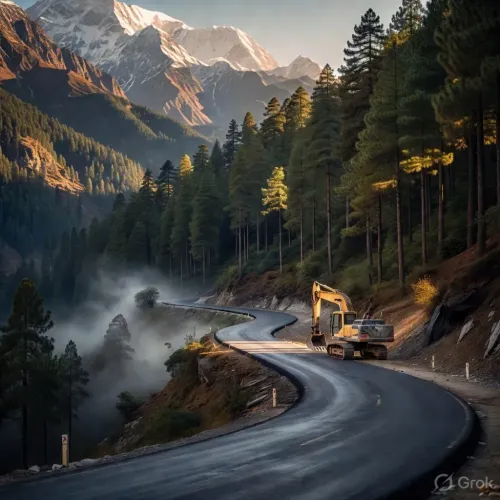
Uttarakhand has been at the centre of large-scale infrastructure activity for over a decade. The Char Dham road project, initiated in 2016, remains one of the most significant connectivity drives in the region, requiring sustained deployment of construction labour across difficult high-altitude terrain. Road, hydropower, and urban development works have similarly drawn on a sizeable workforce.
State governments across India have increasingly used public messaging to spotlight the contributions of workers, particularly as infrastructure delivery timelines face scrutiny. CM Dhami's statement fits within this broader pattern of governance communication that links development outcomes directly to labour.
Stakeholders and Impact
The primary stakeholders of this message are construction workers and migrant labourers employed across Uttarakhand's infrastructure sites — a community that often works in hazardous conditions with limited public visibility. A statement of this nature from the Chief Minister's Office lends institutional recognition to their contribution.
For the broader public and policy community, such messaging signals the state government's intent to keep labour welfare on the governance agenda. It also reinforces the political importance of the worker constituency in a state where development projects are a key electoral talking point.
What's Next
Observers will watch for whether this acknowledgement translates into concrete policy action — including state assembly discussions on labour welfare budgets or new worker safety guidelines tied to ongoing hill infrastructure works. The Uttarakhand government's follow-through on labour protections in active project zones will be a key indicator of how this public messaging is backed by administrative intent.
Point of View
Acknowledging workers publicly serves to humanise what are often opaque construction timelines. The statement fits a broader pattern among state governments of using symbolic recognition to maintain political goodwill with a constituency that is large but rarely foregrounded. The real test will be whether this messaging is backed by measurable improvements in labour welfare policy and worksite safety standards.
NationPress
24 Oct 2026
Frequently Asked Questions
What did CM Pushkar Singh Dhami say about workers in Uttarakhand?
CM Dhami stated that behind every development work lies the tireless toil of the state's worker brothers, formally crediting labourers as the driving force of Uttarakhand's infrastructure growth.
Why is labour important to Uttarakhand's development?
Uttarakhand's challenging Himalayan terrain requires large numbers of construction workers for road, hydropower and urban projects. The Char Dham road project alone has involved sustained labour deployment since 2016.
Who are the main workers involved in Uttarakhand's infrastructure projects?
Both local workers and inter-state migrant labourers are deployed across Uttarakhand's active infrastructure sites, including road connectivity and hydropower projects.
What is the Char Dham road project in Uttarakhand?
The Char Dham road project, initiated in 2016, is a major connectivity drive in Uttarakhand aimed at improving access to the state's four key pilgrimage sites through difficult high-altitude terrain.
What policy action is expected after CM Dhami's labour tribute?
Observers are watching for state assembly discussions on labour welfare budgets and new worker safety guidelines linked to ongoing hill infrastructure works in Uttarakhand.